- 05 June, 2026

April 7, 2026: Bishops are attempting to make sense of the increase, while those entering the Church describe their motivations as deeply personal. An unexpected rise in the number of people joining the Roman Catholic Church has been observed.


This Easter, the Archdiocese of Detroit is set to welcome 1,428 new Catholics—the highest figure recorded in 21 years. The Archdiocese of Galveston-Houston is also reporting its largest intake in 15 years. Meanwhile, in the Diocese of Des Moines, numbers have risen sharply by 51 per cent compared to last year, increasing from 265 to 400.
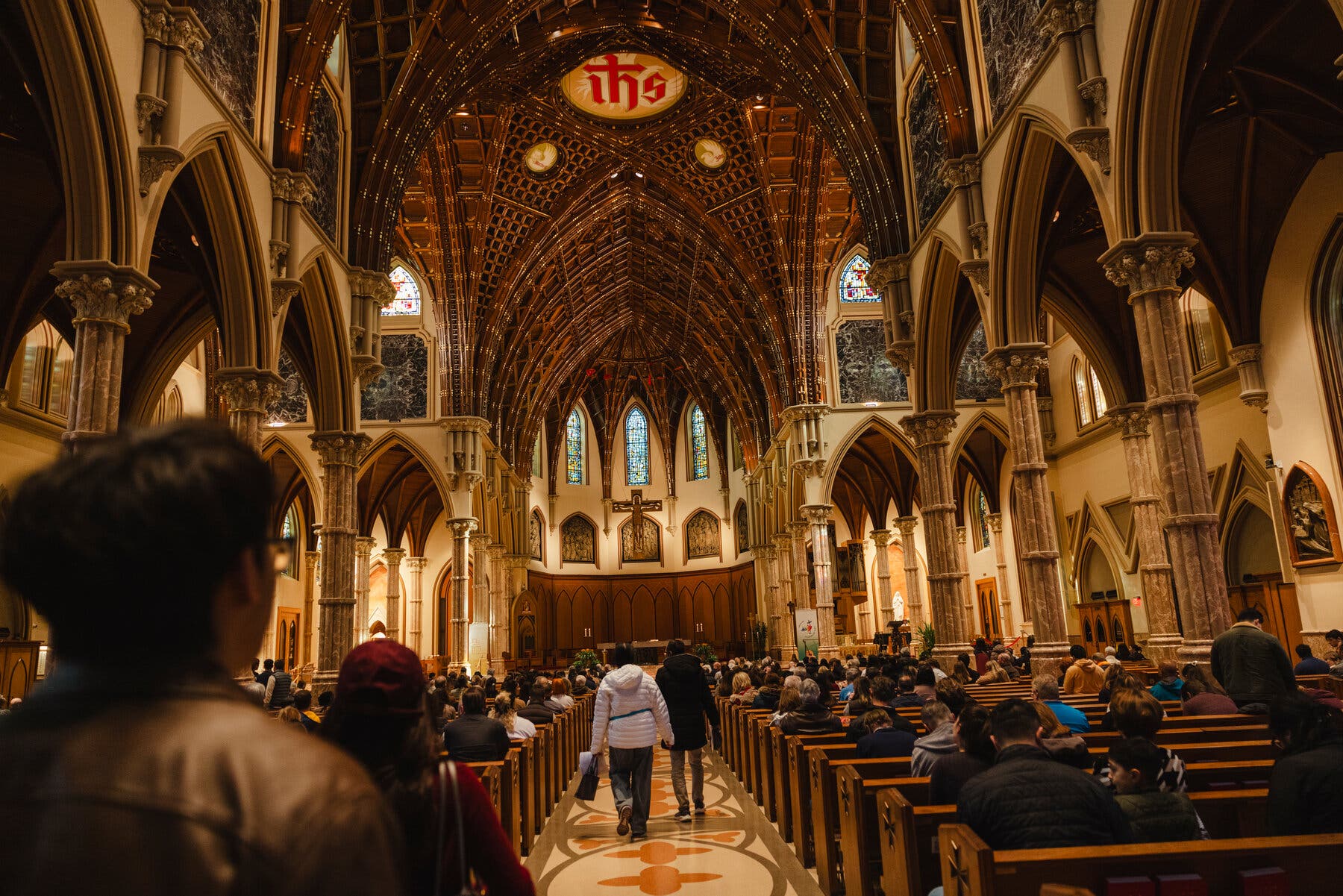
In the first year following the election of Pope Leo XIV, many Catholic dioceses across the United States are experiencing their highest levels of new members in recent years. These individuals will formally enter the Church during the Easter Vigil Mass, held on the evening before Easter Sunday on April 5.


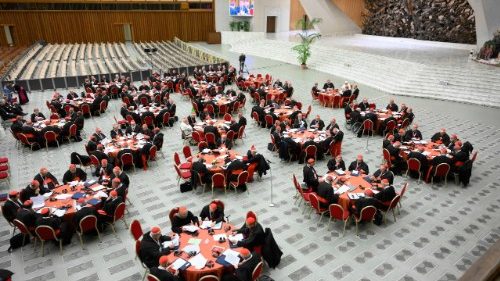
Bishops have taken note of the surge but remain uncertain about its cause.
“Of course we think the Holy Spirit is,” said Cardinal Robert McElroy of Washington. “But we are kind of stymied.”
In his own archdiocese, 1,755 individuals are expected to join the Church this Easter, an increase from last year’s 1,566—which had already been the highest in at least 15 years, according to official records. Similar patterns have been reported elsewhere.
“‘What is your number? What is your number?’” Cardinal McElroy recalled bishops asking one another during informal discussions at a recent conference.
Tracking conversion figures remains complex, as each diocese follows its own system for recording data, making a comprehensive, real-time overview difficult. Data collected from two dozen dioceses—including large ones such as Los Angeles and Phoenix, as well as smaller and rural dioceses like Gallup, New Mexico, and Allentown, Pennsylvania—revealed a consistent rise across all.
Respondents highlighted several possible reasons for the trend, including a longing for community, social and political instability, outreach efforts aimed at younger people, and the influence of technology.
“In our age of uncertainty, and in our age of great anxiety, is a thirst and hunger for God and stability that faith brings to people’s lives,” said Archbishop Mitchell Thomas Rozanski of St. Louis, noting that current numbers are the highest since 2016.
He pointed to two major societal changes that may be driving people towards faith.
“I think technology has isolated us from one other. I think that Covid just really magnified that isolation,” he said. “We are realising many of the ills of our society, particularly anxiety and depression, come about from that isolation.”
He also observed that individuals aged between 18 and 35—often considered among the most isolated—form a significant portion of new entrants, a trend echoed by several dioceses.
Although there was a decline during the coronavirus pandemic due to restrictions on in-person gatherings, current figures in many areas have surpassed pre-pandemic levels. In Philadelphia, the number of new Catholics is now double what it was in 2017. In Newark, 1,701 individuals will join the Church this Easter, compared to 1,000 in 2010.
According to a Pew Research Center survey conducted last year, the overall Christian population in the United States has stabilised after a prolonged period of decline.
Orthodox Christianity has similarly seen a notable increase in new followers, though it remains unclear whether this trend extends across all organised religions.
Individuals entering the Catholic Church often cite highly personal reasons, many of which are not linked to the election of Pope Leo XIV.
Jacqueline Chavira, 41, from Grants, New Mexico, is joining the Church this Easter along with her two children. Although baptised as a child, she was not confirmed and was raised as a Jehovah’s Witness. She later distanced herself from religion, but her perspective shifted after becoming a mother.
“There was a void in me that I couldn’t fill,” she said. She began attending Mass with her Catholic fiancé and decided to embrace the faith fully, particularly with a desire for a Catholic marriage and family life. She emphasised that the Pope’s election did not influence her decision.
“For me it is way more personal, way smaller, just having my kids the way I want to raise them, the way I want to run my home with my husband, and live our lives,” she said.
A Pew Research Center study found that only 8 per cent of approximately 53 million Catholic adults in the United States are converts. Marriage was identified as a primary reason for conversion, along with spiritual fulfilment and the influence of friends and family.
For adults, joining the Catholic Church typically involves participating in the Order of Christian Initiation of Adults (O.C.I.A.), which includes a series of instructional classes. In some cases, individuals may undertake a more personalised path of study. One prominent example is Vice President JD Vance, who converted in 2019 at the age of 35.
The process and rituals can vary depending on an individual’s background—whether they are unbaptised, already baptised, or transitioning from another Christian denomination.
During the Easter Vigil Mass, new members receive the sacraments of baptism, confirmation, and Eucharist, marking their formal initiation into the Church.
In certain instances, digital media and online platforms have played a greater role than local clergy in influencing individuals.
Jesse Araujo, 19, from Pahrump, Nevada, said that Catholic content on YouTube, including podcasts by figures such as Father Mike Schmitz, significantly shaped his journey. He attended Mass only a few times before enrolling in O.C.I.A.
“A lot of people spend their time scrolling through TikTok — my version of that is apologetics,” he said.
He added that learning about the sacraments strengthened his conviction.
“I follow Jesus — Jesus left a church, I should follow that church,” he said.
In Detroit, Sharon Kalil, 26, is preparing to enter the Church through the Cathedral of the Most Blessed Sacrament. Raised Jewish and later identifying as atheist, she began exploring Christianity last summer.
“It’s hard to explain — it just really felt like a calling on my heart,” she said.
After experiencing a miscarriage following a brief pregnancy she had prayed for, she found comfort in the Church community.
“The way the community just wrapped me in prayer, wrapped me in love, and had supported me through that difficult time, really just affirmed that I was in the right place,” she said.
Amen-Ra Pryor, 23, a Ph.D. student at Howard University, also described his journey as one shaped by a search for meaning during the pandemic. Initially nonreligious and agnostic, he began exploring faith through friendships, philosophy, and online Catholic content.
He later attended Mass at St. Augustine’s Church in Washington, where he will formally join during the Easter Vigil.
He expressed a strong connection to Catholic teachings on suffering and the practice of confession.
“To actually be able to audibly hear, ‘Your sins are forgiven,’ is also very important,” he said.
Meanwhile, preparations are already underway for future conversions. The Diocese of Cleveland has announced the next Rite of Election and Call to Continuing Conversion, scheduled for February 13, 2027, encouraging early planning for participation.
Courtesy: The New York Times
© 2026 CATHOLIC CONNECT POWERED BY ATCONLINE LLP