
- 05 June, 2026

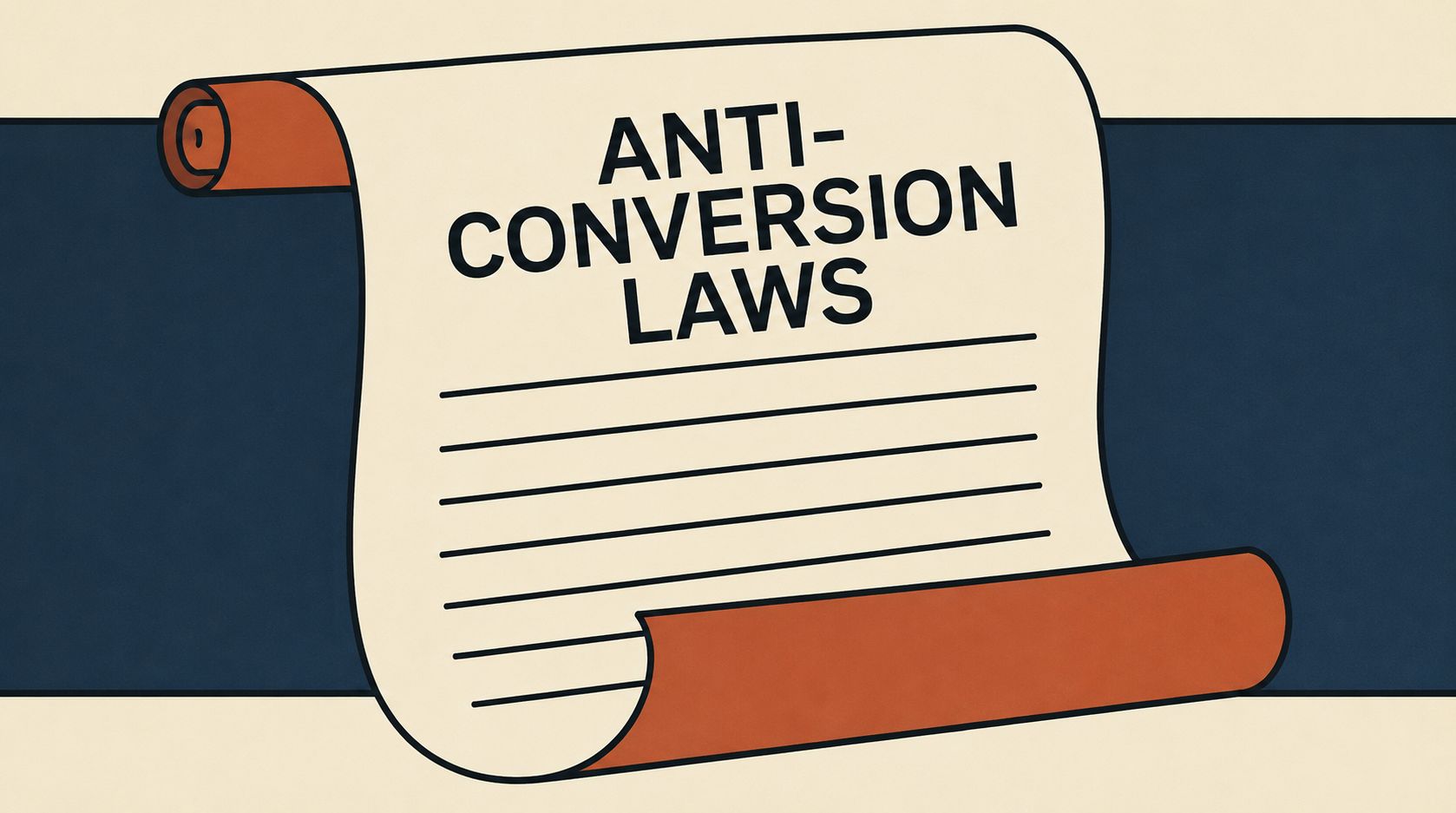
Bengaluru, June 5, 2026: The Karnataka Protection of Right to Freedom of Religion Act, 2022—commonly known as the anti-conversion law—has remained one of the most debated pieces of legislation in the state in recent years. Introduced and passed by the Bharatiya Janata Party (BJP) government led by Basavaraj Bommai, the law came into force in September 2022 amid claims that it was necessary to prevent forced religious conversions through fraud, coercion, allurement, or marriage.


The History Behind Karnataka's Anti-Conversion Law
Supporters argued that the legislation was needed to protect vulnerable communities from exploitation and preserve religious freedom. Critics, however, warned that the law was overly broad, vulnerable to misuse, and could become a tool to target religious minorities, particularly Christians and Muslims.
When the Congress party campaigned for the 2023 Karnataka Assembly elections, it promised to repeal what it described as an unjust law. After forming the government, Chief Minister Siddaramaiah reiterated that commitment. Yet three years later, the legislation remains in force, creating a political, legal, and social dilemma that continues to divide opinion across Karnataka.


What Does the Anti-Conversion Law Say?
The Act prohibits religious conversions carried out through force, fraud, coercion, misrepresentation, undue influence, allurement, or promises of marriage. Violations are classified as cognizable and non-bailable offences.
The law prescribes:
* Three to five years imprisonment and fines for general offences.
* Three to ten years imprisonment for cases involving women, minors, Scheduled Castes (SCs), or Scheduled Tribes (STs).
* Enhanced penalties for mass conversions.
* Compensation provisions for alleged victims.
* The possibility of declaring marriages void if conversion is deemed the sole purpose of the union.
The legislation also requires extensive declarations and notifications surrounding religious conversions, making it one of the more stringent anti-conversion laws in India.
Three Years Later: What Do the Numbers Show?
Recent data obtained through the Right to Information (RTI) Act paints a revealing picture.
Since the law was enacted, 46 cases have been registered across Karnataka. Twenty-five of these cases were filed during the three-year period between 2022 and 2025, averaging approximately eleven cases annually.
Most complaints involve allegations of attempts to convert individuals to Christianity, while a smaller number involve accusations related to Islam. Several cases have involved religious gatherings, prayer meetings, distribution of religious literature, or interfaith relationships.
However, despite dozens of FIRs and investigations, one statistic stands out above all others: there have been zero convictions under the Act.
The Courts Step In
The Karnataka High Court has played a significant role in defining the limits of the legislation.
In a landmark ruling involving three Muslim men accused of attempting conversions through the distribution of pamphlets, the Court quashed the case and clarified important legal principles.
Justice Venkatesh Naik T ruled that merely sharing religious beliefs or distributing literature does not automatically constitute an attempt to convert someone. The Court further stressed that complaints cannot be filed by unrelated third parties or self-appointed vigilantes.
Under Section 4 of the Act, only the person allegedly converted or close relatives connected by blood, marriage, adoption, or association may initiate complaints.
This ruling established an important safeguard against misuse and reinforced constitutional protections surrounding religious expression.
Why Has Congress Not Repealed the Law?
One of the biggest questions surrounding the Act is why the Congress government has not fulfilled its election promise.
Political analysts suggest several reasons.
First, the government has been preoccupied with implementing major welfare programmes and guarantees promised during the election campaign.
Second, repealing the law could invite accusations from political opponents that the government is soft on forced conversions or insensitive to Hindu concerns.
Third, legislative priorities and political calculations appear to have pushed the repeal proposal down the agenda despite initial Cabinet discussions.
As a result, while the government has occasionally indicated support for repeal, the law remains operational and enforceable.
Concerns Raised by Minority Communities
Christian and Muslim organisations, along with several human rights groups, have repeatedly called for the repeal of the legislation.
They argue that the law infringes upon Article 25 of the Indian Constitution, which guarantees freedom of conscience and the right to profess, practice, and propagate religion.
Church leaders and pastors have reported instances where prayer meetings were disrupted, places of worship were targeted, and complaints were filed even when no evidence of forced conversion existed.
Many minority organisations argue that the fear of legal action has created a chilling effect on legitimate religious activities and charitable work.
The People's Union for Civil Liberties (PUCL) and other civil society groups have also documented cases where personal disputes, neighbourhood tensions, or objections to interfaith relationships appeared to trigger complaints under the Act.
What Does the Lack of Convictions Mean?
The absence of convictions does not automatically prove that all allegations were baseless. However, it does raise questions about how the law is being enforced.
Several cases have been closed through police "B-Reports," indicating insufficient evidence. Others remain under investigation or are pending before courts. In at least one notable case, the accused was acquitted after witnesses acknowledged that no forced conversion had occurred.
Legal experts suggest that the data demonstrates the difficulty of proving criminal intent under the law and highlights the importance of careful investigation before arrests or prosecutions are initiated.
The Future of Religious Freedom in Karnataka
The debate surrounding Karnataka's anti-conversion law touches upon some of the most sensitive questions in a democratic society: religious liberty, individual choice, community identity, and the role of the state.
Supporters continue to view the legislation as a necessary safeguard against coercive conversions. Opponents see it as a law that risks undermining constitutional freedoms and fostering suspicion among religious communities.
As court rulings continue to shape its interpretation, the law's future remains uncertain. Whether it is eventually repealed, amended, or retained, the discussion has already become a defining chapter in Karnataka's legal and political landscape.
A Call for Balance, Justice, and Mutual Respect
The ongoing debate over Karnataka's anti-conversion law is ultimately about more than legislation. It is about preserving both religious freedom and social harmony in a diverse society.
The state's experience over the past three years demonstrates the importance of balancing legitimate concerns about coercion with the constitutional rights of individuals to choose, practise, and share their faith peacefully.
As Karnataka moves forward, many hope for solutions rooted in dialogue rather than division, evidence rather than suspicion, and justice rather than fear. Regardless of differing viewpoints, the goal should remain the same: a society where every citizen can live out their beliefs with dignity, security, and mutual respect.
The challenge before lawmakers, courts, and communities is not merely to settle a legal dispute, but to strengthen the foundations of trust and coexistence upon which India's pluralistic democracy has long been built.
Courtesy : The News Minute




© 2026 CATHOLIC CONNECT POWERED BY ATCONLINE LLP