- 03 March, 2026


Mumbai, Dec 10, 2025: For over four centuries, the Church of St. Andrew has stood as a beacon of faith in Bandra, its weathered walls witnessing the ebb and flow of history long before the Taj Mahal was even imagined. Built in 1575, this grand old sentinel of faith has endured cyclones and wars, colonial conquest and urban transformation, from sleepy fishing village to bustling Mumbai suburb. Its bells have echoed through generations, calling the faithful to prayer, marking moments of joy and sorrow, hope and resilience. Today, after twenty months of painstaking restoration, St. Andrew's Church has been renewed—not to erase its past, but to ensure its future as a living house of faith.

Before you even step inside, the church greets you with stories carved in stone. The simple yet striking façade has watched over Bandra for more than four centuries, adapting with the community it serves. In 1890, a wooden porch was added to accommodate growing crowds of parishioners, only to be removed in 1966 when the church was extended to its current dimensions. Behind this façade lies not merely a building, but a living witness to faith's enduring power.
The church follows classic Portuguese colonial design—rectangular, symmetrical, aligned along an east-west axis. Yet, unlike tradition, St. Andrew's faces west, a reminder that faith finds its direction even against the setting sun. Its nine doors—three each on the northern, eastern, and southern walls—serve as more than architectural elements; they are thresholds of faith, welcoming worshippers from every corner of Bandra. When you push open these wooden doors, you step not into a building, but into a sacred story.




A Pulpit That Preaches in Wood and Stone
High on the northern wall stands one of the church's most treasured masterpieces: the original pulpit, carved centuries ago. It rises gracefully like a stone flower, its seven sculpted petals curving outward, each panel alive with biblical narrative. Here, the Prophet Jeremiah carries the yoke of obedience; Isaiah receives the burning coal of purification; St. Peter holds the twin keys of Heaven and Earth, the papal tiara at his feet. St. Mark, the Evangelist, clutches his Gospel with a lion symbolizing courage beside him—the miraculous tale that when thrown to beasts, they refused to harm him. Finally, St. Paul holds the sword of his martyrdom and the book of his enduring letters.
Above this floral pulpit, a canopy carved with the Holy Spirit as a dove once amplified the priest's voice to every corner before microphones existed. Symbolically, it declared that true preaching is carried by the Spirit. The original external entry has now been restored, reconnecting today's faithful with centuries of proscribed Gospels that shaped hearts and inspired devotion.
Altars of Memory and Miracle
To the south of the sanctuary stands one of the oldest treasures: the Holy Crucifix upon a Golgotha base. This original 16th-century wooden altar, described in a 1669 Jesuit letter, depicts Christ upon the Cross with Our Lady and St. John at its foot. In the crypt lies an ancient statue of the dead Christ, venerated by thousands, especially on the night after Good Friday, when silence and prayer fill the nave. The Golgotha base, crowned by skull and crossbones, symbolizes Christ's victory over death. According to tradition, Golgotha was where Adam's remains rested, so Christ's Cross rises above Adam's skull—redemption triumphing over the Fall. Curiously, this altar bears two skulls, a rare artistic mystery that still invites contemplation.
The northern side altar honours Our Lady of the Navigators, another 16th-century wooden creation in the ornate Flamboyant style. The 1669 Jesuit letter tells how Koli fishermen, casting their nets, drew up not fish but a radiant statue of Our Lady holding her Son. They named her "Our Lady of the Navigators," a Mother of Pearl bearing the Pearl of Great Price. Around 1700, when the hilltop statue of Our Lady of the Mount was damaged, this same statue processed there in solemn ceremony, remaining for sixty years until returning home in 1760. So beloved was she that the faithful venerated her under both titles—a testament to the bond between sea, people, and their Queen who guides every voyage safely to shore.
Both altars journeyed to Vasai for restoration by the Sequeira brothers, master craftsmen who returned them renewed yet reverently unchanged.
The Main Altar: Prayer in Carved Form
Rising almost to the sanctuary ceiling, the main altar, built in 1906 after termites destroyed its predecessor, stands as both art and act of faith. Crafted in wood upon a brick and marble base, it reaches heavenward like prayer given form. At its center, life-size St. Andrew holds his X-shaped cross, the symbol of his martyrdom and humility—unworthy, he believed, to die on a cross like his Master's. To his right stands the Sacred Heart of Jesus; to his left, Our Lady bears a plaque reading "St. Ulrich in Gröden, Kirol, Austria"—a quiet reminder of faith's universality.
Bom Jesu stands at the centre, flanked by St. John the Baptist in his animal-skin robe and St. Sebastian, protector against plague and pestilence. For 19th-century Bandra, which endured repeated outbreaks, his presence was deeply personal. Behind the altar, two circular windows shaped as St. Andrew's cross filter light through the sanctuary, illuminating both stone and story.
Renewed for Future Generations
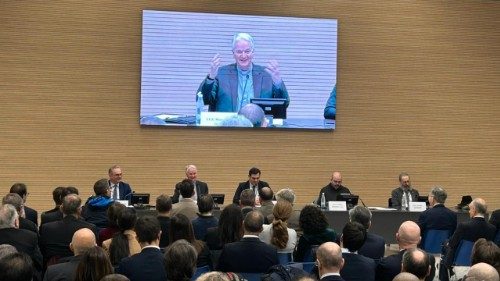
After twenty months of meticulous work, St. Andrew's Church welcomed worshippers once more on December 7th, rededicated by Oswald Cardinal Gracias in the presence of over a thousand faithful. Father Nigel Barrett the parish priest at St. Andrews captured the community's heart when he said that It is with deep gratitude to God that we as a community enter into a church that is worthy to worship and give God glory. We were blessed to have His Eminence Oswald Cardinal Gracias, who rededicated the church and blessed the altar... We pray now that our community will strive to foster understanding and love among all people of goodwill."
The restoration was a labour of love by specialists who understood that heritage demands not just skill but reverence. Rehab Consultant Mr. Chindalkar and Architect Sultanate oversaw the project. Heritage conservation specialist Jivraj Sankhat's firm restored the façade, roof, glass windows, marble, and woodwork, preserving original techniques. Savani Heritage Conservation Pvt meticulously applied lime plaster and lime punning, breathing new life into ancient walls. Kevin Dsouza perfected the acoustics, Roger Drego the master of Sound made sure that the audio true and befitting of a Church, Joseph louis ensure that the electrical and the lighting added to the prayerful ambience , and Vivan and laxman who installed the HVLS Fans —directed by Kiran Bhavsar—ensured comfort without compromising character.
For parishioners, this is no mere building. It is inheritance. Each member is a custodian of a rare and beautiful legacy that must be protected, preserved, and passed on. The restoration committee sought not to change the past, but to ensure future generations can worship in this House of Faith, where handcrafted altars, walled wooden ceilings, lime-plastered walls, and ancient beams each demand traditional techniques and tender care.
St. Andrew's Church has always been more than stone and wood. It is the place where Koli fishermen found their Queen of the Sea, where plague victims found their protector, where generations found their voice in the Spirit-guided pulpit. It is where the Word took root and took flight.
Now, renewed in glory, it stands ready for centuries more—its restored beauty reflecting not just the skill of craftsmen, but the devotion of a community determined that this sacred inheritance will never fade. In preserving their church, the faithful of Bandra have preserved the stories, miracles, and memories that make it holy. They have ensured that the bells will continue to echo, the doors will remain open to every direction, and the heart of faith will beat strongly in this place where death was defeated by love, and where the weary always find their way home.
Fr. Nigel Barrett.
On behalf of the Parish Team and the Restoration committee.
© 2026 CATHOLIC CONNECT POWERED BY ATCONLINE LLP