- 03 March, 2026

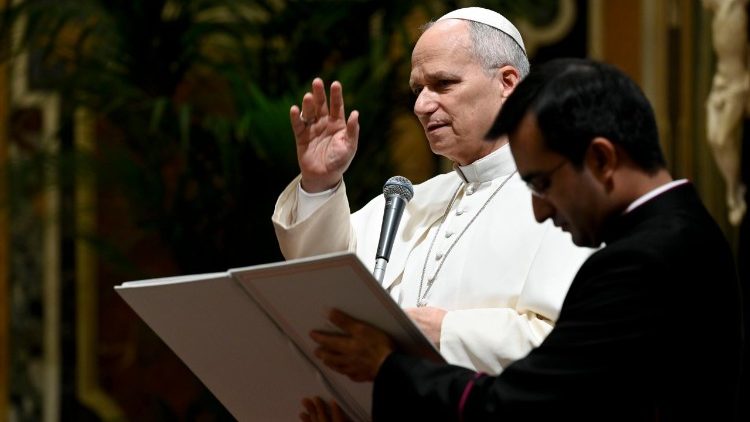
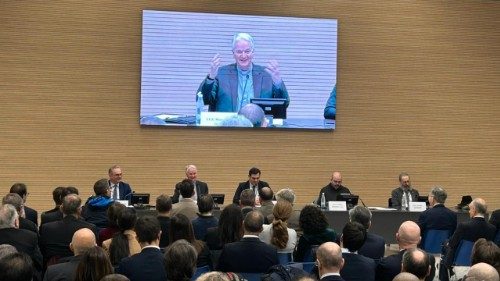
Vatican, Mar 3, 2026: Pope Leo on Monday met representatives of the Theological Faculty of Puglia and the Theological Institute of Calabria at the Vatican, stressing that theology must serve the Church’s mission of evangelisation, deepen understanding of the mystery of faith, and resist any temptation to turn backward.

“Theology serves the proclamation of the Gospel; therefore it is an integral and fundamental part of the Church’s mission.”
Addressing the delegation, he reflected on their formation programs and urged them to engage in theological work with depth and in collaboration, moving forward together in shared responsibility.




Referring to the geographical position of Puglia and Calabria along the sea, Pope Leo recalled how the late Pope Francis spoke to the writers of La Civiltà Cattolica in 2017, urging them: “Remain on the open sea. The Catholic must not be afraid of the open sea; he must not seek the shelter of safe harbors.”
Pope Leo emphasised the continued relevance of this mindset, especially in today’s contexts where faith must be proclaimed and inculturated. He clarified that theological study is not merely about acquiring knowledge to meet academic requirements, but about undertaking a bold journey—venturing courageously into deeper waters.
A Twofold Movement
According to the Pope, this journey unfolds in two complementary directions.
“On the one hand,” he said, “it is a path of descending into the depths, probing the abysses of the mystery of God and the various dimensions of the Christian faith.”
“On the other hand,” Pope Leo continued, “it is a putting out into the deep in order to go beyond, to explore other horizons and thus to find new forms and new languages in which to proclaim the Gospel in the different situations of history.”
He reiterated what he described as a crucial point: “theology serves the proclamation of the Gospel; therefore it is an integral and fundamental part of the Church’s mission.”
Formation for All
Within this framework, Pope Leo reminded his listeners that theological formation is not reserved for a select group of experts but is a vocation extended to everyone. Its purpose is to help each person grow in understanding the mystery of faith and acquire the necessary tools to carry forward, with zeal and perseverance, the cultural and social mediation of the Gospel.
He also drew attention to the significant journey of unity underway in their regions, noting the integration of institutes and formation paths that previously functioned independently. He described this collaboration as an important synergy and a true historical development, one in which they are key participants. This process fosters communion among dioceses, helps move beyond former local rivalries, and encourages an ecclesial journey characterised by unity and fraternity.
Moving Ahead, Not Backward
The Pope explained that this path enables the development of a shared intellectual vision and greater alignment in addressing pastoral challenges and evangelisation needs.
He therefore urged the theologians “to do theology together.” He stressed that formation oriented toward Gospel proclamation can only happen in community—venturing onto the open sea not as isolated individuals but as companions.
Such an undertaking, he noted, requires stepping beyond comfort zones and moving past territorial and ecclesial limitations. It calls for encounter, exchange, attentive listening, dialogue, and communion among Churches that allows for the sharing of resources, skills, and charisms.
Through collaborative theology, intellectual, spiritual, and pastoral perspectives expand and intersect. This generates shared viewpoints and fosters a more incarnational ecclesial presence within local contexts, creating opportunities to renew expressions and language of faith according to real-life circumstances.
A Laboratory for Synodal Formation
Pursuing theology together, the Pope said, will reveal their institutions as formative environments preparing future priests and pastoral workers to live ecclesial relationships in a synodal manner. In this style, various ecclesial subjects, ministries, and charisms complement one another, overcoming tendencies toward isolation and enabling a more effective engagement with contemporary social and cultural questions.
While acknowledging the region’s rich historical and religious heritage, the Pope noted that significant social challenges remain. Issues such as unemployment, emigration, and various forms of oppression, slavery, and injustice demand renewed awareness and courageous commitment from all.
A Call to Persevere
In conclusion, Pope Leo underscored that theological formation helps cultivate critical and prophetic thinking. It represents a cultural investment in the future and has the capacity to counter attitudes of resignation and indifference.
“I encourage you to carry forward this project with enthusiasm, with determination and without allowing yourselves to be seduced by the temptation to turn back.”
He ended by inviting those present to envision an academic community where candidates for ordained ministry, consecrated men and women, and lay faithful are formed together—helping Christian communities become authentic signs of the Gospel and places that nurture hope.
Courtesy: Vatican News
© 2026 CATHOLIC CONNECT POWERED BY ATCONLINE LLP