- 29 April, 2026

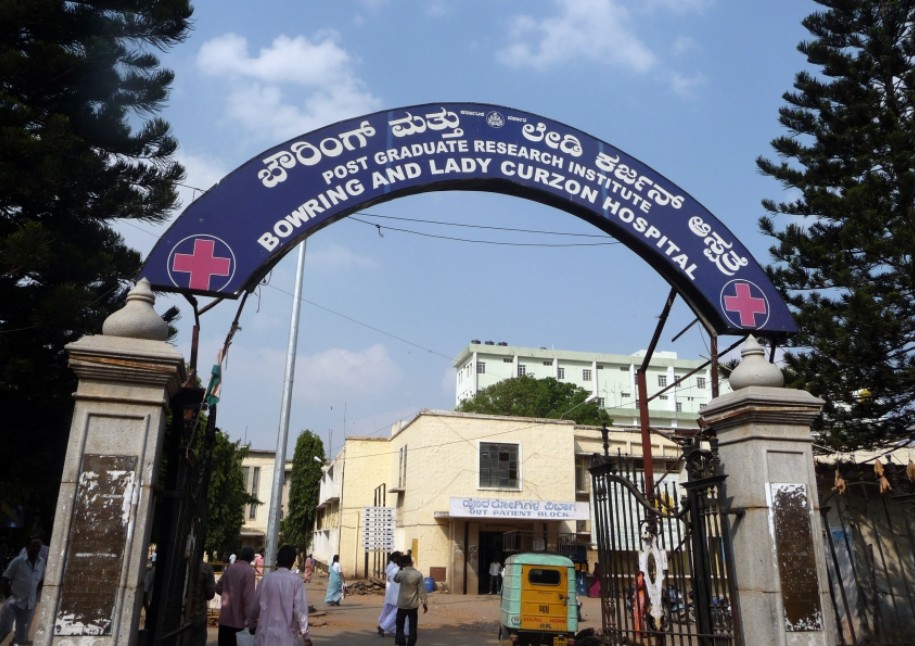
Bengaluru, April 29, 2026: A tragic incident struck Bowring and Lady Curzon Hospital after heavy rains lashed Bengaluru, leading to the collapse of a compound wall that claimed at least seven lives, including children. The incident, which occurred amid severe weather conditions and flooding across the city, has raised urgent concerns about infrastructure safety, especially in areas surrounding major public institutions.

According to reports, relentless rainfall weakened sections of the wall near the hospital premises, causing it to give way suddenly. Victims were reportedly caught off guard, with some seeking shelter nearby when the collapse occurred. Emergency services rushed to the site, and rescue operations were carried out amid difficult conditions, with debris and waterlogging complicating efforts. Authorities have since launched investigations into the structural integrity of the wall and the circumstances that led to the tragedy.
The incident has cast a shadow over one of the city’s most historic and significant healthcare institutions. Established in 1867–68, Bowring Hospital is among the oldest public hospitals in Bengaluru. It was named after Lewin Bentham Bowring, who served as the Chief Commissioner of Mysore during the British era. Originally built as a 104-bed men’s hospital on Lady Curzon Road, it served as the only civil medical institution in Bangalore until 1890.


In the late 1890s, the adjoining Lady Curzon Hospital was established to cater specifically to women and children. Named after Lady Victoria Curzon, the hospital complemented Bowring’s services, and over time the two institutions merged to serve the growing population of the Shivajinagar area.
Historically, Bowring Hospital has played a crucial role in public health. It was actively involved in treating patients during the 1898 plague outbreak and has continued to serve the city through major crises, including the COVID-19 pandemic. Architecturally, it was modeled on the Lariboisière Hospital in Paris, and by the 1920s, it had expanded to include eleven wards with over 100 beds.
Over the decades, the hospital evolved into a major healthcare center. Today, it functions as a key teaching hospital affiliated with the Shri Atal Bihari Vajpayee Medical College and Research Centre and operates under the Government of Karnataka. It serves as a tertiary care facility, handling more than 2,000 outpatients daily and providing essential medical services to thousands of residents.
The recent wall collapse, however, highlights the vulnerabilities that persist even around long-standing institutions. Questions are being raised about maintenance, urban planning, and the impact of extreme weather events on aging infrastructure. Civic authorities have promised accountability and immediate action to prevent similar incidents in the future.
As Bengaluru mourns the loss of innocent lives, the tragedy serves as a stark reminder: even institutions that have stood strong for over a century must continually adapt to present-day challenges. The legacy of Bowring Hospital is one of service and resilience—but ensuring safety around such landmarks is now an equally urgent responsibility.
By Catholic Connect Reporter
© 2026 CATHOLIC CONNECT POWERED BY ATCONLINE LLP