- 29 April, 2026

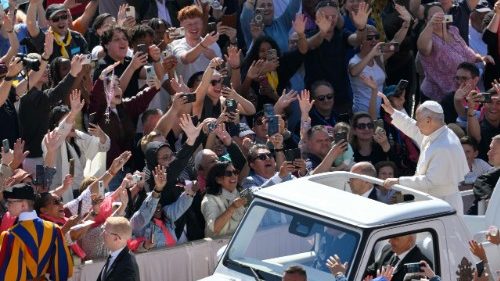
Vatican, April 29, 2026: During his weekly General Audience, Pope Leo XIV reflected on key moments from his recent Apostolic Journey to Algeria, Cameroon, Angola, and Equatorial Guinea, which took place from April 13 to 23.

“I thank the Lord for granting me the opportunity” to undertake an Apostolic Journey across four African countries and “to experience it as a message of peace at a time in history marked by wars and serious and frequent violations of international law,” Pope Leo XIV said during the Wednesday General Audience in St. Peter’s Square on April 29.
Pope Leo visited Algeria, Cameroon, Angola, and Equatorial Guinea from April 13 to 23, where he followed in the footsteps of St. Augustine, appealed for peace in regions marked by tension, and was welcomed by people with singing, dancing, and cheering.


“I cannot forget what happened in the prison in Bata, in Equatorial Guinea,” the Pope said in his catechesis, referring to one of the most striking moments of his journey.
The Pope highlighted that he undertook the visit as a “Shepherd, to meet and encourage the people of God.”
For the people of Africa, the Pope said the visit was “a chance to make their voices heard, to express the joy of being God’s people and the hope for a better future, of dignity for each and every one."
“I am happy to have given them this opportunity, and at the same time I thank the Lord for what they have given me, an inestimable treasure for my heart and my ministry,” he said, expressing gratitude to the civil authorities and religious and Church representatives who welcomed him.
Algeria: Crossing and strengthening bridges
Pope Leo XIV’s first stop was Algeria, where he followed in the footsteps of his spiritual father, St. Augustine, and met with the minority Catholic community as well as representatives of other religions.
“I found myself, on the one hand, revisiting the roots of my spiritual identity and, on the other, crossing and strengthening bridges that are very important for the world and the Church today: the bridge with the very fruitful age of the Church Fathers; the bridge with the Islamic world; and the bridge with the African continent,” the Pope explained.
He noted that his time in the country demonstrated “the world that it is possible to live together as brothers and sisters, even of different religions, when we recognise ourselves as children of the same merciful Father.”
He also stressed that St. Augustine remains an important role model not only for Christians, as “he is a master in the search for God and for truth.”
Populations thirsting for justice
The Pope then travelled to the predominantly Christian nations of Cameroon, Angola and Equatorial Guinea, where he said he received a warm and festive welcome.
He also emphasised that in these countries he encountered populations “thirsting and hungry for justice,” and came to affirm their faith while proclaiming that “blessed are the poor, blessed are the meek, blessed are the peacemakers.”
Cameroon: Keep alive the spirit of unity to guide future choices
In Cameroon, the Pope said he was able to “reinforce the call to work together for reconciliation and peace.” He particularly highlighted his visit to Bamenda, an area in the Anglophone region affected by hostilities linked to separatist groups, where he encouraged people to pursue peace.
He also observed that “Cameroon is known as ‘Africa in miniature,' in reference to the variety and richness of its natural environment, its resources.”
However, he added, “we can also interpret this expression to mean that the great needs of the entire continent are found in Cameroon: the need for a fair distribution of wealth; the need to provide space for the young, overcoming endemic issues; that of promoting integral and sustainable development, countering the various forms of neo-colonialism with far-sighted international cooperation.”
He expressed hope “that the spirit of unity which was evident during” his visit “may be kept alive and guide future choices and actions.”
Angola: A hope that withstands the empty promises of the powerful
In Angola, the Pope noted that despite the country’s bloody civil war following independence in 1975, “in the crucible of this history, God has guided and purified the Church, increasingly converting her in the service of the Gospel, human promotion, reconciliation, and peace.”
“A free Church for a free people!” he emphasised.
He also recalled experiencing “the beating heart of the Angolan people” at the Mamã Muxima Marian Shrine, where he was struck by the participation and joy of people of all ages at the various events.
He said he saw in them “the foundation of a hope that withstands the disappointments caused by ideologies and the empty promises of the powerful.”
He underlined, however, that “this hope demands concrete commitment” and said the Church has a responsibility to recognise and promote the rights of all.
The Pope also assured the Catholic Church’s readiness to continue supporting these efforts, especially “in the field of healthcare and education.”
Equatorial Guinea: Genuine signs of the Kingdom of God in a prison
The Pope then turned to the final leg of his Apostolic Journey, recalling a particularly powerful moment during his visit to a prison in the north-western city of Bata.
“The prisoners sang at the top of their voices a song of thanksgiving to God and to the Pope, asking him to pray ‘for their sins and their freedom’. I had never seen anything like it,” he said.
“And then they prayed the ‘Our Father’ with me in the pouring rain. A genuine sign of the Kingdom of God!”
Later the same day, still in the rain, the Pope met young people in the city’s stadium in “a celebration of Christian joy, with moving testimonies from young people who have found in the Gospel the path to free and responsible growth.”
“This celebration culminated in the Eucharistic celebration the following day, which worthily crowned the visit to Equatorial Guinea, as well as the entire Apostolic Journey,” the Pope concluded.
Courtesy: Vatican News
© 2026 CATHOLIC CONNECT POWERED BY ATCONLINE LLP