- 31 July, 2026
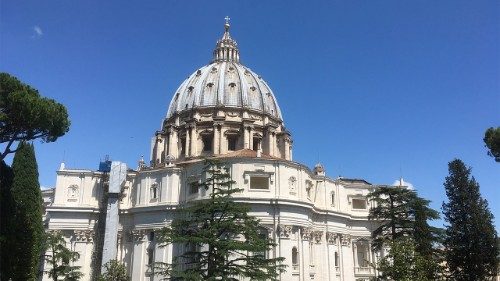
Vatican, July 31, 2026: On Thursday, 31 July, the Memorial of Saint Ignatius of Loyola, Pope Leo XIV signed the new Fundamental Law of Vatican City State. As explained in its preamble, the law responds to the need “to take account of new requirements of governance and of several important legislative changes introduced in recent years.” It comes into force immediately, replacing the previous Fundamental Law that had been in effect since 13 May 2023.


New provision regarding the presidency of the Pontifical Commission
Issued by Pope Leo XIV at the beginning of his pontificate, the new Fundamental Law confirms and incorporates these amendments, which relate to the State’s legislative, executive and judicial functions. Regarding the legislative function in particular, it brings together in a single legislative text the amendment introduced by the Motu Proprio of 19 November 2025 concerning the presidency of the Pontifical Commission for Vatican City State, the body responsible for exercising both the legislative and executive functions.
The 2025 Motu Proprio and the new Fundamental Law


On that occasion, the Pope repealed Article 8, paragraph 1, of the previous Fundamental Law of Vatican City State, which had stated that only cardinals could serve as President of the Pontifical Commission. The position is now held by Sister Raffaella Petrini, who also serves as President of the Governorate. Article 8 of the new Fundamental Law now states: “The Pontifical Commission is composed of Cardinals and other Members, including the President, appointed by the Supreme Pontiff for a five-year term.”
Executive and judicial functions
With regard to the executive function, the new law reaffirms the role of the Governorate, whose organisational structure supports the proper mission of the State and serves the Successor of Peter, to whom it is directly accountable. It also provides greater clarity on the respective responsibilities of the President and the Secretary General, while highlighting their collaborative relationship.
Regarding the judicial function, Article 22, paragraph 1, explicitly reaffirms that the Law establishes the legal framework governing the judicial bodies of the Judicial System. It also notes that the significant reforms introduced in recent years ensure that the law fully guarantees the proper administration of justice.
A law that gives the State its “constitutional identity”
The new Fundamental Law follows a carefully structured approach and, like the earlier versions, is intended, as stated in the preamble, “to give constitutional identity to Vatican City State,” its powers and the exercise of the functions deriving from them. It remains the foundation and principal point of reference for all other legislation of the State, while reaffirming the distinctive character and autonomy of the Vatican legal order.
The mission of the Governorate
The preamble also reiterates “the role of the Governorate, which contributes to the proper mission of the State and is at the service of the Successor of Peter, to whom it is directly accountable.”
As in the past, the preamble concludes, “the governing bodies and all those who, in positions of responsibility and animated by a true ecclesial spirit, carry out their stable service for the State, are entrusted with the exercise of all the powers pertaining to the territory defined by the Lateran Treaty and to the buildings and areas where institutions of the State or of the Holy See operate and where, by virtue of international law, personal and functional guarantees and immunities are in force.”
Courtesy: Vatican News

© 2026 CATHOLIC CONNECT POWERED BY ATCONLINE LLP