- 02 July, 2026

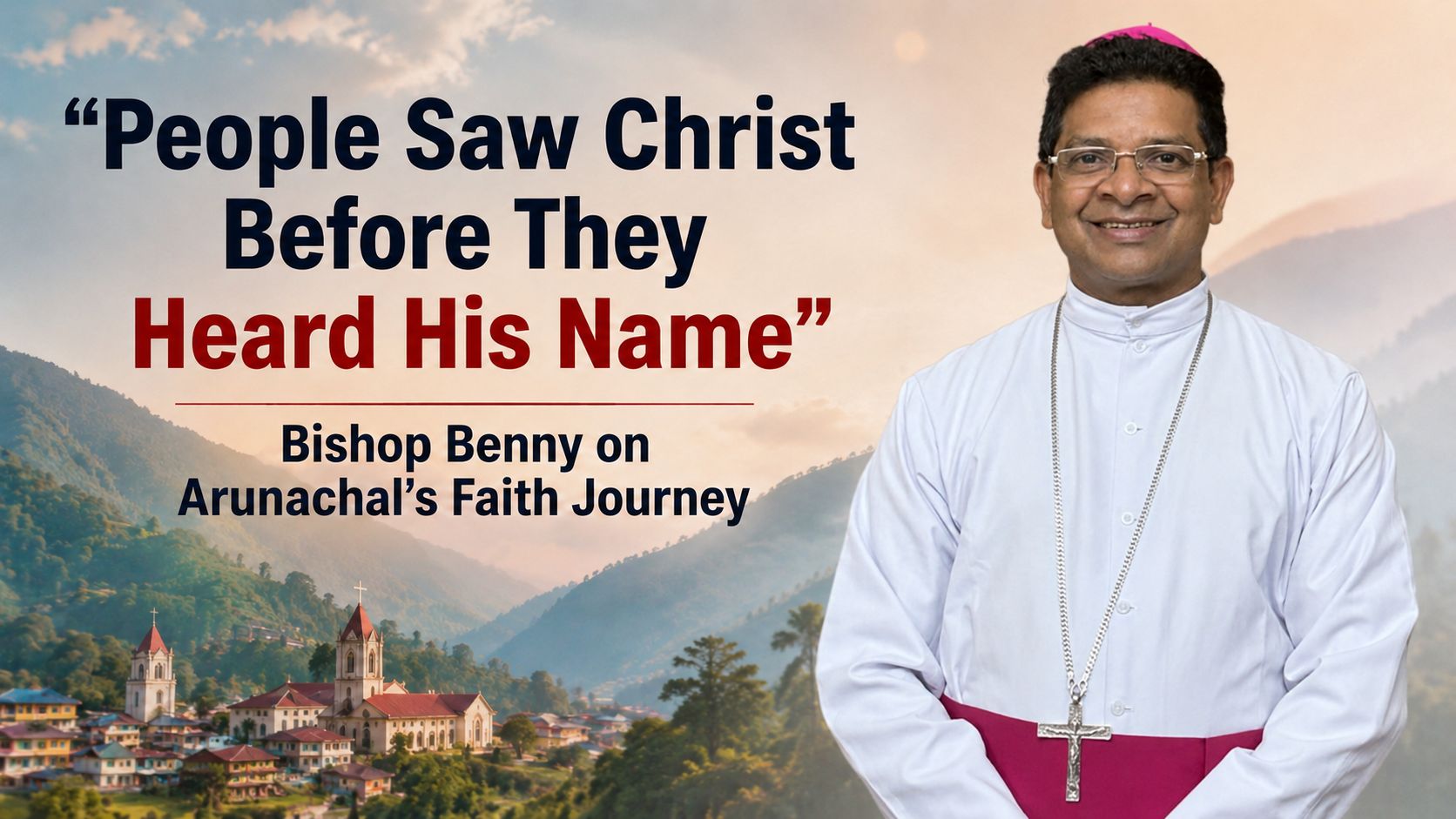
July 2, 2026: In just five decades, the Church in Arunachal Pradesh has undergone a remarkable transformation. Today, Christians make up around 40–50 per cent of the state's population. Having served as Bishop of Itanagar for the past three years, Bishop Benny Varghese Edathattel reflects on the Church's growth, the challenges of serving remote communities, and the role of culture, education and ordinary believers in shaping Arunachal's journey of faith.
Q. Arunachal Pradesh has witnessed remarkable growth in the Catholic faith over the decades. What, in your view, has been the driving force behind this vibrant journey of faith?
If we look at the history of the Catholic Church in Arunachal, we find that it is just 50 years old. In the last five decades, the Church has grown from zero to almost 40 - 50 per cent. The first baptisms in the Catholic faith took place in 1963 with the baptism of three young boys from the village of Hapoli under Ziro Parish. The baptism took place in the Diocese of Tezpur. In the span of these five decades, we can say the Church has grown in leaps and bounds and has become one of the fastest-growing Christian communities in India and Asia.
This remarkable growth has three or four key factors. The first is the witness of life. People did not encounter Christianity merely through words but through the life witness of their neighbours. After becoming Christians, they continued to live a credible witness of the faith wherever they were. People saw Christ before they heard His name.


The tribal community is able to identify itself with a supernatural reality called God. When they experience the mercy of God through the simple gestures of Christian missionaries, they are able to identify the person of Christ in their lives.
The second factor is the inculturation of faith. The Church did not ask the tribal community to stop its traditional way of life. Rather, the Church incorporated local languages into the liturgy, hymns and the Bible. Tribal history, symbols, festivals and value systems were acknowledged and respected. Christianity continues to hold tribal culture in high esteem while nurturing the growth of the community.
The third reason is education and healthcare. People have moved from darkness into light through education and healthcare initiatives. These played a very important role in the growth of the Christian faith in Arunachal Pradesh.
Lastly, the most important factor is the role of the laity. Lay people became active witnesses to their faith. For decades, young people and newly baptised Catholics played an important role in strengthening and supporting faith communities across villages. Even today, they continue to lead the Church, and I find that the laity play an important role in strengthening the faith communities of our state.
(CLICK HERE to follow Catholic Connect for regular News and Content)
Q. Spreading the Good News in Arunachal Pradesh often comes with unique social, cultural and geographical challenges. What are some of the principal obstacles the Church continues to face in carrying out its mission?
The realities of Arunachal Pradesh present unique challenges for pastoral ministry. Like many dioceses across the world, we face various difficulties, but as Bishop of Itanagar for the past three years, one of the most significant challenges I have encountered is the vast geographical spread of the diocese, its isolation and its difficult terrain. Arunachal Pradesh is a vast state bordered by Bhutan, China and Myanmar. There are two dioceses in the state—the Diocese of Itanagar and the Diocese of Miao. As Bishop of Itanagar, I look after 19 civil districts covering about 59,000 square kilometres. Travelling across the diocese can take several days, with some parishes requiring up to three days of travel by road.
Geographical isolation is a major challenge. While we can reach parishes by vehicle, many villages still require walking for one or even two days. The commitment of priests and laity keeps the mission moving forward. Priests and lay faithful are deeply committed to serving communities in remote and underserved areas.
Another challenge is cultural pressure. Some people claim that Christianity has caused the loss of tribal identity. This is not true. Christians have upheld the culture of our people. We are not there to destroy culture but to give a Christian meaning to cultural practices and orient people towards the Divine.
A third challenge is the shortage of local clergy and religious. In nearly five decades, we have just two local priests and 24 local religious sisters. In a state much larger than Kerala, this presents a significant challenge for sustaining and expanding the mission. As a result, many priests are overburdened with sacramental ministry and are unable to reach every village regularly. Some villages are visited once a month, others once a year, and some even once in two years.
Education is another area that requires continued attention, particularly in remote regions where access remains limited. The migration of young people to towns is another challenge. When I visit villages, I mostly find older people remaining. While young people naturally move in search of better opportunities and education, development must also reach the villages. Otherwise, I foresee an identity crisis in village communities in the future. Poverty is also a major concern. Many districts lack adequate schools, roads and hospitals, which become stumbling blocks to growth and development.
Q. What are some of the ways the Church balances respect for indigenous traditions while proclaiming the Gospel?
The Church is not here to abolish existing systems. Christianity is not about abolishing but fulfilling. As Jesus says in the Gospel of Matthew, “I have come not to abolish but fulfil.”
Christianity seeks to perfect what already exists and to reach out to people through education, social service and development. We respect village systems and seek only to perfect whatever is not in the right place in society through the Word of God.
We are not here to antagonise anyone. We are here to love people. Missionaries are present to perfect systems through love and service. For example, before the coming of Christianity, many people struggled with alcoholism. The local drink called Apung was widely consumed. With the coming of Christianity, many have given it up. Likewise, a culture of revenge has gradually been replaced by love.
The Church promotes respect for elders and encourages young people to participate in decision-making and community life. Another important aspect is accompanying people without being judgemental. The moment we become judgemental, we lose our spirit. We must look upon people as children of God and do whatever is possible for the good of society. There is no use cursing the darkness. If we can light even a small ray of light and dispel the darkness, that is the right way to approach society.
Q. The faith of the people in Arunachal Pradesh is often described as dynamic and deeply rooted. What lessons can the wider Church in India learn from the missionary spirit and witness of the faithful in your diocese?
Though Christianity in Arunachal is only about 50 years old, it offers valuable lessons to the 2,000-year-old Church in India. The first lesson is that mission begins with martyrdom. The earliest missionaries who entered Arunachal Pradesh faced great hardships, and some ultimately gave their lives in service of their mission. The first martyrs of Arunachal Pradesh were the Servants of God, Fr. Nicolas-Michel Krick and Fr. Augustin-Étienne Bourry. After their martyrdom, there was no sustained mission for almost 300 years. The Catholic Church began establishing itself in 1963. Many early Catholics faced hardship, ostracism and persecution, yet the Church continued to grow.
The second lesson is the role of the laity. The real missionaries are the laity. We are not clericalising the mission. Lay people have been empowered to carry the mission forward. The bishops of Northeast India envisioned a Church that is missionary in nature. Another lesson is inculturation. Respect for local culture is reflected in church architecture, vestments, music and dance used in the liturgy.
As Tertullian said, “The blood of the martyrs is the seed of the Church.” The story of Arunachal continues to inspire faith communities across India today. We continue to serve people through our witness of life, educational institutions, hospitals, dispensaries and social development initiatives. We are blessed with 19 Christian MLAs, of whom four or five are Catholics. As Christians, we are not going to proselytise anyone because faith is a personal choice.
Q. Looking ahead, what are your hopes and priorities for the mission of the Church in Arunachal, especially in nurturing young people and forming future leaders?
As the shepherd of the Diocese of Itanagar, my priority was to go to the peripheries and get to know my people. During the first six months of my appointment as bishop, I travelled about 60,000 kilometres and visited all the parishes. Listening to priests, religious and lay faithful helped me understand the realities on the ground. My first priority is to strengthen the faith communities—not just more Catholics, but better disciples. We need deeper faith formation and credible Christians who can live and communicate their faith with conviction.
This includes greater knowledge of Scripture, deeper love for the Eucharist and regular access to the sacraments. Second, we are called to be a missionary Church. By the Jubilee of 2033, I hope every village in Arunachal Pradesh will have had an opportunity to encounter the values and message of the Gospel. That is my dream.
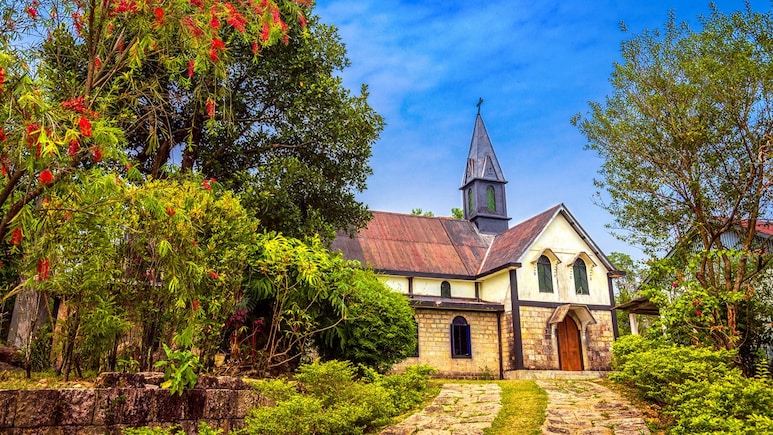
At present, my diocese has 533 village communities with village churches. Around 300 churches are in good condition. I want every community to have a decent place of worship where people can worship God in spirit and faith.
Another priority is caring for young people who are moving away from villages and helping them remain connected to God and the Church. Acts 1:8 reminds us that every baptised Christian is called to be a witness of the Risen Christ through the threefold mission of priest, prophet and king. To be a priest is to strive for holiness. To be a prophet is to stand for truth and justice. To be a king is to care for others. As Christians, we are called to care for everyone, irrespective of denomination, religion, caste, creed or status. Pope John Paul II said that every Christian is called to be a missionary to the ends of the earth.
I dream that one day the Church in India, across all 174 dioceses, will collaborate together and make a difference in the lives of the tribal communities of Northeast India.
By Catholic Connect Reporter
Read More from Indian Church Leaders:
Archbishop Vincent Aind: The Tribal Church Can Guide India’s Synodal Journey
“The Church Must Learn to Listen Without Fear”: Cardinal Filipe Neri on Synodality in India
“The Church Cannot Remain Silent”: Archbishop Linus Neli on Healing and Hope in Manipur
© 2026 CATHOLIC CONNECT POWERED BY ATCONLINE LLP