- 02 April, 2026

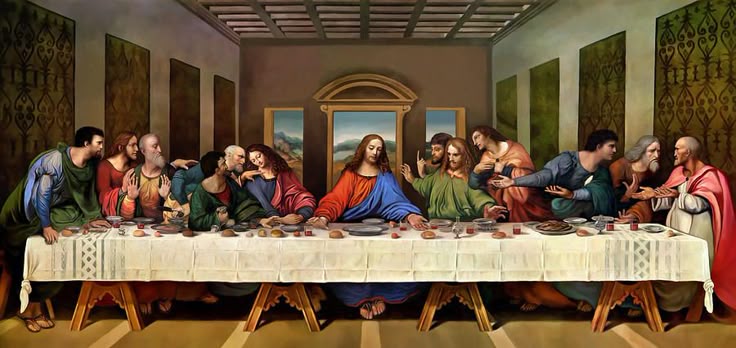
Apri 2, 2026: On the evening of Maundy Thursday, churches across the world recreate a moment that has shaped the very heart of Christian faith—the gathering in the Upper Room. Yet, beyond the familiar rituals of bread, wine, and the washing of feet lies a quieter, more intriguing story: a story of secrecy, vulnerability, and a love that refuses to exclude.

The Gospel narratives offer a subtle but striking detail. The location of the Last Supper was not made known in advance. Not even the closest disciples—Peter, John, or James—were told where the Passover meal would take place. The path to the Upper Room was revealed only at the last moment, through a set of almost coded instructions: follow a man carrying a jar of water, enter the house he enters, and there prepare the meal.
In a time without modern communication, this careful orchestration was not incidental. It was intentional. Jesus, fully aware of the growing threat around him, chose discretion. The betrayal was already in motion, and yet, it was not allowed to disrupt the divine timing. The hidden location became a quiet safeguard, ensuring that the sacred meal—the institution of the Eucharist—would unfold undisturbed.


At the centre of this unfolding drama stands the figure of Judas. While suspicion lingered in the room, clarity did not. When Jesus told him, “What you are about to do, do quickly,” the others remained unaware, assuming ordinary errands tied to his role as keeper of the common purse. The tension was real, yet it was held in silence—known fully only to Jesus.
And still, what followed defies human instinct.
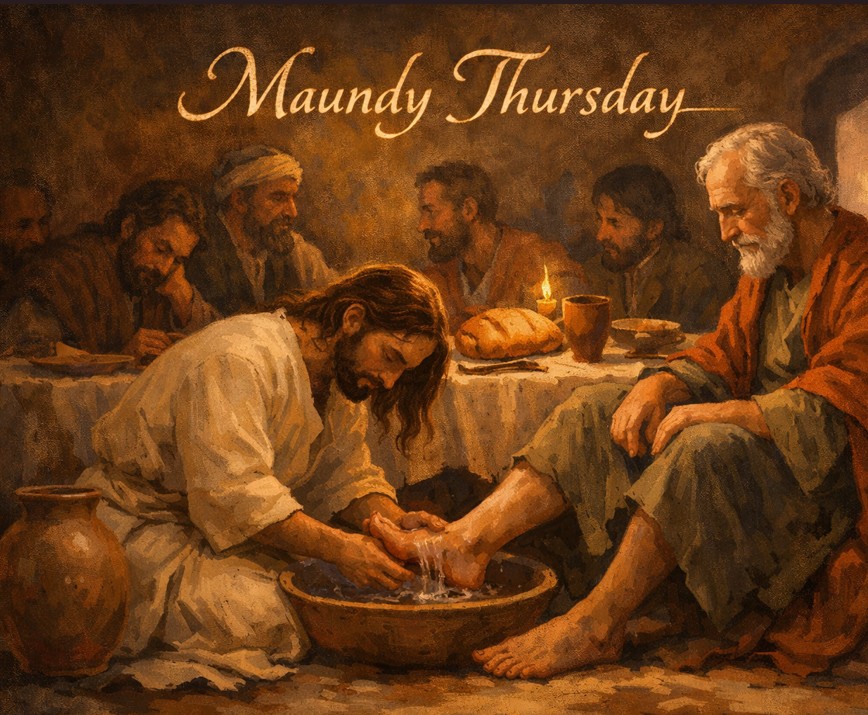
In that same room, with betrayal already breathing down his neck, Jesus knelt to wash the feet of his disciples. Not selectively. Not conditionally. He washed them all—Peter, who would soon deny him, and Judas, who would hand him over. The act was not merely symbolic; it was disarming. It revealed a love that does not calculate worthiness, a humility that does not retreat in the face of hurt.
This is where Maundy Thursday unsettles us.
In a world quick to defend, to retaliate, and to draw boundaries, the Upper Room offers a radically different posture. Jesus does not expose Judas publicly, nor does he strip him of responsibility or cast him out. There is no dramatic rejection, no assertion of moral superiority. Instead, there is restraint, dignity, and a quiet invitation—an opening for conversion, for metanoia.
The silence of that moment speaks volumes. It invites reflection not on Judas alone, but on each of us.
How often do we justify our anger, our fractured relationships, or our quiet resentments? How easily do we assume the role of the wronged, overlooking our own capacity to wound? The Maundy Thursday narrative gently but firmly turns the question inward: Is it not I who contributes to the breaking of trust, the erosion of peace, the distancing of hearts?
Equally striking is what Jesus does not do. He does not curate his circle, excluding the imperfect to preserve harmony. The table remains open, even to the one who will betray him. It is a table of inclusion, not because all are faithful, but because all are invited to transformation.
This is the enduring invitation of Maundy Thursday.
It is not merely a remembrance of a sacred meal, but a call to embrace a way of being—one marked by humility, compassion, and the courage to love without guarantee. It asks us to acknowledge our own frailty without despair and to extend mercy without hesitation.
In the hiddenness of the Upper Room, a profound truth is revealed: even in the shadow of betrayal, love chooses to remain.
By Sr. Molly Fernandes, SFN



© 2026 CATHOLIC CONNECT POWERED BY ATCONLINE LLP