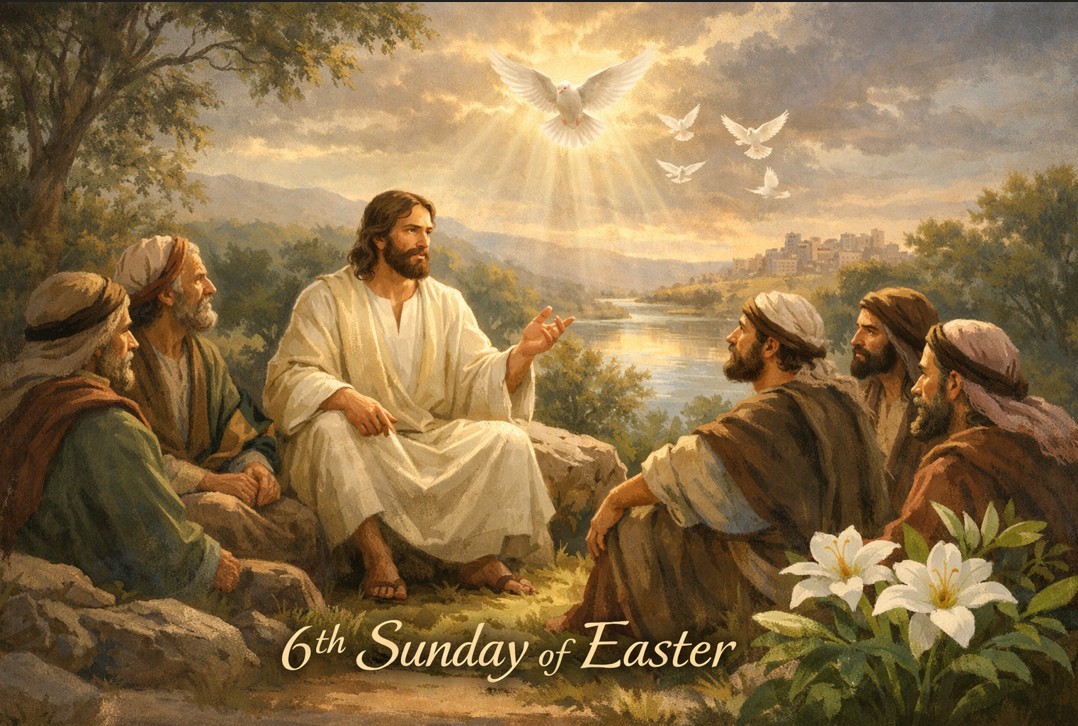
Vatican City, May 10, 2026: The 6th Sunday of Easter draws the Catholic faithful deeper into the heart of Christ’s teachings—love, peace, and the promise of the Holy Spirit. As the Easter season moves closer to Pentecost, the Church reflects on Jesus’ final words to His disciples, preparing believers to live with courage, unity, and enduring faith in a troubled world.

Significance of the 6th Sunday of Easter
This Sunday focuses on Christian love and the promise of divine peace.
- It emphasizes Jesus’ commandment to love one another as He loves us.
- The Gospel highlights the coming of the Holy Spirit, the Advocate and Helper.
- It teaches that true peace comes not from the world, but from Christ.
- In Catholic teaching, it reflects the call to remain faithful through love, obedience, and trust in God.
Historical Origins of the 6th Sunday of Easter
The roots of this celebration go back to the earliest centuries of Christianity.

- It is part of the Easter season (Eastertide), the Church’s 50-day celebration of the Resurrection.
- Early Christians used this period to prepare newly baptized believers for life in the Church.
- Over centuries, liturgical readings developed to focus on the Holy Spirit and Christian unity.
- The Sunday remains an important stage in the Church’s spiritual preparation for Pentecost.
Relevance in the Catholic Church Today
The message of this Sunday continues to speak powerfully to modern believers.
- It reminds Catholics that love is the foundation of Christian discipleship.
- The liturgy encourages believers to seek Christ’s peace amid anxiety and conflict.
- It highlights the role of the Holy Spirit in guiding the Church and individual lives.
- It challenges the faithful to build communities rooted in compassion, unity, and forgiveness.
Interesting Stories and Biblical Events
This Sunday contains some of Jesus’ most comforting teachings.
- In the Gospel, Jesus promises to send the Holy Spirit to teach and guide His followers.
- He tells the disciples: “Peace I leave with you; my peace I give to you.”
- The readings from Acts often highlight the early Church resolving conflicts through prayer and unity.
- The liturgy reveals how the Holy Spirit strengthens believers to continue Christ’s mission.
Insight: The peace Jesus offers is not temporary comfort—it is a lasting peace rooted in God’s presence and love.
When It Became Part of the Catholic Church
The 6th Sunday of Easter developed through the Church’s liturgical traditions.
- Easter celebrations have existed since apostolic times.
- As the liturgical calendar evolved, Sundays during Eastertide received specific themes and Gospel readings.
- This Sunday became associated with themes of love, peace, and preparation for Pentecost.
- Today, it remains a central part of the Catholic Easter journey worldwide.
(CLICK HERE to follow Catholic Connect for regular Catholic Content)
Other Interesting Facts About the 6th Sunday of Easter
- It often focuses on the promise of the Holy Spirit, anticipating Pentecost Sunday.
- In many countries, this period includes prayers for Church unity and evangelization.
- The Gospel readings frequently come from Jesus’ “Farewell Discourse” in the Gospel of John.
- The theme of divine peace is central throughout the liturgy.
- It reminds believers that Christian love is not emotional alone—it requires sacrifice, faithfulness, and action.
The 6th Sunday of Easter invites believers to open their hearts to Christ’s peace and the guidance of the Holy Spirit. It reminds the faithful that love is the defining mark of Christian life and that God continues to walk beside His people, strengthening them for every challenge ahead.
By Catholic Connect Reporter
Reflective Keywords : 6th Sunday of Easter Catholic meaning, Holy Spirit promise explained Catholic, peace of Christ Bible meaning, Easter season Catholic teachings, Jesus farewell discourse reflection, Christian love Catholic Church, preparing for Pentecost Catholic