- 18 September, 2026
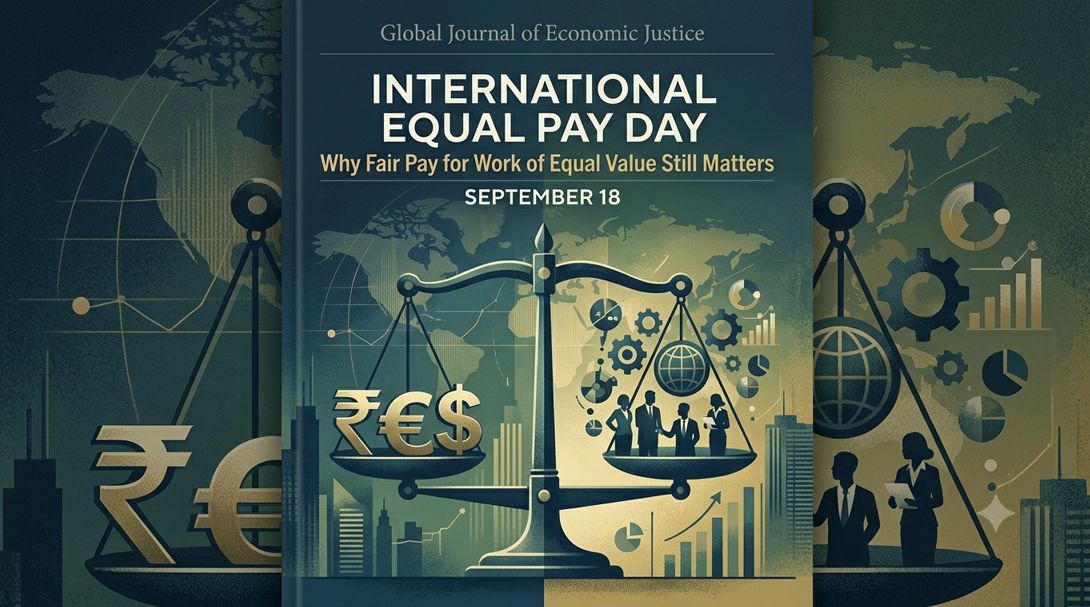
September 18, 2026: Every year, 18 September is observed as International Equal Pay Day, drawing attention to one of the most persistent inequalities in the world of work: the difference between what women and men earn.

The day is not simply about asking whether two people receive the same salary. It highlights a broader principle — equal remuneration for work of equal value — and challenges the economic, social and structural barriers that continue to influence people's earnings.
The issue remains significant. The United Nations estimates that women globally earn around 20 per cent less than men, with progress towards closing the gap remaining slow.

International Equal Pay Day was formally established by the United Nations General Assembly in 2019, which adopted Resolution 74/142 and designated 18 September as an annual international observance beginning in 2020.
The first International Equal Pay Day was marked on 18 September 2020, during a period when the COVID-19 pandemic had exposed and intensified many existing inequalities in employment. The Equal Pay International Coalition (EPIC), led by the International Labour Organization (ILO), UN Women and the Organisation for Economic Co-operation and Development (OECD), organised a global call for action.
However, the campaign for equal pay began long before the international day itself.
A major milestone came in 1951, when the ILO adopted the Equal Remuneration Convention, No. 100. It established the international principle that men and women should receive equal remuneration for work of equal value, without discrimination based on gender.
The principle goes beyond identical jobs. Work of equal value can involve different occupations that require comparable levels of skill, effort, responsibility and working conditions. This is particularly important in addressing occupational segregation, where women may be concentrated in lower-paid sectors or roles.
The gender pay gap is shaped by several interconnected factors. Women continue to carry a disproportionate share of unpaid domestic and care work, which can affect career progression and working hours.
Occupational segregation, limited access to senior positions, discrimination, career interruptions associated with motherhood and a lack of salary transparency can also contribute to unequal earnings.
The consequences extend beyond monthly wages. Lower lifetime earnings can affect savings, pensions, financial independence and economic security.
International Equal Pay Day calls for practical measures rather than awareness alone.
Employers can conduct regular pay-equity audits, introduce transparent salary ranges and use objective criteria for recruitment, promotion and performance assessment. Clear salary structures can make unjustified disparities easier to identify and address.
Governments can strengthen equal-pay legislation, improve enforcement and support policies such as affordable childcare, parental leave and work-life balance. The ILO also highlights pay transparency, collective bargaining and action against workplace discrimination as important tools for narrowing the gap.
International Equal Pay Day is ultimately about more than a figure on a payslip. It is about dignity, opportunity, equality and recognition of the value of work.
The creation of the observance in 2019 and its first marking in 2020 gave the global campaign a dedicated day of visibility, but the underlying struggle is much older. From the ILO's 1951 Equal Remuneration Convention to today's calls for greater transparency, the principle remains clear: a person's gender should not determine the value placed on their work.
As workplaces evolve, closing unjustified pay gaps will require sustained action from employers, governments, workers and society. Equal pay should not remain an aspiration. It should become a normal and measurable feature of a fair world of work.
By Catholic Connect Reporter



© 2026 CATHOLIC CONNECT POWERED BY ATCONLINE LLP