- 11 June, 2026
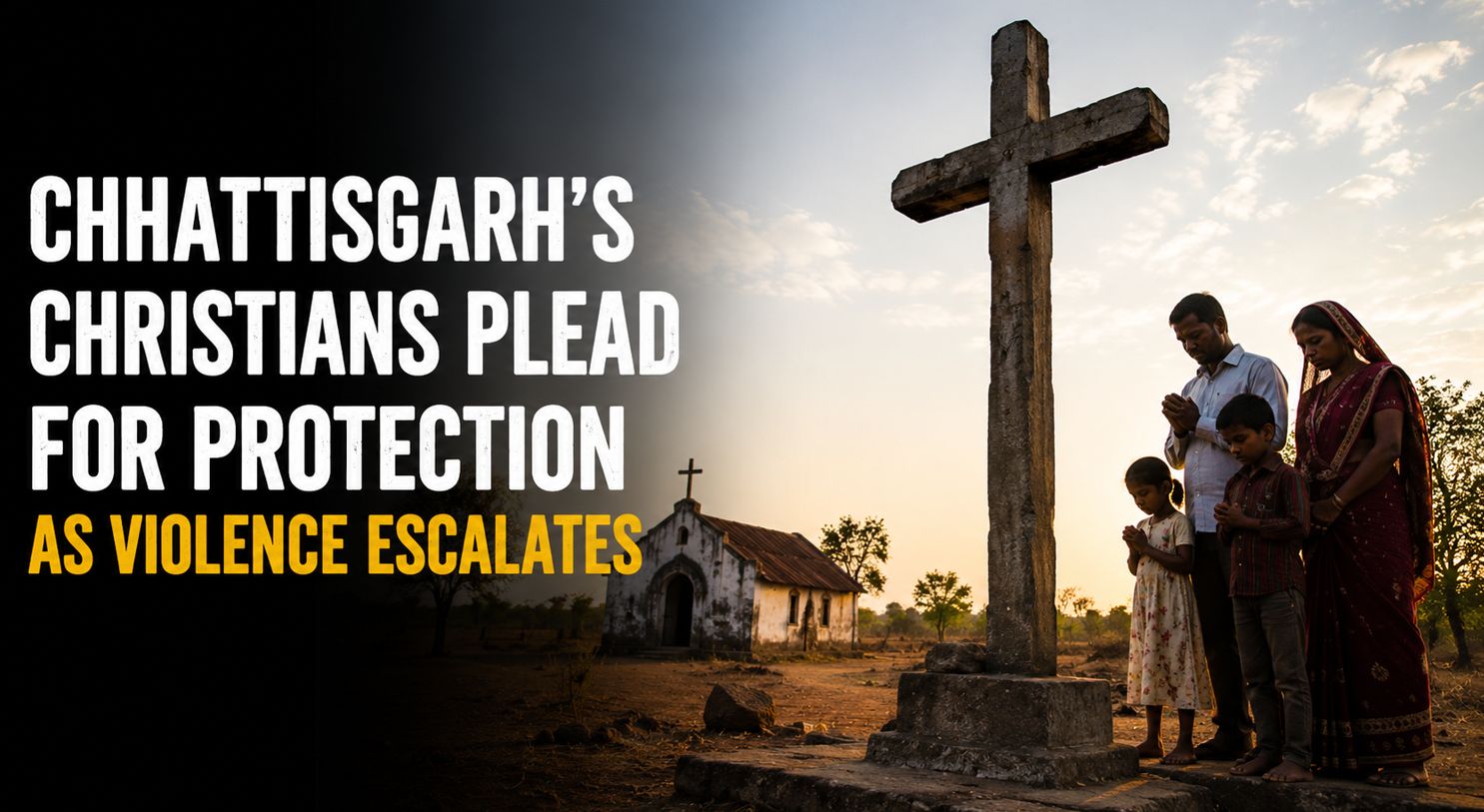
Chhattisgarh , June 10 2026: In Bob Dylan’s timeless protest anthem Blowin’ in the Wind, one haunting question echoes across generations: How many roads must a man walk down before he is called a man? Today, many Christians in India’s central state of Chhattisgarh are asking a similar question. How many attacks, threats and acts of intimidation must they endure before their constitutional rights are fully protected?

A Growing Crisis That India Can No Longer Ignore
The latest incident, which occurred on 31 May 2026 in Sadrapal village of Sukma district, has once again drawn attention to a troubling pattern of violence targeting Christian communities. What began as a peaceful Sunday prayer gathering ended in bloodshed when an armed mob stormed the meeting and assaulted worshippers, leaving dozens injured.
Yet this attack was not an isolated event. It represents the latest chapter in a cycle of hostility that has been steadily intensifying across Chhattisgarh in recent years.


The Roots of the Tension
The origins of the current crisis lie in a combination of religious polarisation, local social tensions and increasing controversy surrounding anti-conversion legislation.
For decades, many Christian communities in Chhattisgarh, particularly among Adivasi and tribal populations, have faced suspicion and accusations of forced religious conversion. While Christian leaders consistently reject such allegations, these claims have often been used to justify social exclusion and public hostility.
Tensions rose significantly after the Chhattisgarh Freedom of Religion Act, 2026, came into force in April this year. The revised law introduced some of the toughest anti-conversion penalties in India, including lengthy prison sentences and severe financial penalties for alleged violations.
Human rights groups and Christian organisations have expressed concern that the law could be misused against minority communities and create an atmosphere where vigilante actions become more common.
Violence in Sadrapal
The events in Sadrapal shocked many observers across India.
Around 70 Christians had gathered peacefully for worship when a mob armed with sticks and traditional weapons reportedly entered the prayer meeting. Witnesses said the attackers targeted worshippers indiscriminately, assaulting men, women and elderly believers.
Among those injured were Pastor Hunga Mandavi and his pregnant wife. Reports indicate that between 25 and 30 Christians suffered injuries, while at least five required urgent hospital treatment.
Local police opened an investigation into the attack. However, Christian advocacy groups have voiced concern about delayed legal action and the absence of publicly available information regarding arrests or prosecutions.
A Pattern of Escalating Hostility
Sadly, Sadrapal is only the latest incident in a longer series of attacks.
In April 2026, Pastor Motu Sodi and his wife were reportedly assaulted with sticks during another attack linked to religious tensions. Community leaders described the injuries as severe and deeply traumatic.
In June 2024, a Christian wedding celebration was allegedly disrupted by a mob that cut electricity supplies, harassed attendees and set parts of the venue ablaze.
Further back, in August 2021, armed groups reportedly stormed a church gathering in Polmi village, attacking worshippers and damaging religious materials.
Several village councils have also issued informal directives demanding that Christians abandon their faith or leave their communities altogether. Such actions have created an atmosphere of fear for many families who simply wish to practise their religion peacefully.
Constitutional Rights Under Pressure
India's Constitution guarantees freedom of conscience and the right to profess, practise and propagate one's religion.
For many Christians in Chhattisgarh, however, the gap between constitutional guarantees and daily reality appears to be widening.
Community leaders report that attacks on churches, prayer meetings and Christian homes have become increasingly frequent. Families often face social boycotts, threats of expulsion from villages and pressure to renounce their beliefs.
Human rights organisations have repeatedly called upon state authorities to ensure that law enforcement agencies respond swiftly and impartially whenever such incidents occur.
The challenge facing India is not merely a religious issue. It is a test of the country's commitment to democracy, pluralism and equal citizenship for all communities.
Calls for Protection and Justice
Christian organisations across India have urged authorities to strengthen protection for vulnerable communities and ensure accountability for those responsible for acts of violence.
Medical assistance has been provided to victims of the Sadrapal attack, while legal aid networks continue to support affected families. Advocacy groups are also calling for transparent investigations and stronger safeguards against mob violence.
Many observers argue that effective policing, prompt prosecution and community dialogue are essential if trust is to be restored.
Hope Beyond Fear
Despite the pain and uncertainty, many Christians in Chhattisgarh continue to respond with remarkable resilience.
Church leaders, tribal communities and ordinary believers have repeatedly called for peace rather than retaliation. Their message remains one of reconciliation, justice and coexistence.
India's strength has always been found in its extraordinary diversity. Protecting that diversity requires courage from political leaders, law enforcement agencies, civil society and citizens alike.
The events in Chhattisgarh should serve as a wake-up call. Every Indian, regardless of faith, deserves the freedom to worship without fear.
There is still hope that dialogue can overcome division, that justice can prevail over violence, and that constitutional freedoms can be upheld for all.
The road ahead may be challenging, but a peaceful and democratic future remains possible if authorities act decisively and if communities choose understanding over hostility. For the Christians of Chhattisgarh, that hope remains worth holding onto.
Courtesy : Christian Solidarity International
© 2026 CATHOLIC CONNECT POWERED BY ATCONLINE LLP