- 11 June, 2026

Colombo , June 10 2026: As of June 2026, the long-running investigation remains in the spotlight following the February arrest of former State Intelligence Service chief retired Major General Suresh Sallay and his subsequent hunger strike while in custody, developments that have renewed public attention on the search for truth and accountability.


A Nation Shattered on Easter Morning
On 21 April 2019, Easter Sunday dawned as a day of joy and celebration for Christians across Sri Lanka. Churches were filled with families dressed in their finest, gathering to celebrate the Resurrection of Christ. Within moments, that joy was transformed into horror.
A series of coordinated suicide bombings tore through three churches and several luxury hotels, killing more than 260 people and injuring hundreds more. Worshippers attending Easter Mass in Colombo, Negombo and Batticaloa became victims of one of the deadliest terrorist attacks in the nation’s modern history. The bombings left a scar not only on the Catholic community but on the entire country.


For many Sri Lankans, the memories remain vivid: shattered pews, grieving families, and communities struggling to comprehend how such brutality could occur despite prior intelligence warnings. Seven years later, the pain has not faded, and neither has the demand for answers.
The Long and Painful Aftermath
The years following the attacks have been marked by mourning, legal battles, and persistent calls for accountability.
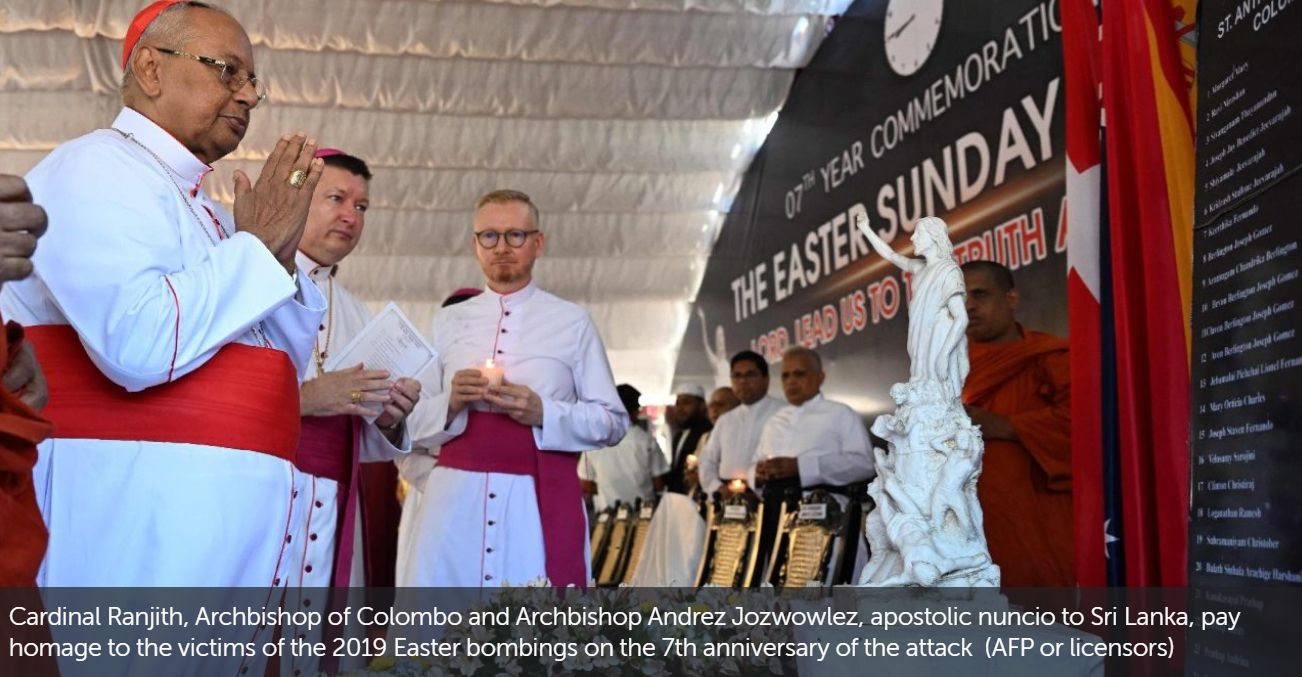
The Catholic Church in Sri Lanka, led by Cardinal Malcolm Ranjith and supported by clergy, legal experts and lay leaders, has consistently pressed authorities to uncover the full truth behind the bombings. Church leaders have argued that justice is not only owed to the victims and their families but is essential for the future stability of the nation.
Numerous investigations, commissions and court proceedings have taken place. Yet many survivors and relatives of those killed continue to believe that critical questions remain unanswered. Calls for the appointment of an independent special prosecutor and for the release of previously unpublished investigative findings have become central demands in the Church’s campaign for transparency.
In April 2026, marking the seventh anniversary of the attacks, Church representatives reiterated that while some progress had been made, the journey towards truth remained incomplete. They stressed that justice must be pursued regardless of political pressure or institutional resistance.
The Suresh Sallay Investigation
The most dramatic recent development has been the arrest of retired Major General Suresh Sallay, the former head of Sri Lanka’s State Intelligence Service (SIS).
In February 2026, Sri Lanka’s Criminal Investigation Department arrested Sallay under the Prevention of Terrorism Act in connection with the Easter Sunday attacks. Investigators allege that evidence links him to conspiracy and complicity in the bombings. Authorities have described the arrest as a significant breakthrough in the long-running investigation.
The case gained additional attention because previous media investigations, including allegations highlighted in a 2023 documentary, suggested possible connections between intelligence figures and extremist elements involved in the attacks. These allegations remain highly controversial and continue to be disputed.
Sallay has firmly denied any involvement. He maintains that he had no connection to the Islamist extremists responsible for the attacks and has stated that he was attending a National Defence College course in India during the period in question. His supporters and family argue that he is the target of a politically motivated campaign.
Critical Condition in Hospital
The investigation took a dramatic turn when reports emerged that Sallay had begun a hunger strike while in custody on 6th June.
According to accounts from his family, he refused food and medication after alleging that he had been subjected to degrading and inhumane treatment while being held by investigators. As his health deteriorated, he was transferred to Colombo National Hospital, where he reportedly came under the supervision of a special medical board due to his critical condition.
His wife has publicly maintained that the case against him is politically driven and linked to wider efforts targeting figures associated with former President Gotabaya Rajapaksa.
Meanwhile, investigators continue to pursue evidence relating to the attacks, and the legal process remains ongoing.
The Road Ahead
Seven years after the Easter bombings, Sri Lanka finds itself at a crucial crossroads.
The government faces growing pressure to ensure that investigations proceed independently and transparently. Law enforcement agencies must continue gathering evidence and presenting it before the courts. Intelligence institutions are also under scrutiny as questions persist regarding what was known before the attacks and whether opportunities to prevent the tragedy were missed.
For the Catholic Church and the families of the victims, the goal remains unchanged: truth, accountability and justice. Church leaders have repeatedly emphasised that their pursuit is not driven by revenge but by a desire to ensure that such a tragedy can never happen again.
As court proceedings continue and investigations widen, the coming months may prove decisive. Whether through criminal prosecutions, intelligence reforms, judicial oversight or greater transparency from government institutions, Sri Lanka’s ability to confront the unanswered questions of Easter Sunday 2019 will shape public trust for generations to come.
The wounds of Easter Sunday remain deep. Yet many Sri Lankans continue to believe that lasting healing can only begin when the full truth is finally brought into the light.
Courtesy : Vatican News
Picture Courtesy : Vatican News (AFP or licensors)
© 2026 CATHOLIC CONNECT POWERED BY ATCONLINE LLP