- 29 June, 2026

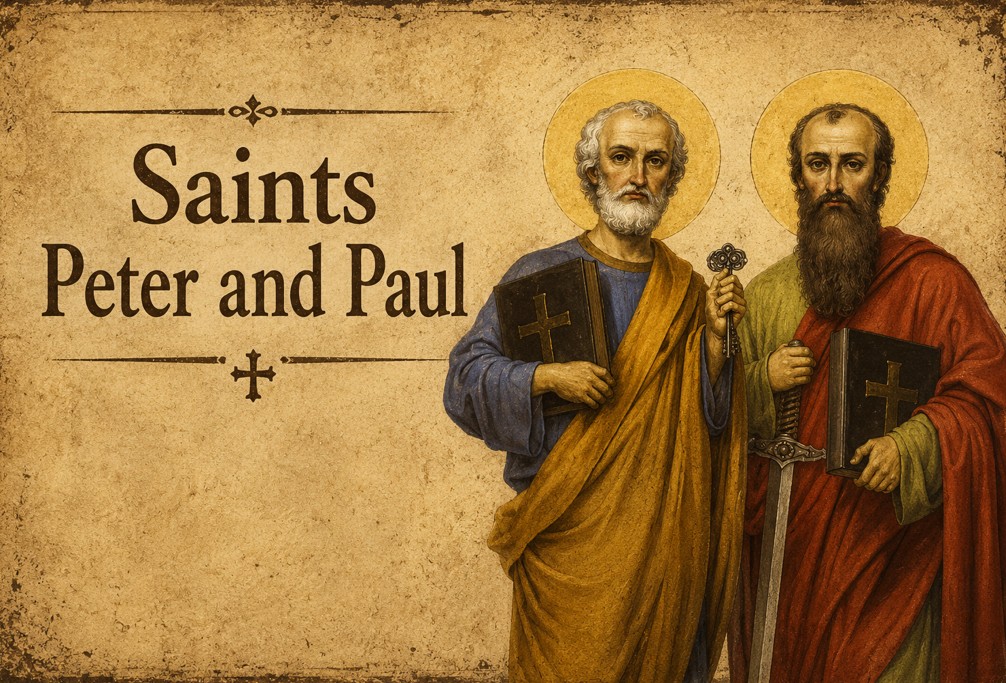
Rome, June 29, 2026: Why are Saints Peter and Paul honoured together as two of the greatest figures in Christian history? Discover the extraordinary story of the fisherman who became the first leader of the Church and the persecutor who became the greatest missionary of the Gospel. Together, their faith, preaching, and martyrdom transformed the world and established the foundation of Christianity.


Feast Day: 29th June
Saint Peter: Apostle of Jesus, first Pope, and leader of the early Church
Saint Paul: Apostle to the Gentiles, missionary, and author of many New Testament letters
Patron of: Rome, the papacy, missionaries, fishermen, and Christian unity


Known For: Spreading the Gospel, founding Christian communities, defending the faith, and giving their lives as martyrs for Christ
Title: Princes of the Apostles
Few saints have shaped Christianity as profoundly as Saints Peter and Paul.
Although their backgrounds were very different, God united their lives through a single mission: proclaiming Jesus Christ to the world.
Peter was a fisherman from Galilee who personally followed Jesus and became the leader of the Apostles.
Paul was a learned Pharisee who initially persecuted Christians but experienced a powerful conversion and became the greatest missionary of the early Church.
Their feast day celebrates not only two remarkable individuals but also the unity of the Church founded upon their witness.
Saint Peter was originally named Simon and was a fisherman from Bethsaida in Galilee.
He and his brother Saint Andrew the Apostle were called by Jesus to leave their nets and become “fishers of men.”
From the beginning, Peter showed both great faith and human weakness.
He was the Apostle who declared that Jesus was the Christ, the Son of the living God.
Jesus responded by giving him a special mission:
“You are Peter, and on this rock I will build my Church.”
Through these words, Christians understand Peter as receiving a unique role of leadership among the Apostles.
(CLICK HERE to follow Catholic Connect for regular News and Content)
Peter was present at many important moments in Jesus’ life.
He witnessed:
However, Peter also experienced failure.
During Jesus’ Passion, Peter denied knowing Him three times.
Yet after the Resurrection, Jesus forgave and restored him, asking him three times to care for His flock.
This moment revealed an important truth: God can transform human weakness into faithful service.
After Pentecost, Peter became a courageous preacher of the Gospel.
Filled with the Holy Spirit, he proclaimed Jesus publicly and helped guide the first Christian communities.
According to tradition, Peter eventually travelled to Rome, where he served as the leader of the Christian community.
During the persecution of Emperor Nero, Peter was martyred by crucifixion.
Ancient Christian tradition holds that he was crucified upside down because he felt unworthy to die in the same manner as Jesus.
His tomb is traditionally located beneath St. Peter's Basilica, which became one of the most important Christian pilgrimage sites in the world.
Saint Paul was born as Saul in Tarsus, a city known for learning and trade.
He was a highly educated Pharisee and initially opposed the followers of Jesus.
He took part in the persecution of early Christians and witnessed the martyrdom of Saint Stephen the Protomartyr.
However, while travelling to Damascus, Saul experienced a life-changing encounter with the risen Christ.
Jesus called him to become an apostle to the nations.
From that moment, Saul became Paul—a passionate missionary who dedicated his life to spreading the Gospel.
Saint Paul travelled across the Roman Empire preaching Christ.
His missionary journeys brought Christianity to many cities, including:
He founded Christian communities, encouraged believers, and wrote letters that became part of the New Testament.
His writings continue to guide Christians in understanding faith, grace, love, and salvation.
Among his most famous teachings are:
Saints Peter and Paul had different personalities and missions.
Peter was the Apostle who walked with Jesus during His earthly ministry.
Paul encountered the risen Christ and was called after the Resurrection.
Yet both preached the same Gospel and served the same Lord.
Their cooperation showed that the Church is strengthened by different gifts united in faith.
Together, they represent the unity of the Jewish and Gentile peoples brought together through Christ.
Both Apostles gave the ultimate witness by sacrificing their lives for Christ.
Saint Peter was martyred in Rome during the persecution of Emperor Nero, traditionally around AD 64.
Saint Paul, as a Roman citizen, was executed by beheading, likely around AD 67.
Their deaths did not end their mission.
Instead, their martyrdom became a powerful testimony that faith in Christ was worth more than life itself.
The Church honours them as witnesses who planted the seeds of Christianity through their blood.
The Church celebrates Peter and Paul on the same feast because their missions are inseparably connected.
Peter represents the stability and unity of the apostolic Church.
Paul represents the missionary spirit that carries the Gospel to all nations.
Together they show two essential aspects of Christian life:
Their feast reminds Christians that the Church is built upon apostolic faith and missionary love.
The Feast of Saints Peter and Paul is a celebration of courage, conversion, and commitment.
Their lives show that God chooses ordinary people for extraordinary purposes.
Peter, the fisherman who struggled with fear, became the shepherd of the Church.
Paul, the persecutor of Christians, became the greatest preacher of Christ.
Their stories reveal that God’s grace can transform every life.
The lives of Saints Peter and Paul teach important lessons:
Saints Peter and Paul remind Christians that every believer has a role in building God’s Kingdom.
Nearly two thousand years later, Saints Peter and Paul remain among the most beloved figures in Christianity.
They were apostles who preached fearlessly, leaders who guided the early Church, and martyrs who gave everything for Christ.
From the ancient streets of Rome to Christian communities throughout the world, their witness continues to inspire faith and devotion.
The Feast of Saints Peter and Paul celebrates a timeless message:
A life given completely to Christ can change the world.
To know about more saints please visit the spiritual section.
By Catholic Connect Reporter
Feast of Saints Peter and Paul, Saint Peter Apostle, Saint Paul Apostle, June 29 feast day, Princes of the Apostles, apostles of Jesus, first Pope, Apostle to the Gentiles, Catholic saints, Roman martyrs, early Church history, Vatican saints, Christian feast days, apostles biography
© 2026 CATHOLIC CONNECT POWERED BY ATCONLINE LLP