- 12 July, 2026

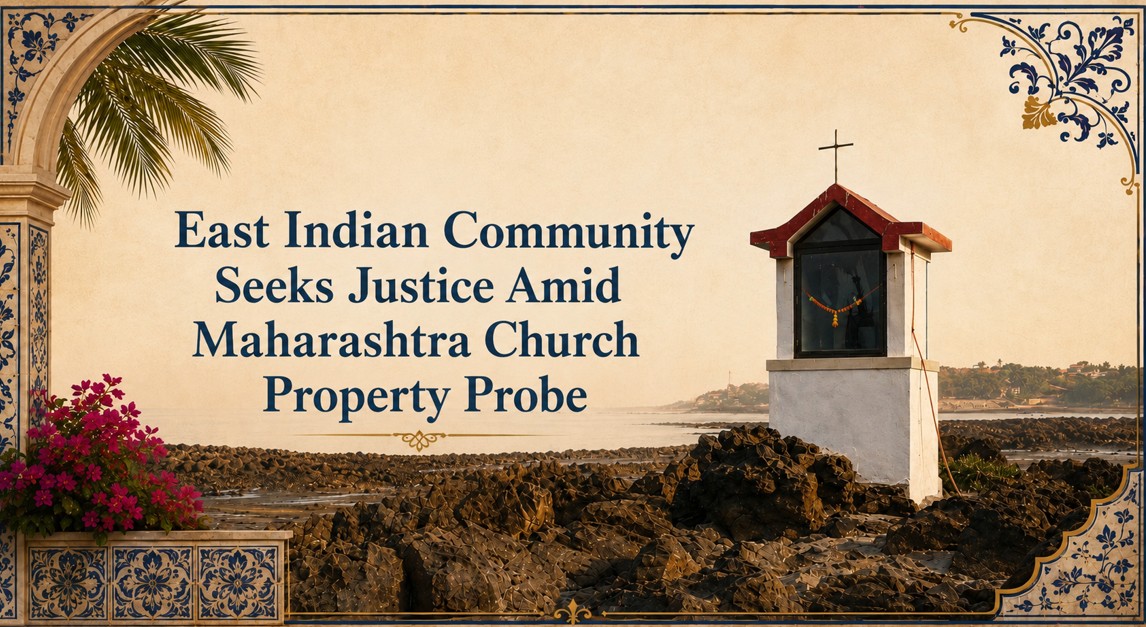
Mumbai, July 10, 2026: The Mobai Gaothan Panchayat (MGP), the apex representative body of Mumbai's indigenous East Indian community, has voiced concern over the Maharashtra government's reported investigation into church land holdings, while renewing its long-standing demand for housing rights and recognition of the community's historic contribution to the city.


The organisation says the government's move has brought renewed attention to a decades-old issue: the large tracts of land donated by East Indian families for churches, schools, hospitals and charitable institutions, while many of their descendants now struggle to secure homes within their own traditional villages, known as gaothans.
A Call for Recognition and Justice
In a statement issued on Wednesday, the MGP described the East Indian community as the Bhumiputra (indigenous people) of Mumbai's original seven islands and reiterated its demand for the implementation of the East Indian Samaj Action Plan (EISA Policy).


According to the organisation, one of the key proposals under the policy is a dedicated housing scheme for landless East Indians whose ancestors donated land for religious and community purposes over several generations.
The MGP expressed sadness over the reported probe into church-owned land, stating that the issue highlights the sacrifices made by the community and the challenges many families now face.
"Our Ancestors Gave Land in Good Faith"
Speaking on behalf of the community, MGP leader Vicky Misquitta said East Indian families had willingly donated land to support the Church and its social mission, never expecting that future generations would struggle for basic housing.
"We are the original inhabitants of Mumbai and among the biggest land donors to the Church. Our ancestors gave land in good faith for the service of the community and faith."
Misquitta added that many descendants of those donors now find themselves unable to own homes in the very villages where their families have lived for generations.
"Today, our own people are struggling for housing in our own gaothans. The EISA Policy sought justice, dignity and a home for our Bhumiputras. If that had been honoured, we would not be in this situation today."
Demand for Review of Land Acquisition
Beyond housing, the MGP has urged the Maharashtra government to review past land acquisitions, particularly those carried out for Mumbai airport.
The organisation claims that a significant portion of the land acquired originally belonged to East Indian families and has called for a fresh assessment of those acquisitions.
It has also requested a review of Town Planning Scheme lands across Mumbai to ensure that the interests of the indigenous East Indian community are protected.
Appeal for Housing and Consultation
The MGP has appealed to both the Maharashtra government and Church authorities to support a dedicated housing scheme for landless East Indians in line with the recommendations of the EISA Policy.
The organisation stressed that its demands are not directed against the Catholic Church or its institutions but are intended to secure justice and dignity for the community whose land helped establish many of them.
"Our appeal is for justice, respect and security," the organisation said, emphasising that the contributions of the East Indian community should be recognised alongside efforts to preserve its cultural and historical identity.
Seeking a Seat at the Table
The MGP has also called on the state government to formally consult the organisation in any future proceedings relating to community lands acquired under various land reform and acquisition laws.
Community leaders argue that as the recognised representative body of Mumbai's indigenous East Indians, the MGP should have a voice in discussions affecting ancestral lands and policies that could shape the future of the community.
The appeal comes as debate continues over the Maharashtra government's proposed review of church-owned properties, with community representatives urging authorities to ensure that any inquiry also acknowledges the historical role played by East Indian families in building many of the city's religious, educational and charitable institutions.
Courtesy Free Press Journal


© 2026 CATHOLIC CONNECT POWERED BY ATCONLINE LLP