- 11 August, 2026

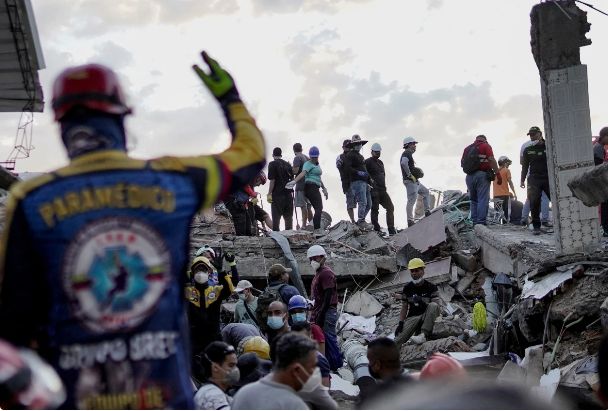
Bogotá, August 10, 2026: At least 132 people have died and 570 have been injured after a powerful magnitude 7.4 earthquake struck western Colombia on Monday, according to the Colombian Association of Capital Cities. The earthquake, described by officials as the strongest recorded in the country in the past decade, caused widespread damage, collapsed buildings and disrupted transport across several regions.


The full scale of the disaster is still emerging, with rescue teams continuing to search damaged buildings for people who may be trapped beneath the rubble.
The Colombian government has declared a national disaster and deployed soldiers to support emergency operations. Several cities have reported serious damage, while airports and other essential infrastructure have also been affected.
The earthquake struck at 07:34 local time, or 12:34 GMT, with the epicentre near San José del Palmar in Chocó province. The Colombian geological service placed the depth of the earthquake at around 103 kilometres.


San José del Palmar is located in an underdeveloped area of western Colombia, roughly 150 miles west of Bogotá. Despite being close to the epicentre, the town's mayor, León Fabio Marín Moncada, said there had been no deaths or injuries there, although roads connecting the community had been damaged.
The earthquake was felt across a vast area of the country. Strong shaking was reported in Bogotá, where alarms sounded and people left buildings and gathered in the streets.
Tremors were also felt in neighbouring Venezuela, Ecuador and Panama.
Pereira, in Colombia's coffee-growing region, has emerged as one of the areas most severely affected.
The Colombian Association of Capital Cities said the city had reported 60 deaths. Earlier local reports placed the death toll in the city's metropolitan area at at least 40, while authorities reported that dozens of buildings had collapsed.
Videos from Pereira showed damage in the city's Plaza Bolívar, where a building collapsed and left debris and dust across the area.
Authorities have reported dozens of collapsed structures in Pereira, with people believed to be trapped inside some of them. A curfew has also been introduced in parts of the city.
The nearby city of Manizales has also suffered significant damage. The vice president, José Manuel Restrepo, travelled to Manizales to lead the Unified Command Post and coordinate the government's response.
The earthquake caused serious damage to buildings across several cities.
In Cali, about 160 kilometres south of Pereira, at least 32 buildings were reported to have collapsed. Among the damaged structures were the paediatric and neonatal sections of a hospital, adding urgency to rescue and medical operations.
There have also been reports of deaths and structural damage in Manizales, Quibdó, Medellín and other areas of Chocó and Valle del Cauca.
In Manizales, residents described scenes of panic as walls cracked, bricks fell and dust filled buildings.
A journalist and meteorologist from the city said strict seismic-resistant building regulations had helped his building withstand the earthquake. However, hundreds of books were thrown from shelves, while glass broke and residents screamed as the ground shook.
Emergency workers are continuing to search collapsed buildings for survivors.
Soldiers and other emergency personnel have been deployed to support rescue operations, while local communities have also been involved in the response.
The Colombian government has created special powers to respond to the disaster, including the ability to reallocate public funds towards emergency measures.
President Abelardo de la Espriella, who took office only days before the earthquake, convened an emergency committee and said he would personally lead efforts to rescue people trapped in damaged structures.
With the number of casualties continuing to rise, emergency crews face a race against time to locate survivors and provide assistance to those who have lost homes or relatives.
The government has reported that more than 1,500 homes have been damaged.
The earthquake has also affected Colombia's transport network.
The country's aviation authority reported damage at several regional airports, including those serving Pereira, Manizales, Quibdó, Armenia, Cartago and Buenaventura.
The Colombian Association of Capital Cities said seven airports had suspended operations and that five capital cities were under red alert.
Damage to roads has also complicated access to some communities, particularly those closer to the epicentre.
The disruption is expected to create additional difficulties for rescue teams attempting to reach isolated areas and deliver emergency supplies.
The earthquake occurred in a region with significant tectonic activity. According to geological expert Gustavo Ortiz, the event was linked to the movement of the Nazca Plate beneath the South American Plate, a process known as subduction.
Ortiz said this geological setting differs significantly from the earthquakes that struck neighbouring Venezuela more than a month earlier.
The Venezuelan earthquakes involved interaction between the South American and Caribbean plates, with the plates moving laterally rather than one plate being forced beneath another.
Another important difference is the depth of the earthquakes. The Venezuelan earthquakes occurred relatively close to the Earth's surface, at depths of less than 20 kilometres. The Colombian earthquake, by contrast, occurred at a depth of more than 100 kilometres.
According to the US Geological Survey, around 1.5 million people experienced shaking close to magnitude seven.
Deep earthquakes are generally considered less dangerous than shallow earthquakes because their energy is released further below the surface. However, they can still cause significant damage, particularly to buildings and infrastructure.
As the scale of the disaster became clearer, international leaders offered assistance to Colombia.
US Secretary of State Marco Rubio said Washington was closely monitoring the situation and was ready to provide support.
European Commission President Ursula von der Leyen said the European Union's Copernicus satellite system was being used to assist rescue operations.
El Salvador's President Nayib Bukele also expressed solidarity with Colombia and offered personnel and equipment to support the emergency response.
The international offers come as Colombian authorities assess the damage and determine where additional assistance is most urgently needed.
For survivors, the earthquake has brought fear, loss and uncertainty. Residents in affected cities described being thrown from their sleep, running into the streets and watching buildings shake around them.
A British visitor staying in Cali described waking during the earthquake and running outside with his partner. Although the hotel did not suffer major structural damage, cracks appeared in the walls and plaster and paint fell away.
For many Colombians, however, the consequences have been far more severe. Families are mourning loved ones, communities are searching for missing people and thousands face the prospect of damaged or destroyed homes.
As rescue operations continue, authorities warn that the death toll could rise further.
The earthquake has become an immediate national challenge for President de la Espriella's newly formed government. For emergency workers and affected communities, the priority remains clear: find survivors, care for the injured, restore essential services and provide support to those who have lost everything.
With international assistance beginning to arrive and rescue teams working across the worst-hit areas, Colombia now faces a long recovery from one of the most powerful earthquakes to strike the country in recent years.
Courtesy CNN World
Picture Courtesy : Sergio Acero/Reuters
© 2026 CATHOLIC CONNECT POWERED BY ATCONLINE LLP