
- 25 October, 2026

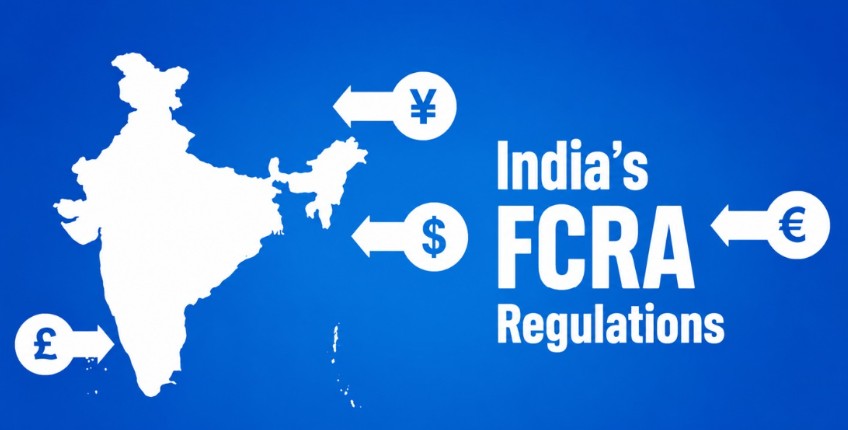
New Delhi, June 23: The Central Government has significantly tightened regulations governing foreign contributions to non-governmental organisations (NGOs), introducing a series of amendments to the Foreign Contribution Regulation Act (FCRA) Rules aimed at enhancing transparency, accountability and oversight of overseas funding.



The revised rules, notified by the Union Home Ministry, require organisations seeking FCRA registration to provide detailed information about the specific purposes for which foreign funds will be received and the states or Union Territories where the funds will be utilised.
Detailed Disclosure Requirements Introduced
Under the new framework, NGOs can no longer provide broad descriptions of their objectives while applying for registration. Instead, applicants must select their proposed activities from a predefined list of approved purposes outlined in a schedule attached to the amended rules.
The categories include sectors such as education, culture, social welfare, economic development and religious activities. Authorities say the move will allow better monitoring of how foreign contributions are spent and ensure that organisations remain aligned with their declared objectives.
The approved activities and operational areas of organisations will also be reflected on their FCRA registration certificates.
Curbs on Foreign Nationals in Key Positions
One of the most notable changes concerns the role of foreign nationals in organisations receiving overseas funding.
According to the amended rules, associations with foreign nationals—except persons of Indian origin—serving as key functionaries will generally not be eligible for FCRA registration or prior permission to receive foreign contributions.
However, the government has retained the power to grant exemptions in specific cases through special orders.
The definition of “key functionary” has also been expanded to include company directors, trustees, partners in firms, the Karta of a Hindu Undivided Family, and individuals exercising managerial control over an organisation.
Religious Activities Face Additional Conditions
The amendments also introduce fresh conditions for organisations engaged in faith-based activities.
While foreign funding will continue to be permitted for maintaining places of worship, religious education, devotional music and preservation of traditions, certain activities must be conducted without proselytisation.
The restriction applies to religious education, documentation of faith traditions and programmes aimed at preserving indigenous and tribal belief systems, rituals and worship practices.
The government has said the measures are intended to ensure that foreign contributions are used for lawful charitable and social purposes while preventing misuse.
Existing NGOs Given One Year to Comply
Organisations already registered under the FCRA have been given one year to furnish updated details regarding their approved purposes and operational jurisdictions.
The Centre has also introduced an additional application fee of Rs 300 for each extra purpose or state added by an organisation.
In another significant move, NGOs seeking renewal of their FCRA registration will be required to demonstrate meaningful utilisation of foreign funds. Organisations must show that they have spent at least Rs 10 lakh from foreign contributions on approved activities during the previous two financial years.
(CLICK HERE to follow Catholic Connect for regular News and Content)
Enhanced Monitoring of Foreign Donations
The amended rules strengthen scrutiny of foreign funding sources and expenditure patterns.
Organisations receiving contributions through intermediary remittance systems or donor-advised funds must now disclose the identity of the ultimate donor—the original source of the funds.
For NGOs operating under prior permission arrangements, subsequent instalments of approved foreign contributions will be released only after at least 75 per cent of the previous instalment has been utilised. Field inspections may also be conducted to verify fund utilisation.
Additionally, applicants seeking registration or renewal will be required to disclose their social media accounts, while annual returns must include more comprehensive activity reports alongside financial statements.
New Reporting Obligations
The government has also introduced reporting requirements related to publications and communication activities. Organisations will have to disclose whether they or their key office-bearers have published books, articles or other materials.
The requirement comes amid existing restrictions that prohibit entities receiving foreign contributions from producing or broadcasting news and current affairs content.
Balancing Accountability and Social Impact
The Centre has maintained that the amendments are designed to strengthen public confidence in the foreign funding system and ensure greater accountability in the use of overseas donations.
However, civil society organisations have previously argued that increasing compliance obligations could place an additional burden on smaller NGOs working in sectors such as healthcare, education and community welfare.
Foreign contributions continue to play a vital role in supporting humanitarian initiatives, social development projects and public welfare programmes across India. The latest amendments mark one of the most significant changes to the FCRA framework in recent years, signalling a stronger emphasis on regulatory oversight while raising fresh questions about the operational challenges facing the voluntary sector.
As the new rules come into effect, both regulators and civil society organisations will be closely watching how the measures impact the flow and utilisation of foreign funding in the country.
Courtesy The Hindu





© 2026 CATHOLIC CONNECT POWERED BY ATCONLINE LLP