- 31 March, 2026
March 31, 2026: In the shadow of the Eastern Ghats, Sittilingi Valley once carried a quiet burden—one measured not in statistics alone, but in the long, uncertain journeys its people undertook in search of care. Illness here was not merely a medical condition; it was a test of endurance. For many, survival depended on whether they could travel miles over rough terrain to reach the nearest doctor.

Three decades ago, this remote corner of Tamil Nadu stood on the margins of India’s healthcare map. The nearest hospital lay nearly 50 kilometres away, while surgical care demanded journeys of over 100 kilometres—distances that turned emergencies into tragedies. Infant mortality was alarmingly high, with 147 deaths per 1,000 births, reflecting a stark absence of access, infrastructure, and awareness.
It was into this reality that two young doctors arrived in the early 1990s—not as visitors, but as people willing to stay.



A Decision That Changed a Valley
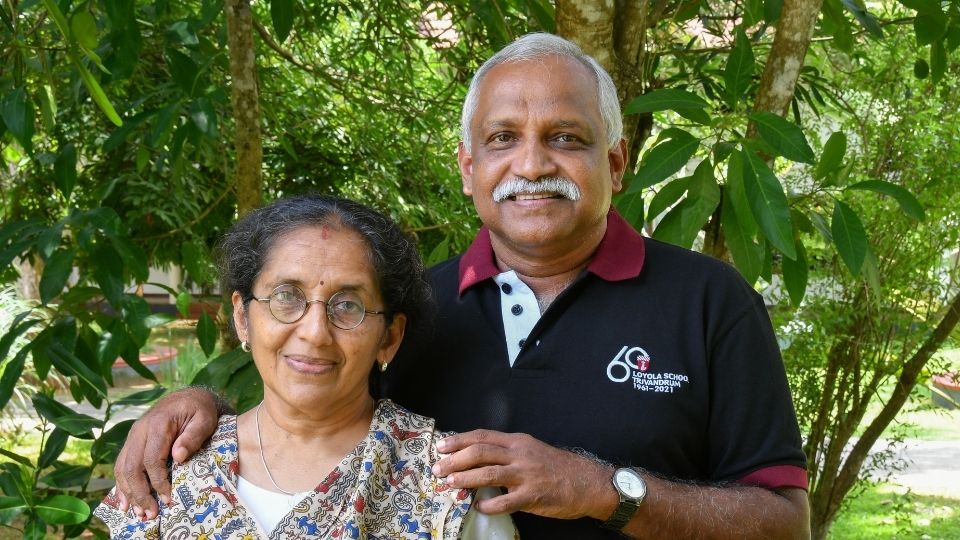
When Dr. Regi George and Dr. Lalitha first came to Sittilingi, they faced a landscape with no safety nets. There were no hospitals to support them, no established systems to rely on. What they had instead was a conviction that care could begin anywhere—even in the humblest of spaces.
Their first clinic was a hut
It was small, improvised, and far from what one might call a medical facility. Yet for the people of the valley, it became something far more significant: a place where help was finally within reach. Word spread, not through announcements or campaigns, but through trust—patient by patient, family by family.
That hut marked the beginning of what would grow into the Tribal Health Initiative (THI), a model of healthcare shaped not by external prescriptions but by the rhythms and realities of the community itself.
(Also Read - The Inspiring Story of a Village in Assam That Rebuilt Its Church Against All Odds)
Redefining Healthcare from Within
From the outset, the doctors understood that healing in Sittilingi would require more than treating illness. It demanded a reimagining of how care was delivered—and who delivered it.
One of their most transformative steps was to train tribal women as health workers. These women, rooted in the community, became the bridge between medical knowledge and everyday life. They carried essential care into homes and hamlets, ensuring that help was no longer confined to a distant clinic.
This shift brought healthcare closer—not just geographically, but culturally. It made care familiar, accessible, and continuous.
Beyond Medicine: Addressing Life Itself
As the initiative evolved, it became clear that health in Sittilingi was shaped as much by daily living conditions as by disease. Nutrition, hygiene, and livelihoods were all intertwined with well-being.
The response was holistic
Efforts were made to improve dietary habits, promote sanitation, and encourage sustainable agricultural practices. Farmers began transitioning to organic, millet-based cultivation, reconnecting traditional food systems with better health outcomes.
At the same time, women found new avenues for economic independence. Artisan groups, tailoring units, and revived traditional crafts offered not just income, but dignity and confidence. These initiatives strengthened families and, in turn, reinforced the foundations of community health.
Quiet Transformations, Lasting Impact
The results did not come overnight, but they came steadily.
Infant mortality rates, once among the highest, dropped significantly over the years. Maternal deaths, once a looming fear, became increasingly rare. What began as a fragile experiment in a hut gradually expanded into a full-fledged hospital—standing as a testament to years of perseverance.
Yet, the most profound transformation cannot be captured by numbers alone. In Sittilingi today, healthcare is no longer something that arrives from outside. It is something the community understands, participates in, and sustains. Knowledge has replaced fear; ownership has replaced dependence.
A Model Rooted in Presence
The story of Sittilingi Valley is not one of dramatic interventions or sweeping policies. It is, instead, a story of staying—of choosing to remain present in a place others overlooked.
Dr. Regi George and Dr. Lalitha did not simply build a healthcare system; they nurtured a culture of care. Their work illustrates that meaningful change often begins quietly, with relationships, trust, and a willingness to walk alongside a community over time.
Today, the valley stands transformed—not as a showcase of infrastructure alone, but as a living example of what happens when care is built with people, rather than delivered to them.
What started as a hut has become something far greater: a self-sustaining ecosystem of health, rooted in compassion and carried forward by the very people it serves.
Read More Stories Of Hope
Dream, Work, Pray: Sreeja's Inspiring Path to Civil Services Rank 57
Students Launch 1,000 Handwritten Books at Loyola School in Kozhikode
From France to Tamil Nadu: The Missionary Who Built a Village of Faith
By Catholic Connect Reporter



© 2026 CATHOLIC CONNECT POWERED BY ATCONLINE LLP