- 10 September, 2026

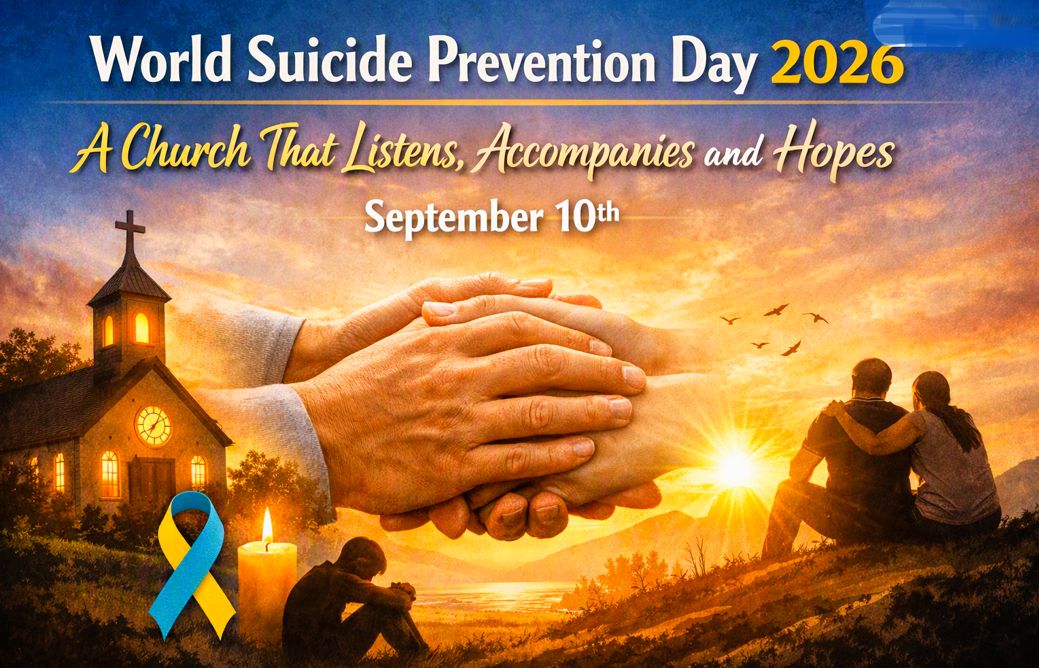
September 10, 2026: World Suicide Prevention Day, observed on 10 September, invites us to confront one of the most painful realities of our time.


The World Health Organization reports that more than 720,000 people die by suicide every year, leaving families, friends and communities carrying profound grief. The 2026 theme, “Changing the Narrative on Suicide,” concludes its three-year campaign with the call to “Start the Conversation” – encouraging openness, compassion and support rather than silence and stigma.
For Catholics, this is both a pastoral and moral challenge. The Church must speak about suicide as a grave moral matter and a profound human, psychological, spiritual and pastoral tragedy.
Catholic teaching affirms that every human life is created and loved by God and possesses an inherent and inviolable dignity. That dignity is never lost because of illness, weakness, psychological distress or suffering.

The Church teaches that suicide is objectively a grave moral wrong because God is the Lord of life and death and human life ultimately belongs to Him. Objectively, suicide contradicts God's sovereignty over life and death; nevertheless, severe psychological suffering may greatly diminish or even remove a person's personal culpability.
The Catechism of the Catholic Church recognises that “grave psychological disturbances, anguish, or grave fear” can diminish a person's responsibility. It also teaches that we should not despair of the eternal salvation of those who have died by suicide, entrusting them to God's mercy and continuing to pray for them.
This distinction is important for grieving families. The Church upholds moral truth without presuming to judge the eternal destiny of the person who died.
The call to “Start the Conversation” can become a profoundly Catholic invitation. Jesus repeatedly drew near to people who suffered, heard their cries and restored their dignity.
A parish can become a place where someone feels safe enough to say, “I am struggling.” Priests, religious, catechists, teachers, youth leaders and parishioners can help create communities where people are heard without judgement.
Listening does not mean having all the answers. Nor should parish personnel attempt to replace trained mental-health professionals. Their role is to listen compassionately, take expressions of suicidal distress seriously, encourage appropriate professional help and involve responsible family members or professionals when safety is at risk.
Confidentiality is important, but it is not absolute when someone faces an imminent risk of serious harm.
Prayer and the sacraments provide essential spiritual support, while appropriate medical and psychological care may also be necessary. Seeking help from a psychologist, psychiatrist, counsellor or doctor is not a failure of faith.
God can work through the knowledge and compassion of those who care professionally for people experiencing mental and emotional suffering. Pastoral accompaniment and professional care can therefore work together.
If someone is in immediate danger of harming themselves, do not leave them alone. Contact local emergency services or an appropriate crisis service and involve a trusted family member, responsible adult or qualified professional.
The Church is called to be more than a place where people worship. It must also be a community where those who are wounded know that they are not alone.
Christian hope does not deny darkness. It insists that darkness does not have the final word.
On this World Suicide Prevention Day, Catholics can answer the call to “Start the Conversation” by listening with compassion, accompanying with patience, encouraging professional help and pointing gently towards the hope found in Christ.
Sometimes, a conversation can be the beginning of that hope.
By Catholic Connect Reporter
If you or someone you know is struggling with emotional pain, mental-health difficulties, or thoughts of suicide, please do not face it alone. You are not a burden, and asking for help is not a sign of weakness—it is an act of courage and hope.
The Catholic Mental Health Ministry (CMHM) is here to offer compassionate, faith-sensitive support and guidance. Whether you are personally struggling or are worried about someone you love, reaching out can be an important first step. You do not need to have all the answers before asking for help. Sometimes, simply having someone listen with understanding can make a difference.
Please reach out to CMHM for support (CMHM Helpline Number: +91 9611393454), guidance and appropriate referrals. Let us walk together with compassion, faith and hope, remembering that no one should have to carry their suffering alone.
If you or someone else is in immediate danger, please contact your local emergency service or crisis helpline and seek urgent professional help.


© 2026 CATHOLIC CONNECT POWERED BY ATCONLINE LLP