- 22 May, 2026

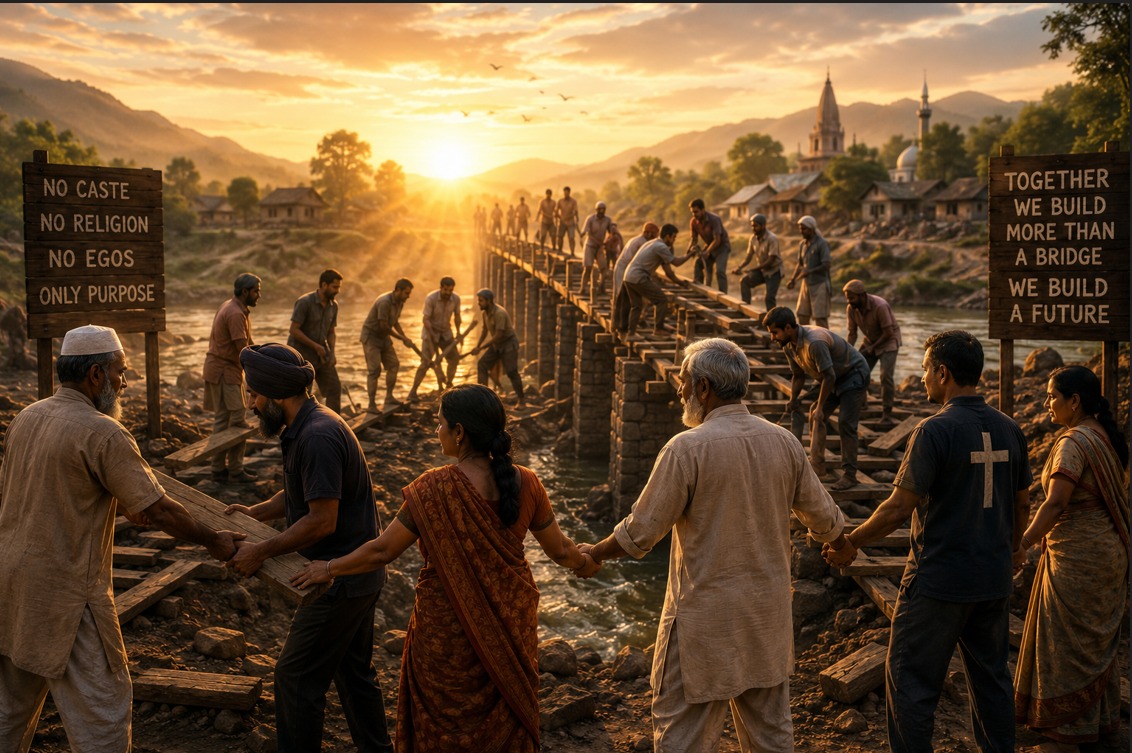
Agartala, May 22, 2026: In the remote village of Rangacharra under Karbook block in Gomati district, a damaged bridge once stood as a daily struggle for the people living there. Today, that same bridge has become a powerful symbol of unity, service, and shared responsibility among people of different faiths and communities.


Rangacharra belongs to Christ the King Parish of Agartala diocese and is home to people from different religions, including Christians (Catholics and Baptists) and Hindus. The village is also made up of different ethnic communities such as Uchoi, Debbarma, and Reang, each carrying its own traditions and culture. With 42 Catholic families and limited infrastructure, the village is still in a developing stage. It remains connected to the parish through a kacha road and a bridge that had been badly damaged.
A Concern Raised During Gospel Sharing
The Basic Ecclesial Communities (BECs), introduced in the village in 2012, gradually became an active part of community life under the pastoral guidance of Parish Priest Fr. Amal Raj, who later attended a one-month BEC Theology Course in Nagpur.


During a regular BEC Bible Sharing-cum-meeting in 2022, a BEC member, Mr. Lawrence Uchio (45), raised a serious concern before the group. The damaged bridge, which connected the village to the mission area, had become unsafe for daily use. Children, elderly people, churchgoers, and vehicles depended on the bridge every day, but its poor condition made crossing difficult and risky, especially for school-going children.
The concern deeply moved the members.
After reflecting on the issue, the BEC members unanimously agreed that the bridge needed immediate repair. Without delay, the BEC decided to take responsibility and invited the entire village to participate in the work.
When the Entire Village Stepped Forward
What began as a simple initiative by the St. Peter and St. Paul BEC soon spread across the locality. News of the bridge repair reached not only Catholics but also non-Christians and members of other denominations. Slowly, a spirit of collective responsibility began to grow among the people.
Then came the day of repair.
People from different faiths and ethnic groups gathered together with one spirit and one voice saying, “Let us begin the work.”
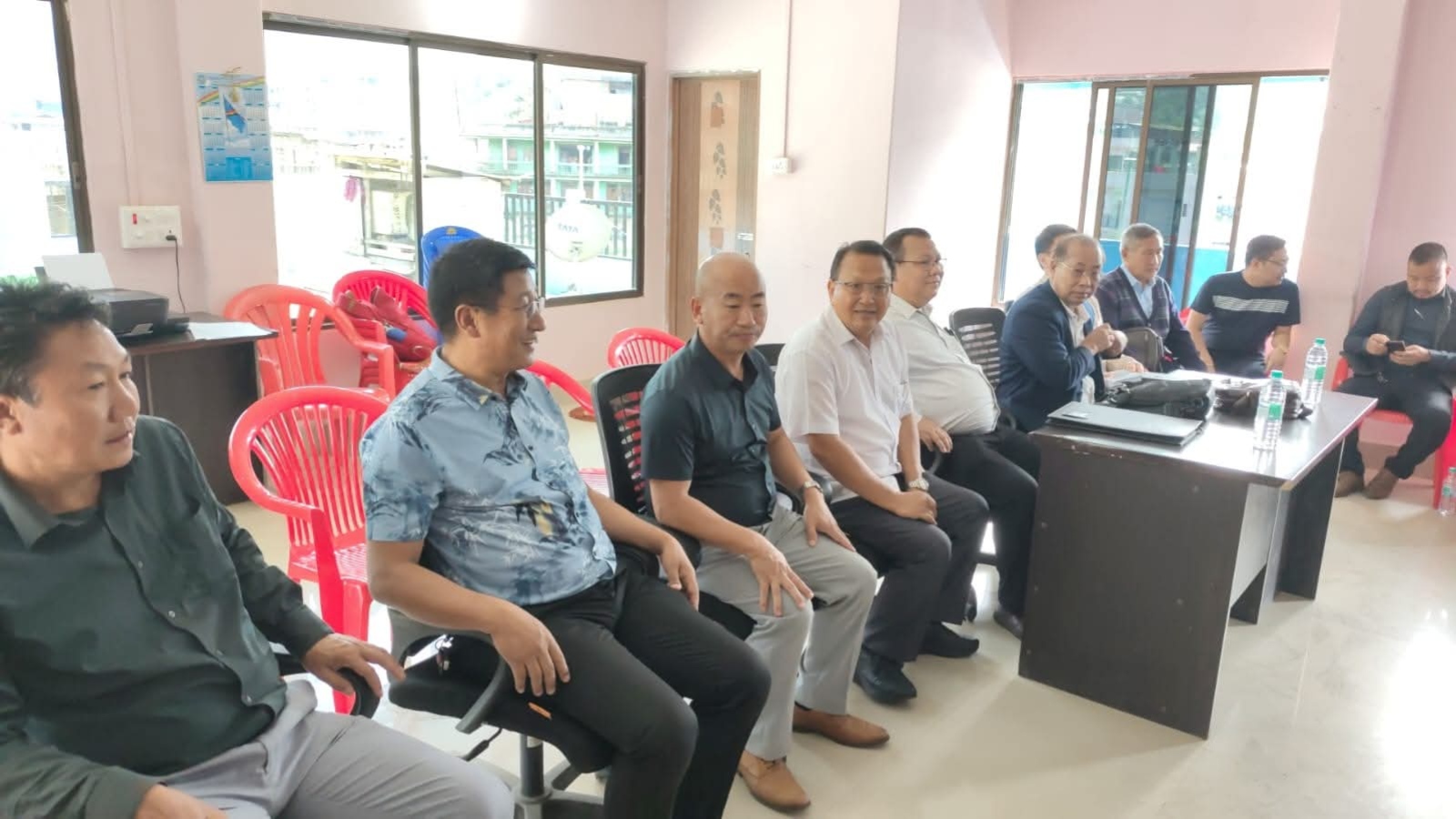
The task was not easy. Three electric poles had to be carried near the bridge. As the men struggled with the heavy weight, the women stepped forward to help. Together, they carried the poles, levelled the ground, placed iron sheets over the poles, filled the area with soil, and continued working until the bridge was fully restored.
Every hand mattered. Every effort counted.
What rebuilt the bridge was not just labour or materials, but cooperation, sacrifice, and love.
More Than a Bridge
What was first seen as the responsibility of a few BEC members eventually became a movement embraced by the whole village. Today, children cross the bridge safely on their way to school, vehicles move smoothly, and villagers walk with confidence.
The bridge now stands as a visible sign of hope and unity.
The initiative of the St. Peter and St. Paul BEC received widespread appreciation and touched many hearts. More importantly, it became a living example that BEC is not only about Gospel Sharing through words, but also through action.
Through this effort, the BEC strengthened neighbourhood relationships, encouraged a deeper sense of belonging, and brought people together beyond religious and social differences.
Today, the BEC continues to stand as a vibrant platform of unity, care, love, and sharing among the people of the locality.
The “BEC Bridge” did more than reconnect two sides of a village.
It united people of all faiths and built a stronger and more compassionate community.
By Catholic Connect Reporter
© 2026 CATHOLIC CONNECT POWERED BY ATCONLINE LLP