- 11 October, 2026
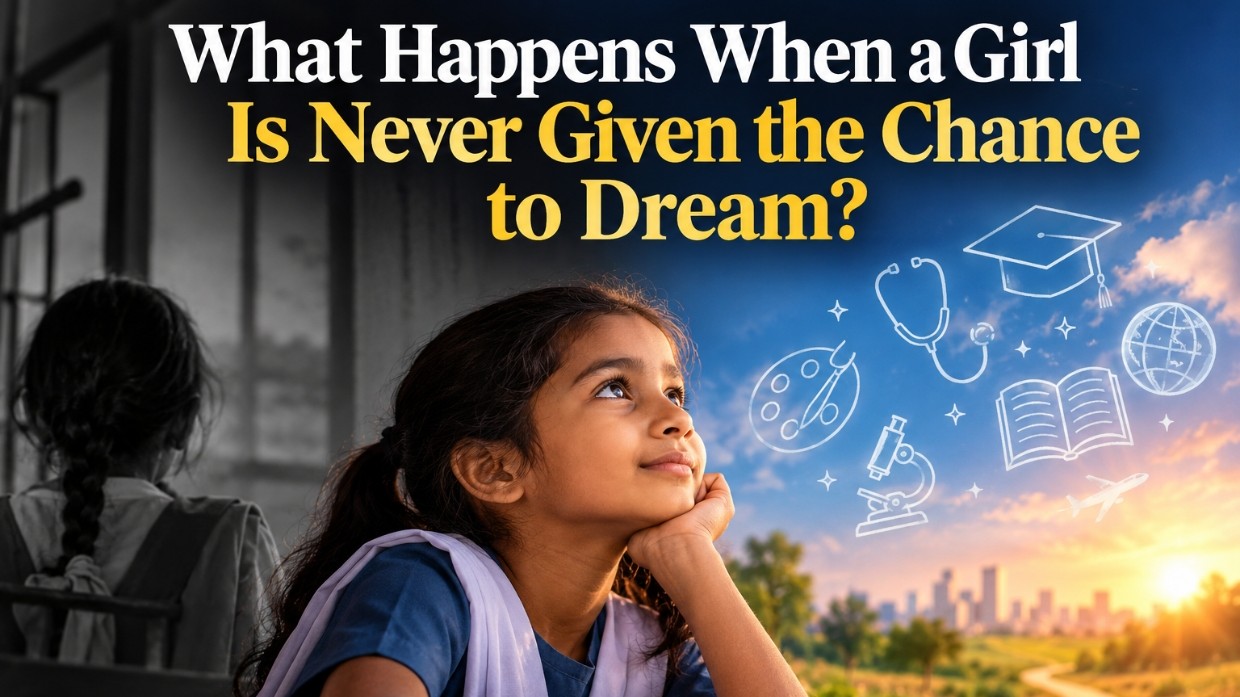
A girl may have a school uniform, a notebook and a classroom waiting for her — yet still have no real say over what happens to her future. For millions of girls around the world, the biggest barrier is not a lack of ambition, but the limits placed on it. From being told which subjects are “for boys” to being married before adulthood, girls continue to lose opportunities long before they are old enough to make their own choices.


Observed every year on 11 October, the International Day of the Girl Child draws attention to girls’ rights, voices and potential. Yet behind the celebrations lies a striking reality: more than 12 million girls are married before the age of 18 every year — roughly one every three seconds.
When education becomes a turning point
Education is often the first step towards giving a girl control over her future. Yet 122 million girls remain out of school globally, according to UNICEF. Almost four in 10 adolescent girls and young women do not complete upper-secondary education. The gap becomes even wider for girls living in poverty, rural communities and marginalised groups.
Staying in school can protect girls from child marriage and early pregnancy while improving their future earning opportunities. A school seat can become a safeguard for an entire lifetime, opening doors to careers, independence and the freedom to make informed choices.
A girl’s safety should not determine her freedom
For many girls, simply moving through their communities can involve risks that boys may not face in the same way. Violence can occur at home, in relationships, in public spaces and online. Nearly one in four ever-married or partnered adolescent girls worldwide has experienced intimate partner violence during her lifetime.
Technology has also created new forms of harassment and abuse, making safety a concern beyond the physical world. A girl should not have to choose between being visible and being safe.
Not just protected — heard
Girls are often spoken about, but not necessarily listened to. Yet the UN Convention on the Rights of the Child recognises children’s right to express their views and have those views taken seriously in matters affecting their lives.
This means participation must begin before adulthood — in classrooms, families, communities and decisions that shape girls’ futures.
Katie Ledecky, the American Olympic swimming champion, offers a powerful example of what dedication, opportunity and faith can help a young woman achieve. She began swimming at the age of six and went on to become one of the most successful female Olympians in history. At the Paris 2024 Olympics, she won four medals, including gold in the 800-metre and 1,500-metre freestyle events. Her ninth Olympic gold made her the joint record-holder for the most Olympic gold medals won by a female athlete. Ledecky has also spoken openly about her Catholic faith, describing prayer as a source of peace and strength before races. Her journey reminds girls that their ambitions need not be limited by stereotypes and that perseverance can help turn dreams into extraordinary achievements.
The question, therefore, is not simply whether girls are allowed to dream. It is whether society creates enough space for those dreams to become possible.
Because when a girl is educated, protected, heard and given opportunities, she does not merely change her own future. She can change the future of the community around her.
By Catholic Connect Reporter
Continue Reading on Catholic Connect App
Get access to exclusive news articles & more.





© 2026 CATHOLIC CONNECT POWERED BY ATCONLINE LLP