- 31 October, 2026
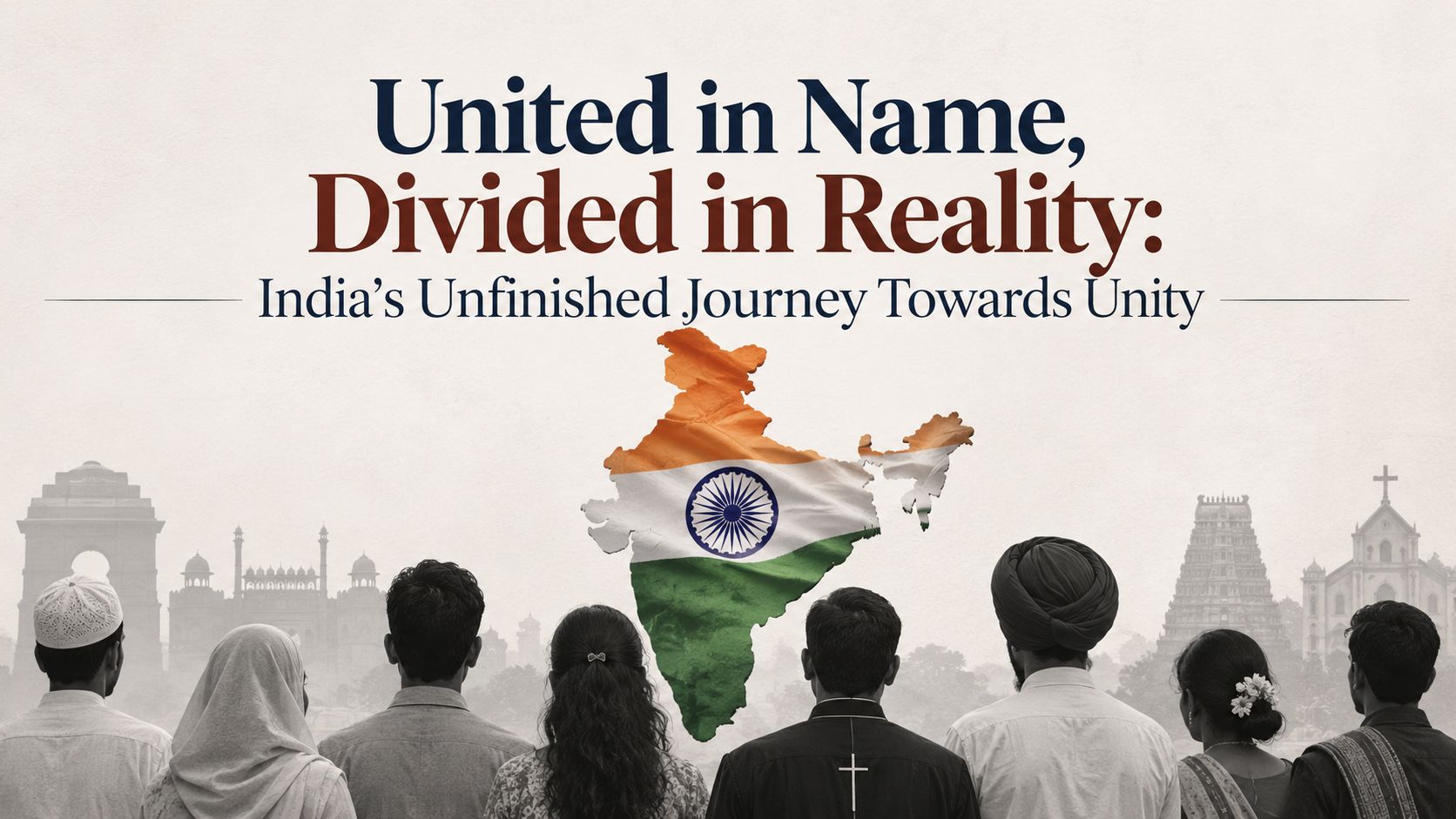
October 31, 2026: When did discrimination become just another news story? When did humiliating someone for their language, treating them as an outsider for coming from another state, or denying them dignity because of their caste, religion or wealth become so ordinary that we barely stop to question it? We read about hatred, witness prejudice and watch people being divided along lines they never chose. We are outraged for a moment, perhaps, but how often do we ask ourselves what kind of country we are becoming?


We call India one nation, yet we keep finding reasons to turn against one another. We speak of progress, development and global leadership, but can a country truly move forward when its people are made to feel unwelcome in their own land? If we cannot respect one another's differences, what exactly are we uniting for?
One Nation, But Are We Standing Together?
Every October 31, India observes National Unity Day, commemorating the birth anniversary of Sardar Vallabhbhai Patel. His efforts to integrate more than 560 princely states into the Indian Union helped shape the nation we know today. He worked towards bringing territories with different rulers and interests together under one national identity.
Today, India speaks confidently of economic growth, technological advancement, international partnerships and global influence. We seek investments, strengthen relationships with other nations and aspire to become a developed country. But amid these ambitions, are we paying enough attention to the relationships between our own people?
What is the point of building bridges with the world if we continue building walls between our own states?
Who Benefits When We Turn Against Each Other?
No one can reasonably be expected to know every language spoken across India. Learning the local language is a valuable way to understand a community, but it should be encouraged through inclusion, not imposed through intimidation. A state border does not make another Indian a foreigner. Religious differences should not invite suspicion, caste should not determine dignity, and wealth should not decide whose voice deserves to be heard.
So why are these differences repeatedly turned into reasons for hostility? Why does regional pride sometimes become contempt for those from elsewhere? Why is hatred allowed to spread, and why are we so often willing to tolerate it when the people targeted belong to a different community?
When did defending our identity begin to mean denying someone else's? And when did another Indian become someone we must fight rather than someone we must stand beside?
We Have Stood Together Before. What Has Changed?
India's history is not without division, but it is also filled with examples of solidarity. People from different religions, castes and regions contributed to the freedom struggle, united by a cause greater than their differences. Today, that spirit survives when neighbours celebrate one another's festivals, strangers help disaster victims, and communities support families in distress without asking who they are.
If ordinary people can put aside their differences to save lives and help strangers, why should prejudice dictate how we live together?
What Kind of India Are We Building?
The Constitution envisions fraternity alongside justice, liberty and equality. These ideals must mean more than words we recall on national occasions. They must shape how we treat people and whether we speak up when another person's dignity is threatened.
National Unity Day must be more than a celebration of our past. It must be a reckoning with our present. Silence in the face of discrimination does not preserve unity; it allows division to become normal.
Perhaps the hardest question is this: when future generations look back at us, will they remember a people who recognised the divisions threatening their country and stood against them, or a people who watched those divisions grow and learnt to live with them?
A developed India cannot be measured by its wealth alone, nor a powerful India solely by its standing in the world. Its strength must also be measured by whether its people can live together without fear, prejudice or hatred.
We can take pride in our states without turning against other states, cherish our languages without humiliating those who speak differently, and hold firmly to our faith without denying another person's dignity. We do not have to be the same to stand together. We simply have to remember that our differences do not make us less Indian.
The question is not merely whether India can become a global power. It is whether, in the process, we can remember how to be one people.
By Catholic Connect Reporter



© 2026 CATHOLIC CONNECT POWERED BY ATCONLINE LLP