- 04 June, 2026

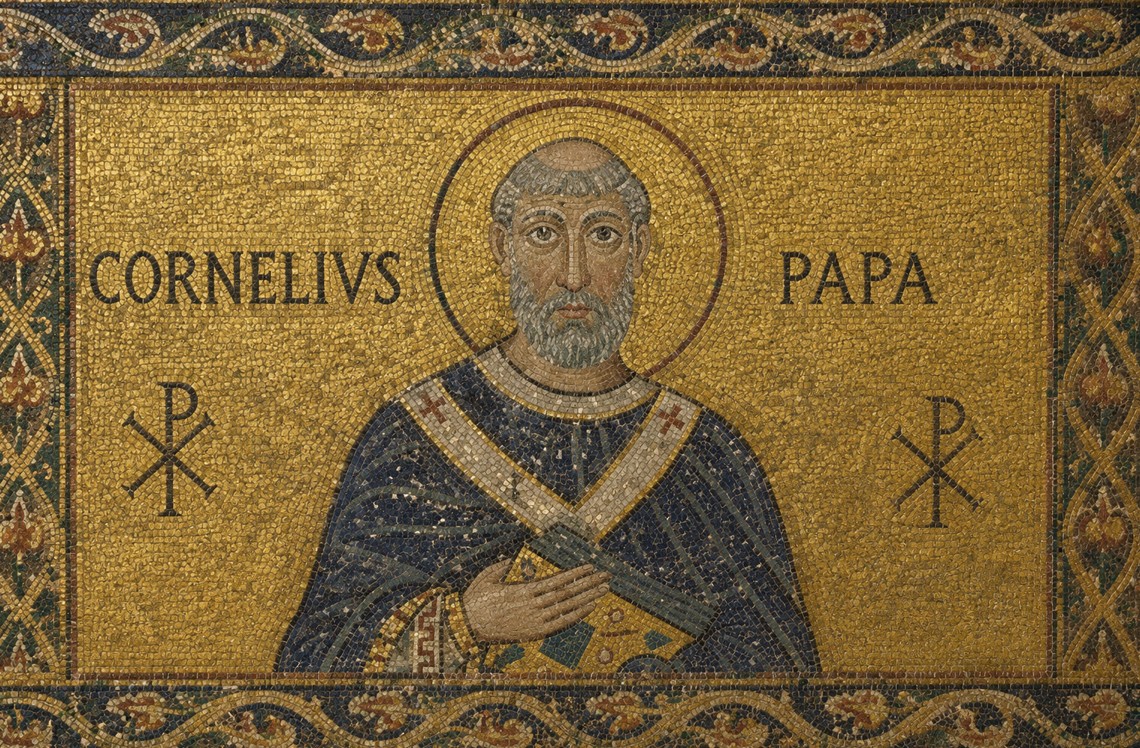
St. Cornelius, the twenty-first successor of Saint Peter, led the Church during one of the most painful crises in early Christian history. After a brutal wave of persecution, thousands of believers faced a difficult question: could Christians who had denied their faith under pressure be welcomed back into the Church? Cornelius answered with a message that still resonates today—God's mercy is greater than human weakness.


How should the Church respond when believers fail?
This was the defining challenge of Cornelius' papacy. Following the fierce Decian persecution, many Christians had abandoned their faith out of fear. Some Church leaders wanted to exclude them permanently. Cornelius chose a different path—one of repentance, forgiveness, and reconciliation.
His decision would shape the Church's pastoral approach for centuries to come.


Little is known about Cornelius' early years, although historical sources indicate he came from a respected Roman Christian family. He lived through a period when Christianity remained illegal and believers often faced imprisonment, exile, or death.
These experiences helped form a leader who understood both human weakness and the need for mercy.
(CLICK HERE to follow Catholic Connect for regular Catholic News & Content)
Following the martyrdom of Pope Fabian during the Decian persecution, the papal office remained vacant for more than a year due to the dangerous political climate.
In 251 AD, Cornelius was elected Bishop of Rome. His election, however, immediately sparked controversy.
Cornelius led the Church during a period of recovery after one of Rome's harshest persecutions.
The greatest challenge involved the "lapsed" Christians—those who had renounced the faith under threat of death.
Cornelius is best remembered for:
These actions reinforced the Church's belief that sincere repentance can restore even those who have fallen.
Cornelius is remembered for:
His spirituality reflected the Gospel message of forgiveness and redemption.
Cornelius faced a major conflict with Novatian, a Roman priest who argued that Christians who had denied the faith should never be readmitted.
This disagreement led to one of the earliest major schisms in Church history. While Novatian promoted strict exclusion, Cornelius defended forgiveness for those who genuinely repented.
His position ultimately became the enduring teaching of the Church.
Although no direct writings survive, his leadership communicates a powerful truth: The Church must be a place where repentance meets mercy.
In 253 AD, Cornelius was exiled by Roman authorities to Centumcellae, where he died shortly afterwards.
His friendship with St. Cyprian of Carthage became a model of episcopal unity and mutual support.
Why does St. Cornelius matter today?
His legacy continues through the life of the Church today, carried forward by his successors.
To know more about the previous Popes, click here
By Catholic Connect Reporter
St. Cornelius, Pope Cornelius biography, Pope Cornelius mercy, twenty-first pope Catholic Church, Novatian schism, Decian persecution, early Catholic popes, Catholic Church forgiveness, apostolic succession, Catholic Church history
© 2026 CATHOLIC CONNECT POWERED BY ATCONLINE LLP