- 06 May, 2026
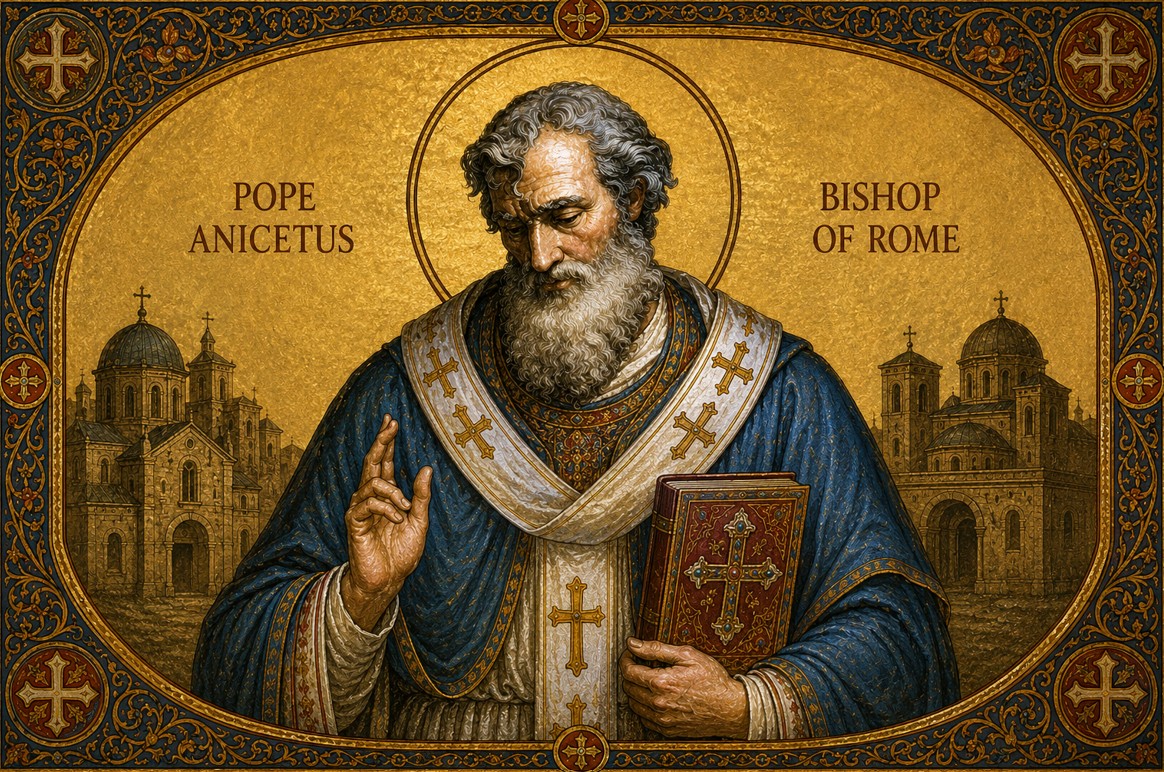
Pope Anicetus, the eleventh successor of Saint Peter, led the Church during a time of growing diversity—and disagreement—within Christianity. His leadership helped preserve unity while respecting legitimate differences.


What happens when sincere believers disagree?
During the second century, Christians across different regions began developing distinct practices. One major issue threatened unity: When should Easter be celebrated?
Into this debate stepped Anicetus—a pope who showed that unity in the Church does not always mean uniformity.


Pope Anicetus was the eleventh pope of the Catholic Church, serving from around 155 AD to 166 AD. He is best known for addressing early liturgical differences and defending apostolic tradition while maintaining peace within the Church.
Anicetus was born in Emesa, in present-day Syria, making him one of the early popes from the Eastern part of the Roman Empire. This background may have helped him understand the diversity of practices emerging in different Christian communities.
After the papacy of Pope Pius I, Anicetus was chosen as Bishop of Rome. His leadership came at a time when the Church was expanding geographically and culturally.
Anicetus led the Church during the mid-second century under the Roman Empire.
A key moment of his papacy involved his interaction with Polycarp of Smyrna, a respected leader from the East.
Anicetus is especially remembered for his approach to unity:
These contributions were significant because they showed that unity in the Church could coexist with diversity in practice.
Anicetus is remembered for:
His spirituality reflects a leader who valued peace and unity without compromising truth.
Anicetus faced important challenges:
Rather than forcing uniformity, he chose dialogue—a decision that shaped future Church leadership.
Though no writings of Anicetus survive, his actions offer a powerful lesson: Unity is preserved not by eliminating differences, but by remaining rooted in truth and charity.
Tradition holds that Anicetus died in Rome, possibly as a martyr, though details are uncertain.
He is honored for his role in preserving unity during a time of diversity and debate.
St. Anicetus represents:
His leadership helped the Church navigate differences without division.
Why does St. Anicetus matter today?
His legacy continues through the life of the Church today, carried forward by his successors.
To know more about the previous Popes, click here
By Catholic Connect Reporter
St. Anicetus, Pope Anicetus biography, eleventh pope Catholic Church, early Catholic popes, Easter controversy early Church, Polycarp of Smyrna, apostolic succession, Church unity history, Gnosticism early Church, history of papacy


© 2026 CATHOLIC CONNECT POWERED BY ATCONLINE LLP