- 16 March, 2026

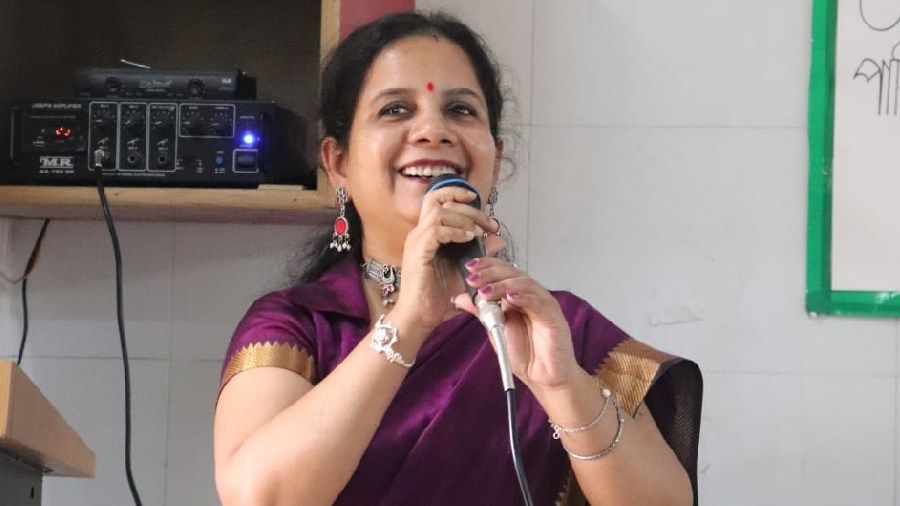
March 16, 2026 — Born with a condition that would gradually take away her eyesight, Professor Nilanjana Sen transformed what many would consider a profound physical limitation into a remarkable story of perseverance and academic achievement. Today, despite complete visual impairment, she stands as a respected scholar and teacher, guiding generations of students while proving that intellectual vision can triumph over physical darkness.


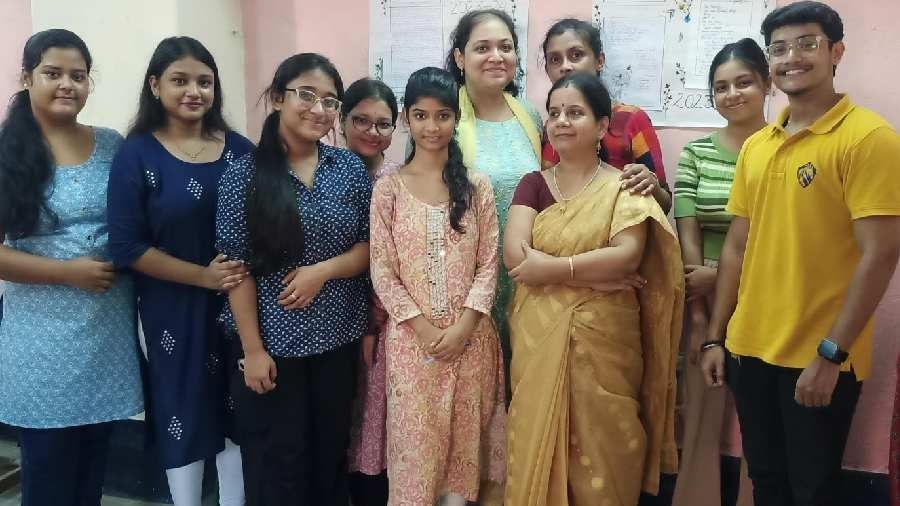
Professor Sen currently teaches English literature at Kishore Bharati Bhagini Nivedita College, where she addresses her students daily with insights that go far beyond textbooks. Her life story is one of determination, discipline and resilience in the face of a progressive genetic disorder.
Early Struggle with Fading Vision



Sen’s struggle began in early childhood. Growing up in Raniganj in West Bengal, she was an active and cheerful child who loved playing outdoors. But when she was about five years old, her parents began noticing something unusual — she had difficulty seeing clearly in dim light.
At first, the symptoms were dismissed as childhood behaviour. Doctors initially overlooked the signs, assuming that her difficulty with drawing or reading might simply be playful mischief. The reality became clear one day when her mother noticed her reading her routine with a torch even in broad daylight.
Alarmed, her parents rushed her to eye specialists in Kolkata and later to Chennai. Medicines were brought from overseas in the hope of slowing the condition. Eventually, doctors diagnosed her with Retinitis Pigmentosa, a rare and incurable genetic disorder that gradually destroys the light-sensitive cells of the retina.
For the young girl, the diagnosis meant a life-changing transition. Her vision would continue to deteriorate until she eventually lost her sight completely.
Learning to Read in Darkness
With her eyesight fading, Sen had to leave her regular school. For nearly a year and a half she remained at home learning Braille, the raised-dot reading system used by visually impaired people.
Her father played a crucial role in this stage of her life. Determined that his daughter should not fall behind, he travelled regularly to Ramakrishna Mission Narendrapur to learn Braille himself so he could teach her at home.
Together, father and daughter spent months mastering the tactile alphabet that would become her gateway to education. Later she joined the Calcutta Blind School, where she not only continued her studies but also learned mobility skills and self-reliance.
Although she initially struggled to adjust, the experience strengthened her confidence. Among students facing similar challenges, she discovered a sense of equality and dignity that shaped her outlook on life.
Rising Through Academic Excellence
Sen’s intellectual abilities soon began to shine. After completing Class X, she entered mainstream higher education, choosing English literature at P.D. Women’s College.
Studying without sight was extremely demanding. There were no Braille textbooks for most university courses. Her parents recorded lessons on cassette tapes, which she listened to repeatedly, memorising long passages because she could not simply glance back at a page. She prepared notes in Braille, dictated them to scribes and then had them written in ink for submission.
Even writing examinations required enormous effort. Her family had to search for an amanuensis — a student one academic year junior who could write answers as she dictated them.
Despite these challenges, Sen graduated as the university topper from the University of North Bengal. She later secured a first-class second position in her Master’s degree in 2001.
A Scholar and Teacher
Determined to pursue a career in academia, Sen cleared the National Eligibility Test (India) on her first attempt. She began teaching part-time at Ananda Chandra College of Commerce in 2003.
At first, some doubted whether a visually impaired teacher could manage a classroom effectively. Sen answered those doubts through her commitment and skill. By 2005, she secured a full-time teaching position at the same institution.
After marrying Professor Pallab Halder in 2010, she moved to Kolkata and later joined Kishore Bharati College in 2015, where she now serves as Head of the Department of English. During this period she also completed her doctoral research on playwright Mahesh Dattani, focusing on the theme The Invisible Issues of India.
Technology and Determination
Advances in assistive technology have significantly improved her ability to work independently. Screen-reading software, digital documents and smartphones now enable her to access academic material with far greater ease than earlier in her career.
Yet technology alone does not define her work. Each day she navigates the college corridors with the help of a guide before entering her classroom, where she teaches while seated and engages students through digital tools such as screen readers and online platforms.
A Classroom Built on Respect
More than anything else, Professor Sen’s teaching is rooted in mutual respect and intellectual curiosity. Her students often say that her lectures go beyond literature, encouraging them to think deeply about resilience, empathy and the meaning of true vision.
Despite living with complete visual disability, Professor Nilanjana Sen’s life stands as a powerful testimony that physical weakness need not limit intellectual achievement. Her journey from a child losing her sight to a respected academic leader continues to inspire students and educators alike.
Courtesy: Telegraph India
© 2026 CATHOLIC CONNECT POWERED BY ATCONLINE LLP