- 18 June, 2026

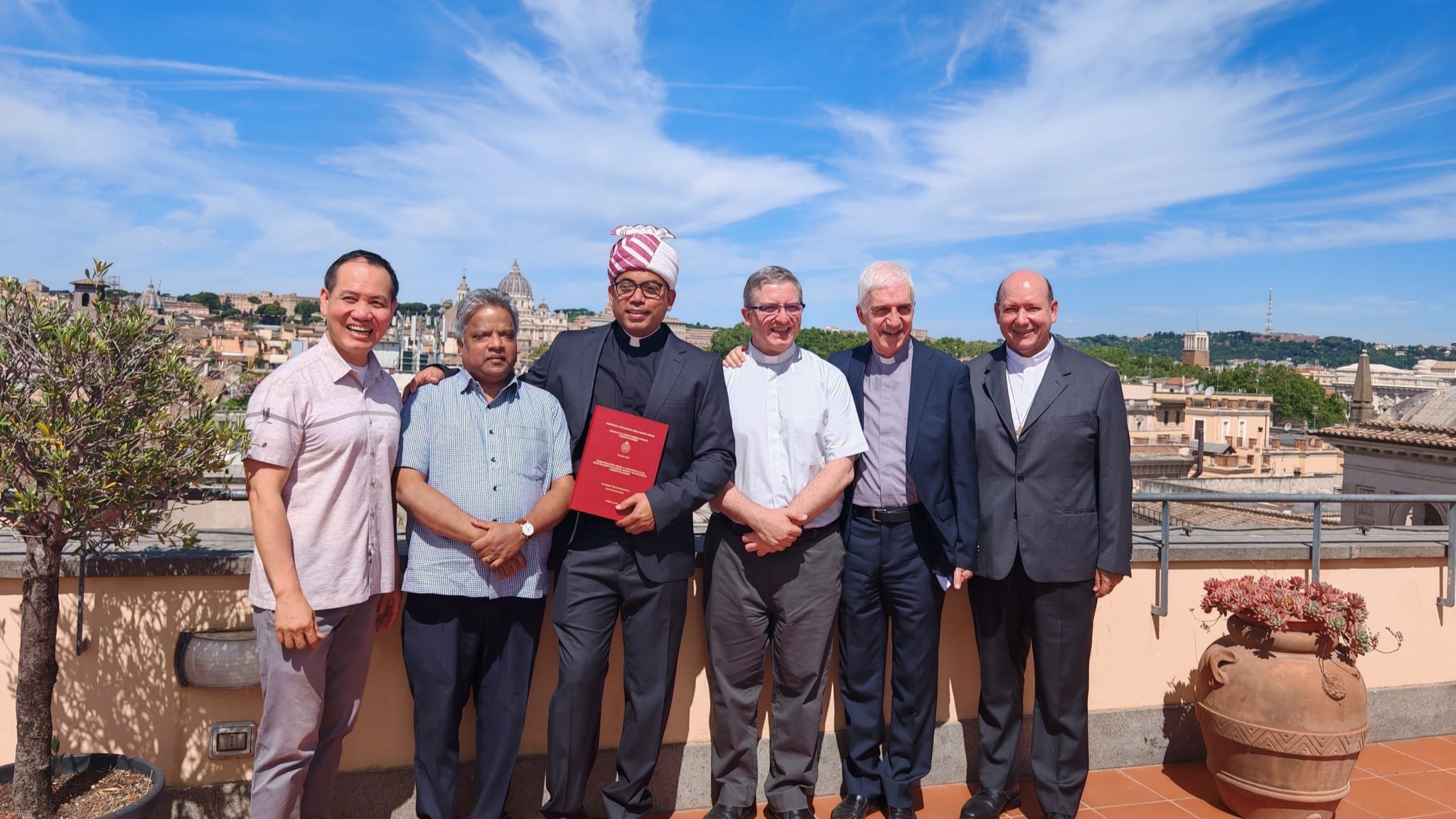
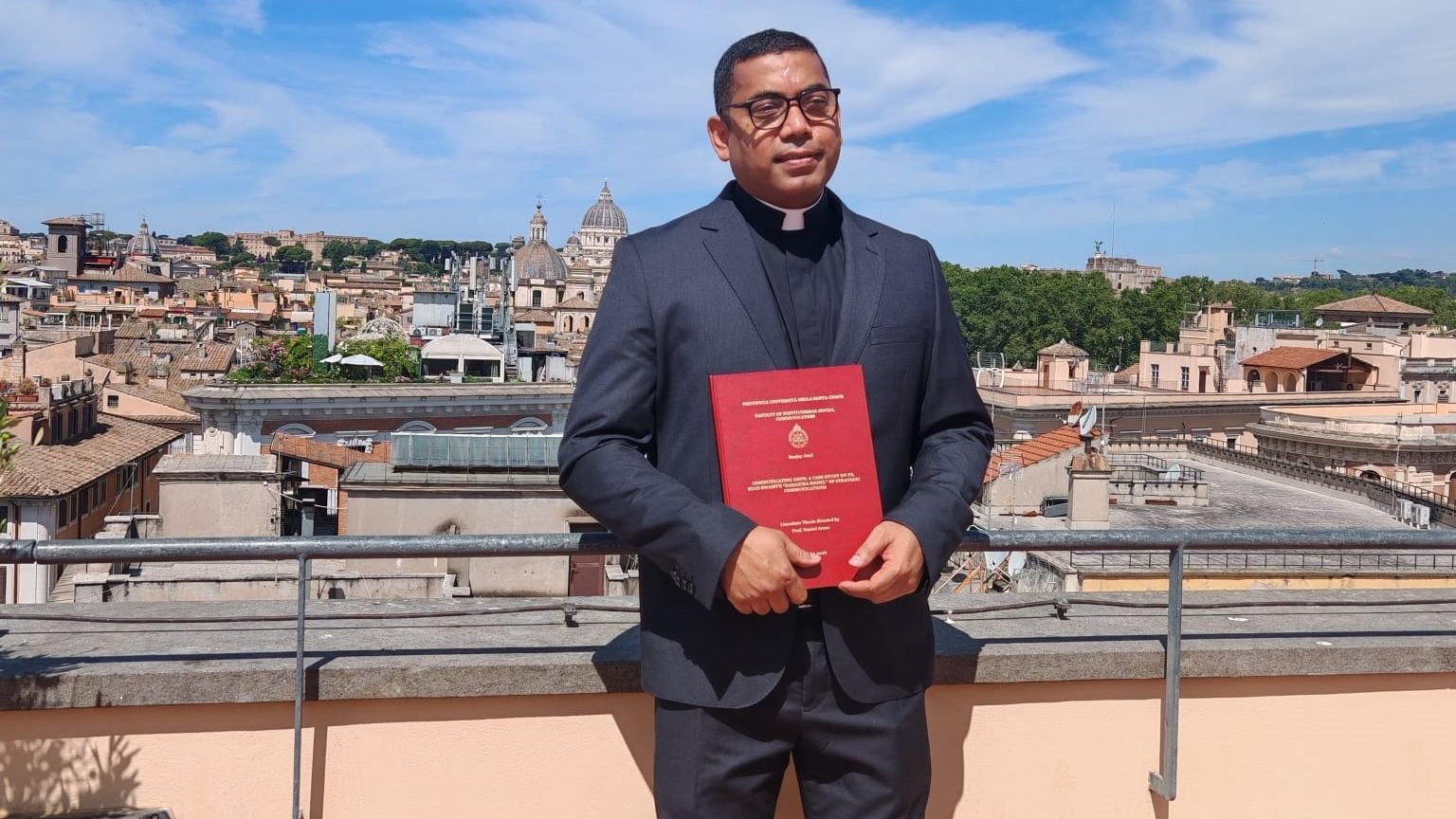
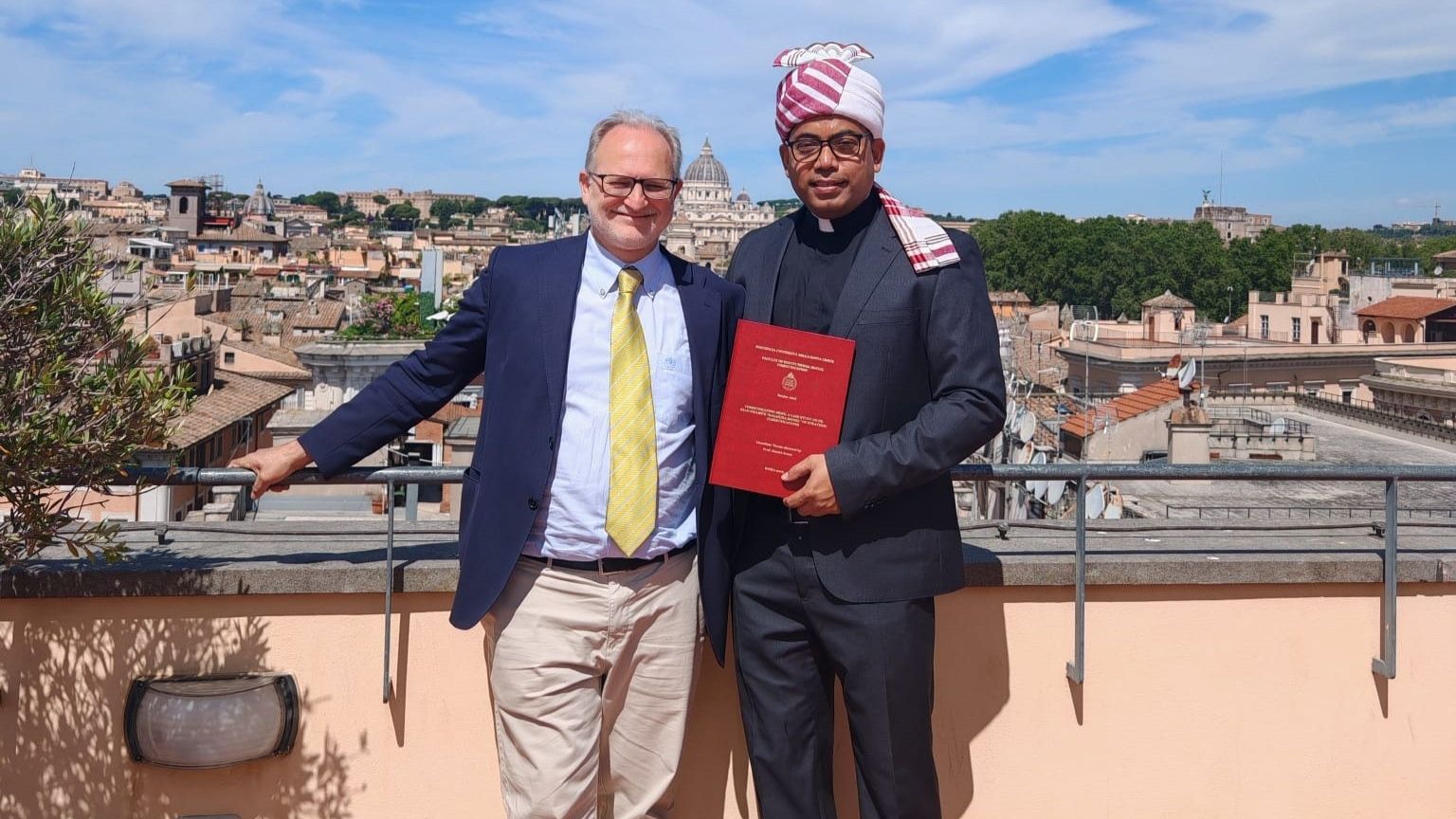
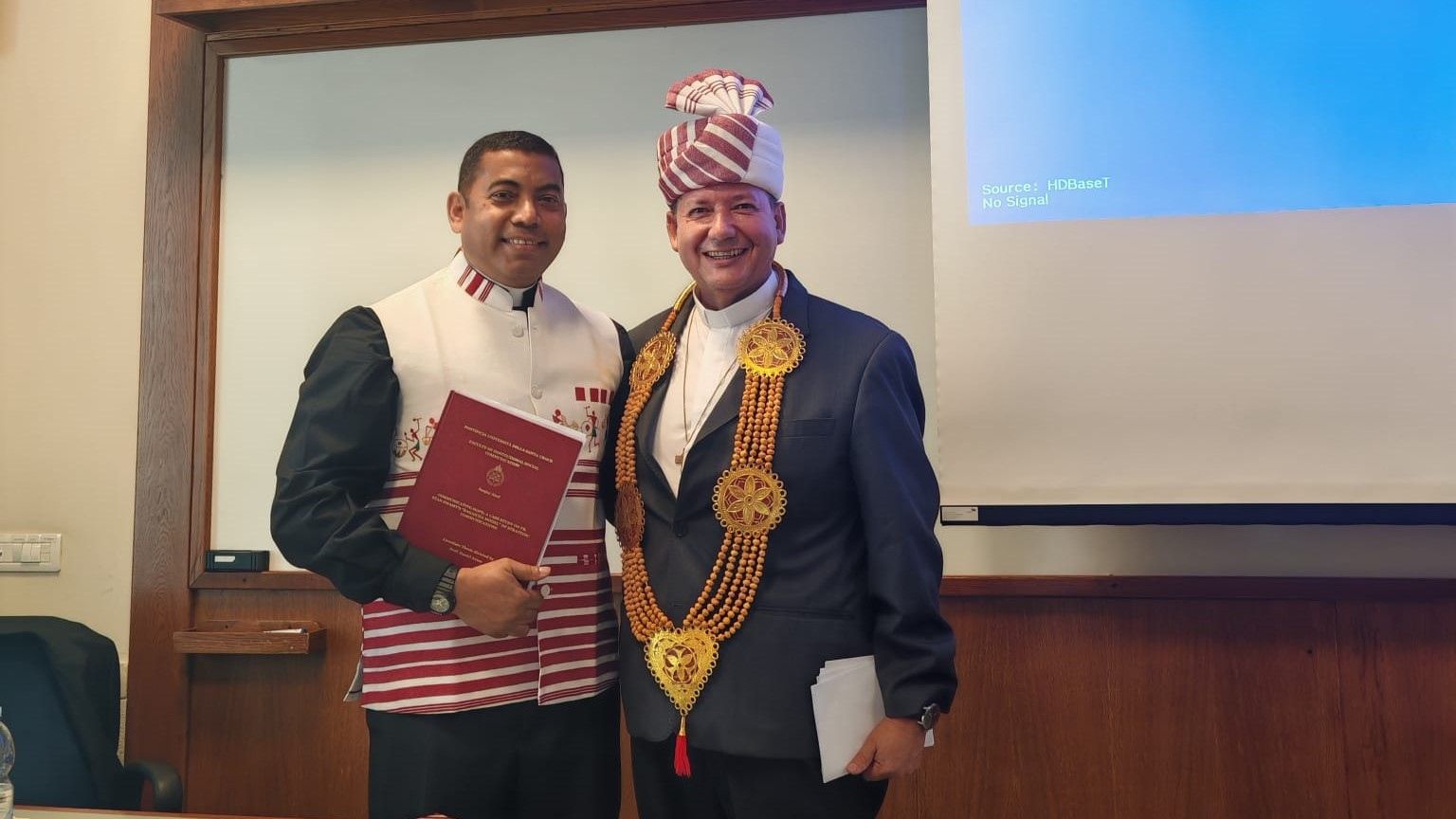
Rome, June 18, 2026: The enduring witness of Jesuit tribal rights activist Fr. Stan Swamy has received fresh academic attention through a groundbreaking study that explores how communication can become a transformative force for justice, participation, and hope among marginalized communities.


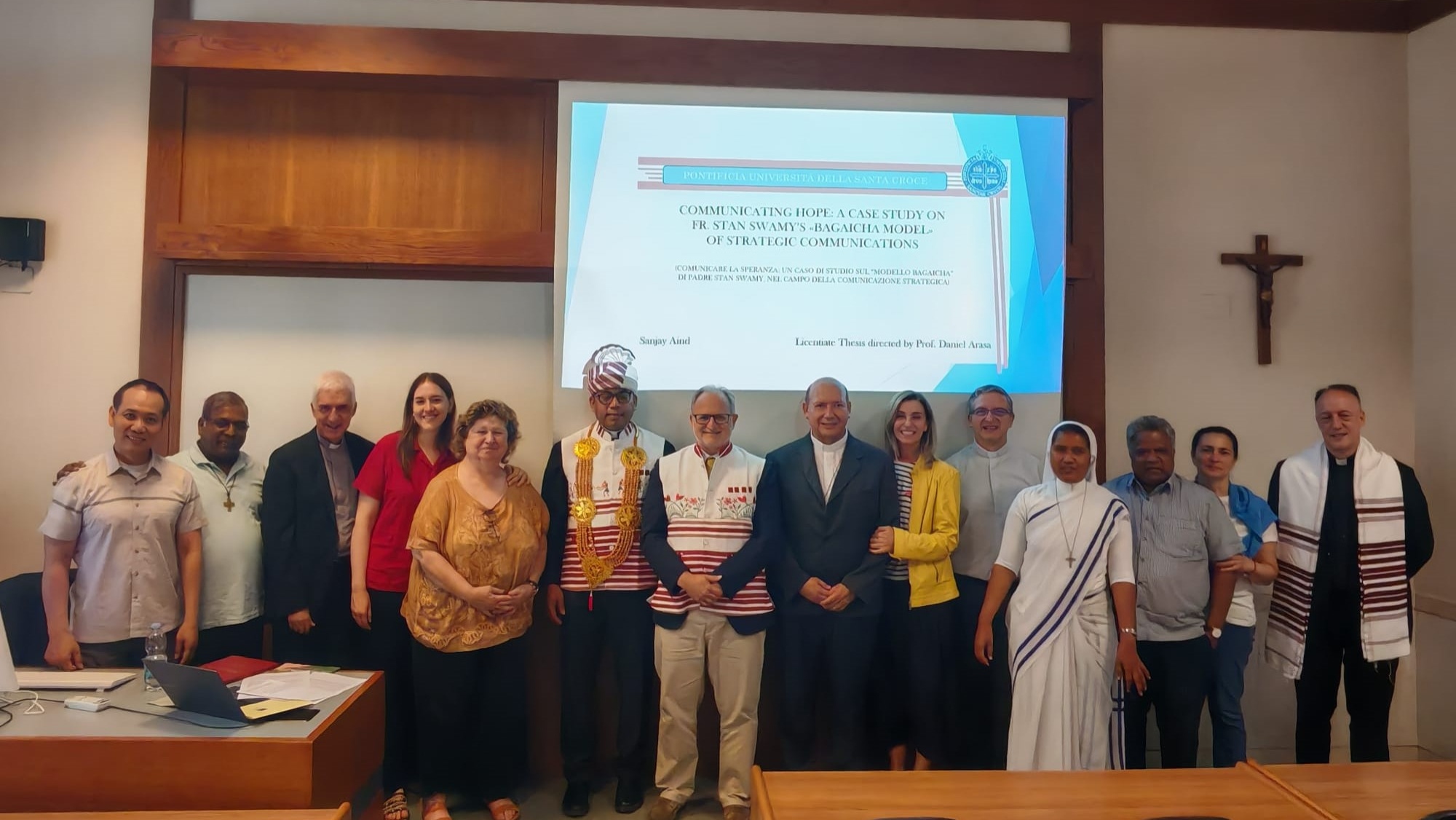
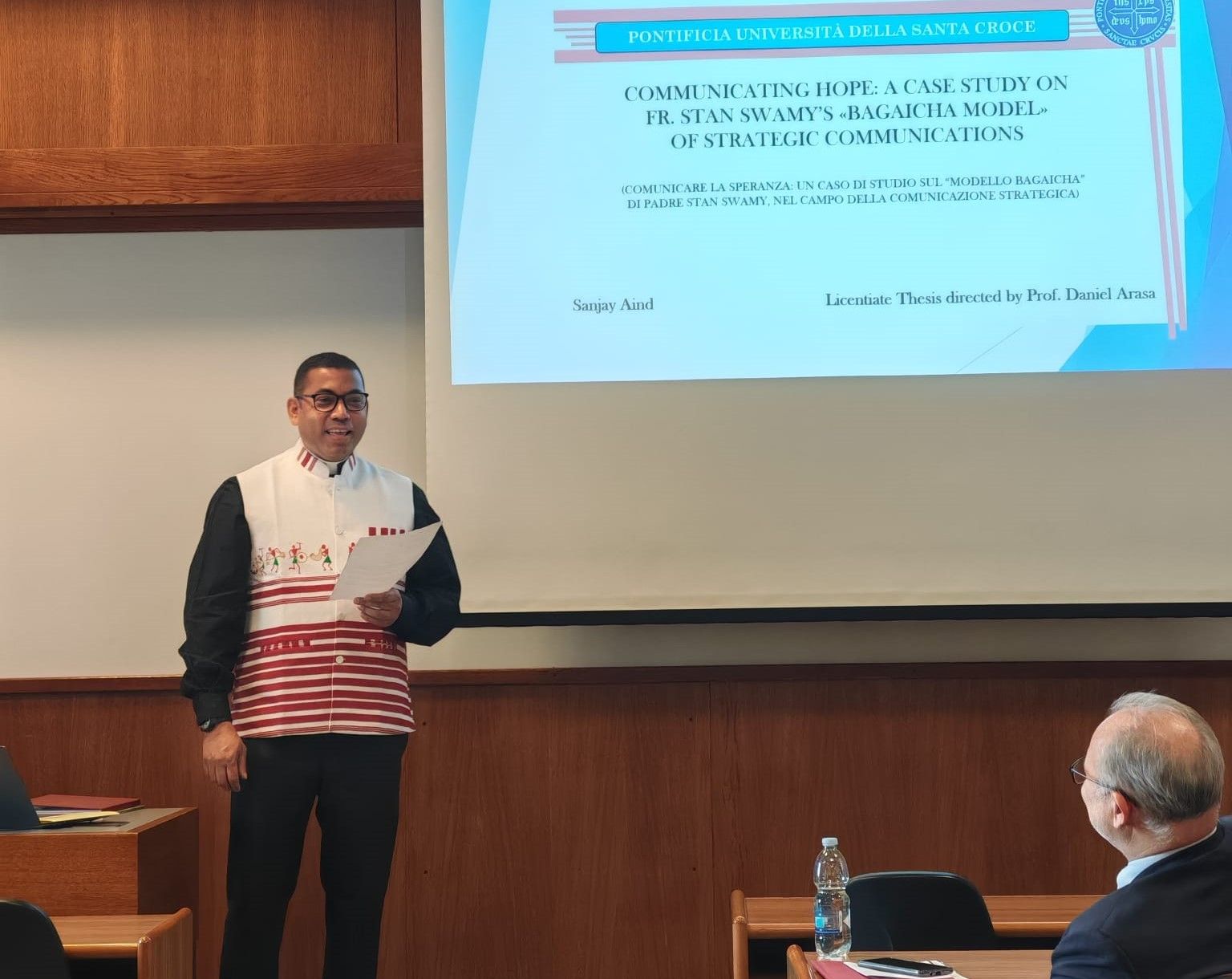
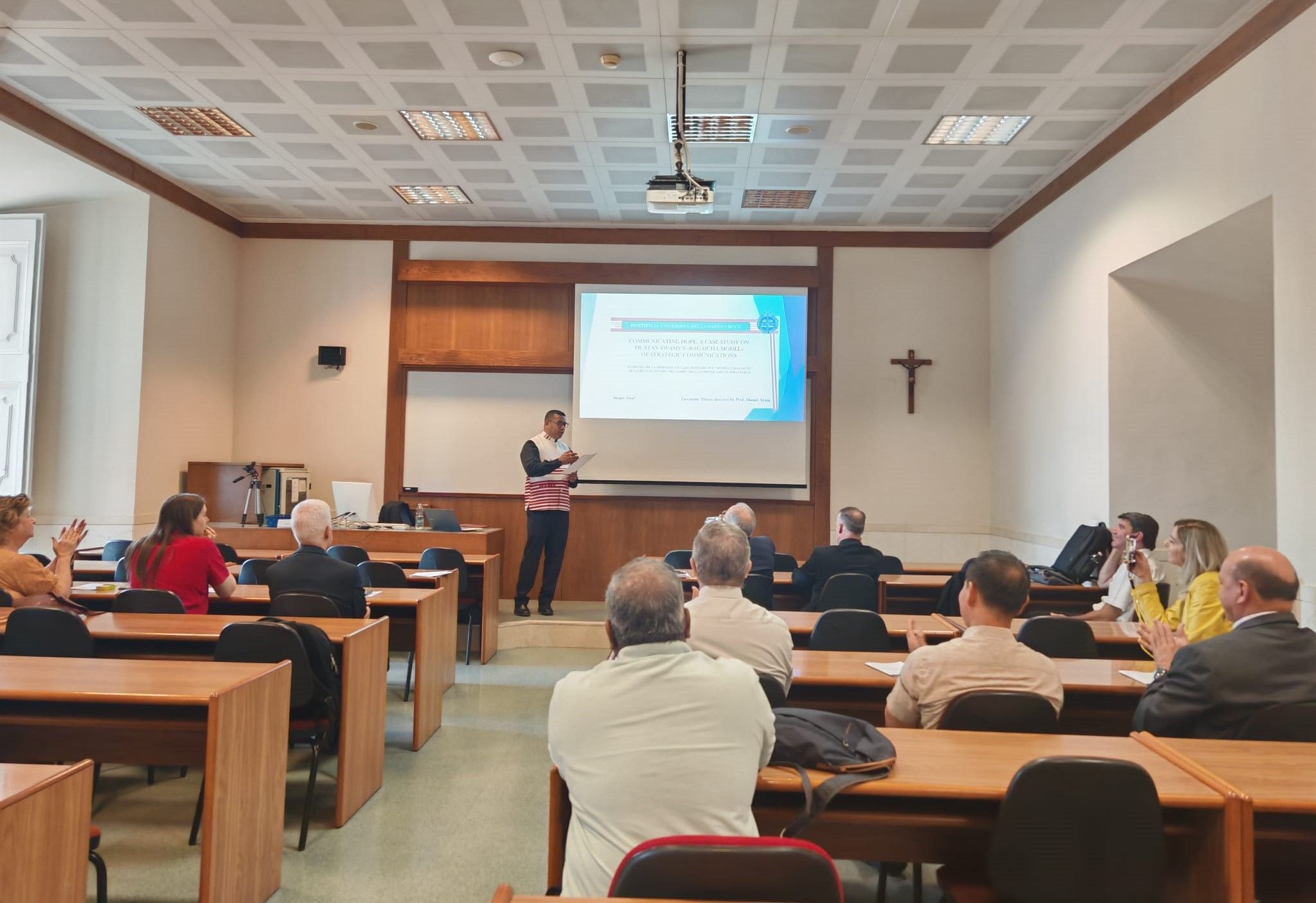
Fr. Sanjay Aind, SDB, a Salesian priest serving as Assistant Parish Priest at Sacro Cuore in Rome, successfully defended his Licentiate Thesis at the Faculty of Institutional Social Communication of the Pontifical University of the Holy Cross on June 15. His research, titled “Communicating Hope: A Case Study on Fr. Stan Swamy’s ‘Bagaicha Model’ of Strategic Communications,” examines the innovative communication approach developed by Fr. Stan during his decades-long ministry among India’s indigenous peoples.
Conducted under the supervision of Prof. Daniel Arasa, the thesis investigates how communication can serve not merely as a means of transmitting information but as a powerful tool for empowering communities, defending human dignity, and advancing social justice.


Central to the study is Fr. Stan’s conviction that communication must amplify the voices of those who are often excluded from public discourse. Rather than adopting a top-down approach, he fostered participation, dialogue, and accompaniment, enabling marginalized communities to articulate their own experiences, aspirations, and concerns.
The research traces Fr. Stan’s more than five decades of ministry among the Adivasi communities of Jharkhand, where he worked alongside indigenous peoples facing displacement, land alienation, environmental degradation, and threats to their cultural identity arising from mining projects and inequitable development policies. According to the thesis, his commitment was rooted in accompanying these communities in their struggle for justice and the protection of their constitutional rights.
A significant portion of the study focuses on Fr. Stan’s efforts to educate tribal communities about legal safeguards available to them, including the Fifth Schedule of the Indian Constitution, the Panchayats (Extension to Scheduled Areas) Act (PESA), and the Forest Rights Act. Through grassroots education, research initiatives, and public advocacy, he encouraged indigenous communities to participate actively in decisions affecting their land, resources, and future.
At the heart of the thesis is the “Bagaicha Model,” named after Bagaicha, the social research and training centre near Ranchi where Fr. Stan carried out much of his work. Fr. Sanjay identifies the model as a distinctive framework of strategic communication built on four pillars: listening, dialogue, participation, and accompaniment.
The study highlights how Fr. Stan combined social research, documentation, community engagement, and public advocacy to raise awareness about issues such as tribal land rights and the plight of undertrial prisoners. His communication strategy, the thesis notes, was marked by credibility, empathy, and a steadfast commitment to justice, enabling him to influence both grassroots communities and wider public opinion.
During the public defence, Fr. Sanjay emphasized the continuing relevance of Fr. Stan’s communication model in a world where marginalized voices are frequently overlooked. He argued that the Bagaicha Model offers valuable insights for fostering solidarity, participation, hope, and social transformation in contemporary society.
The thesis concludes that Fr. Stan Swamy’s legacy extends far beyond activism. It presents him as a “communicator of hope” whose life embodied the Gospel values of justice, compassion, and solidarity with the poor. Through his ministry, research, and advocacy, he empowered countless indigenous people to defend their rights, preserve their cultural identity, and uphold their human dignity.
Fr. Sanjay’s research not only contributes to the field of communication studies but also serves as a reminder that authentic Christian communication begins with listening to the marginalized and standing alongside them in their search for justice and hope.
By Catholic Connect Reporter
© 2026 CATHOLIC CONNECT POWERED BY ATCONLINE LLP