Vatican City, May 3, 2026: The 5th Sunday of Easter draws believers into a deeper spiritual truth—life in Christ is not distant, but deeply connected and life-giving. Through powerful Gospel imagery, the Catholic Church teaches that every Christian is called to remain united with Jesus, the source of all grace, strength, and fruitfulness.

Significance of the 5th Sunday of Easter
This Sunday focuses on spiritual union and fruitful living in Christ.
- It emphasizes the call to remain in Jesus as the source of life and grace.
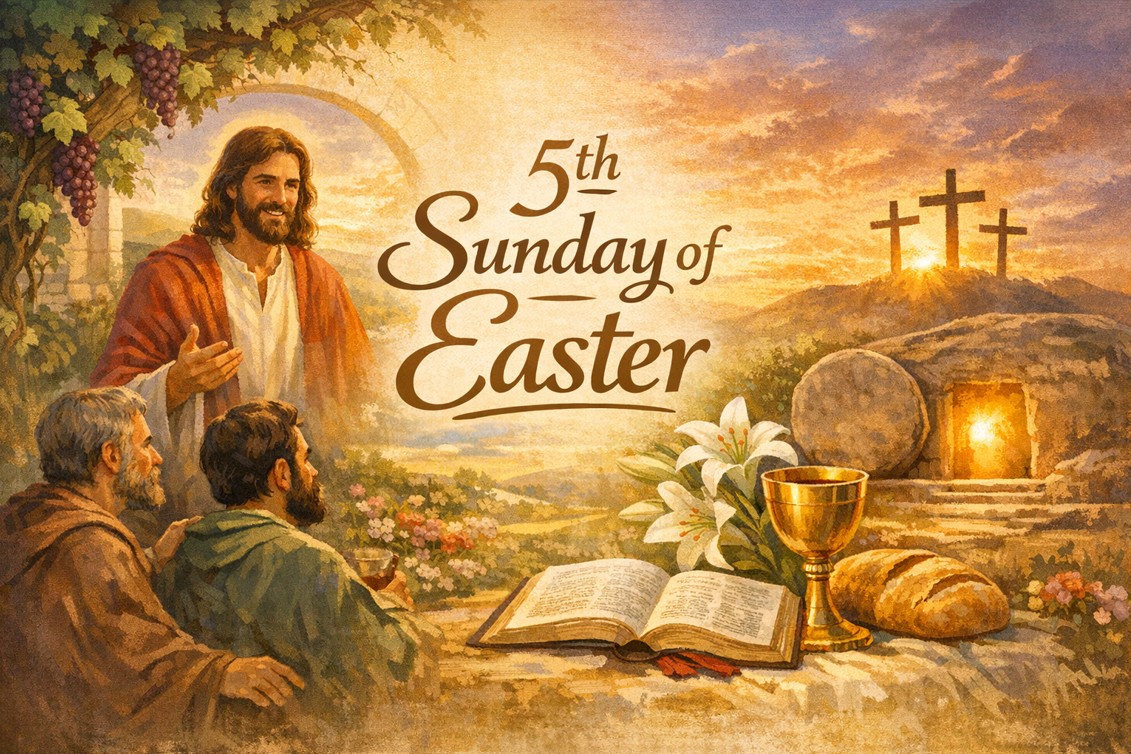
- The Gospel presents the image of the vine and the branches, symbolizing deep connection with Christ.
- It highlights that true Christian life flows from a living relationship with Jesus.
- In Catholic teaching, it reminds believers that faith must bear fruit through love and action.
Historical Origins of the 5th Sunday of Easter
This celebration is rooted in early Christian liturgical tradition.

- It is the fifth Sunday of the Easter season (Eastertide), celebrated 50 days after Easter.
- Historically known as “Cantate Sunday,” from the Latin “Sing to the Lord.”
- Early Church liturgies focused on teachings preparing believers for Pentecost.
- The structure and readings have been preserved in the Catholic liturgical calendar.
Relevance in the Catholic Church Today
The message of this Sunday remains deeply meaningful today.
- It calls Catholics to stay spiritually connected to Christ in everyday life.
- The liturgy encourages growth in prayer, sacraments, and charity.
- It reminds believers that without Christ, spiritual life cannot flourish.
- It challenges the faithful to reflect Christ through acts of love and service.
Interesting Stories and Biblical Events
This Sunday presents one of Jesus’ most powerful teachings.
- The Gospel features Jesus saying: “I am the vine; you are the branches.”
- He teaches that those who remain in Him will bear much fruit.
- It also connects with the commandment to love one another as Christ loves.
- The early Church, as seen in Acts, begins to grow through unity and mission.
Insight: A branch cannot survive without the vine—likewise, a Christian cannot thrive without a living relationship with Christ.
When It Became Part of the Catholic Church
This Sunday has been part of Christian worship since early times.
- Easter celebrations date back to apostolic tradition.
- The structured Sundays of Eastertide developed in the early centuries.
- Over time, specific Gospel themes like the vine and branches were assigned.
- It remains a central teaching moment within the Easter season today.
Other Interesting Facts About the 5th Sunday of Easter
- It is sometimes called “Cantate Sunday,” emphasizing joyful praise.
- The theme shifts from Resurrection appearances to teachings of Jesus.
- It prepares the faithful for the coming of the Holy Spirit at Pentecost.
- The readings often highlight unity, love, and growth in the early Church.
- It reinforces that Christian life is not passive—it must bear spiritual fruit.
The 5th Sunday of Easter invites believers into a deeper, more personal relationship with Christ. It reminds the faithful that true strength, joy, and purpose come from remaining connected to Him—allowing His life to flow through them and transform the world through love.
By Catholic Connect Reporter
Reflective Keywords : 5th Sunday of Easter Catholic meaning, vine and branches explained Catholic, Easter season significance Catholic Church, remain in Christ meaning, Jesus love one another commandment, Eastertide reflection Catholic, bearing fruit in faith Catholic