- 16 May, 2026

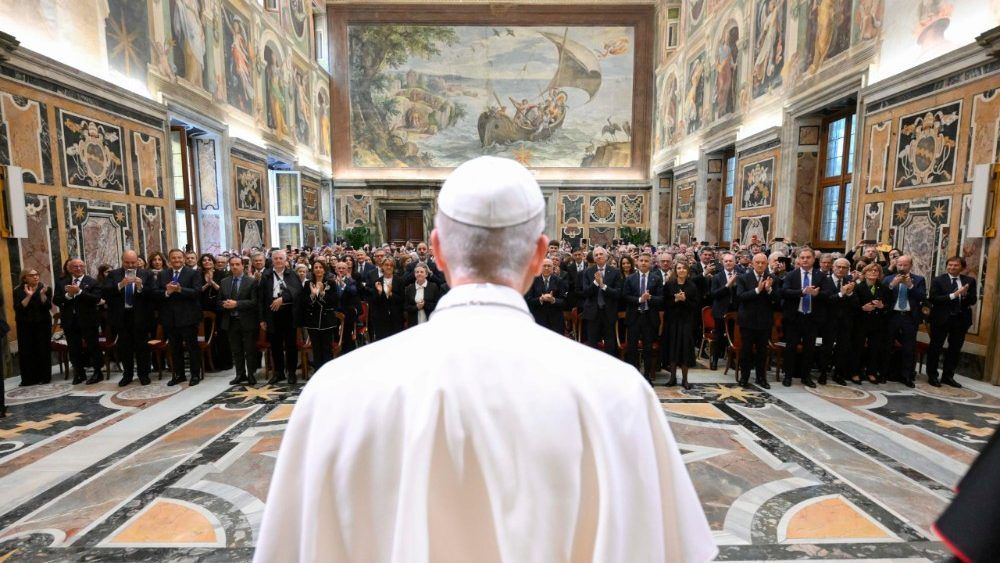
Vatican City, March 14, 2026: Pope Leo XIV’s Message for the 60th World Day of Social Communications, titled “Preserving Human Voices and Faces,” is a significant document. It matters to Catholics and non-Catholics alike, to believers and non-believers, because of its wide-ranging political, religious, moral, social, and economic implications, among others that cannot all be addressed here. Only a few of them are highlighted.


The Spanish writer Javier Cercas says he is not an expert in Artificial Intelligence, but he finds it striking that the same kind of apocalyptic predictions appear whenever a major technological revolution takes place, and AI is certainly one of them. In Plato’s Phaedrus, King Thamus criticized the arrival of writing, calling it a dangerous invention that would “implant forgetfulness in their souls” and lead people to “cease to exercise memory” because they would depend on what is “written”. Plato’s character also argued that writing would weaken the essential bond between teacher and student, and that instead of giving wisdom, it would produce only “the conceit of wisdom,” leading to the decline of authentic culture.
Centuries later, similar concerns appeared again with Gutenberg’s invention of the printing press. Many feared that culture, once confined to libraries, would spread too widely and lose its value by becoming accessible to a broad public. As a result, they believed demanding and authentic culture would be diluted, degraded, and eventually disappear.


More recently, the same kind of anxieties have been voiced about television, the internet, and social media. Yet writing did not destroy real culture; instead, it gave rise to a different kind of culture. In the same way, the printing press did not bring an end to high culture. Shakespeare and Cervantes, for example, are not inferior to Homer and Virgil.
Cercas is not claiming that AI is without dangers, nor that its growth should not be watched carefully. Rather, he argues that, like writing, the printing press, and the internet, AI must be used for good rather than evil, and that its impact depends on how human beings and public authorities choose to direct and regulate it. Writing and the printing press, like AI, can serve both noble and harmful purposes: they can be used to publish Don Quixote, but also Mein Kampf.
He adds that technology itself is not the issue; the real issue is how people use it. At the same time, he is not saying technology is neutral. Since human beings create technology, they are responsible for the good or harm it produces, whether in the case of writing, the printing press, or AI.
According to Cercas, this is also Leo XIV’s understanding of AI. The Pope does not take an apocalyptic view. He does not believe, as some do, that this technology is or will become the source of all or most of humanity’s problems, nor that it will destroy civilization or culture. But he is also not “integrated,” and does not believe, as others do, that this technology on its own can make life better. “Embracing the opportunities offered by digital technology and artificial intelligence with courage, determination and discernment does not mean turning a blind eye to critical issues, complexities and risks”, Pope Leo XIV writes.
The Pope clearly recognizes these dangers and cautions against “a naive and unquestioning reliance on artificial intelligence as an omniscient ‘friend’, a source of all knowledge, an archive of every memory, an ‘oracle’ of all advice”. In other words, for Leo XIV, AI is neither a cure-all nor an evil tool in itself. It is simply shaped by what human beings choose to make of it. For that reason, its development is above all a challenge: to use it in building a society that is more just, more equal, and more joyful.
That is why the Pope states that the “task laid before us is not to stop digital innovation, but rather to guide it and to be aware of its ambivalent nature”, including both its clear benefits and its less visible dangers. To strengthen the former and prevent the latter, so that AI becomes an ally rather than an enemy, Leo XIV points to three key values: responsibility, cooperation, and education. This includes the responsibility of AI owners, developers, programmers, politicians, regulatory authorities, journalists, and also citizens, who must hold them accountable; cooperation among the many sectors that shape the future of AI, since no one can do it alone; and the education of users, which means everyone. Together, these three priorities form an ambitious but necessary program.
Nearly a year after the death of Pope Francis, many Catholics and non-Catholics still continue to wonder what kind of Pope Leo XIV will be, especially in comparison with Francis. From the beginning, Leo seemed to come to calm the waters stirred by his predecessor, remaining in continuity with Francis in substance, though not in style.
In any event, this document shows that, like Francis, Leo XIV is able to confront the urgent questions of the present age with courage, clarity, and without prejudice. This is one of the ways the Catholic Church can be of service to everyone.
Courtesy: Vatican News
© 2026 CATHOLIC CONNECT POWERED BY ATCONLINE LLP