- 16 May, 2026

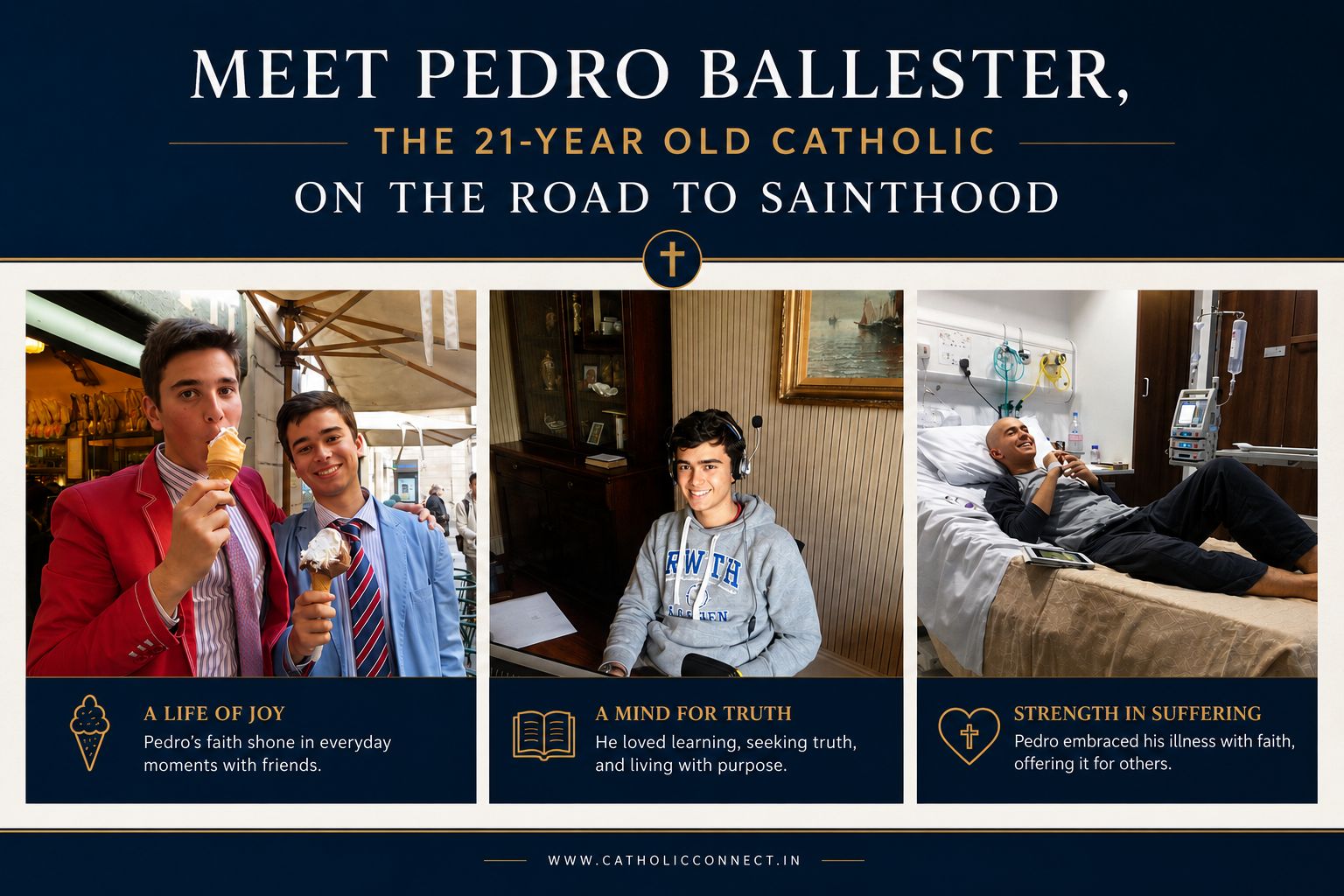
May 16, 2026: He loved fishing, engineering, politics and late-night conversations with friends. He was a top university student with dreams for the future. But at 18, Pedro Ballester was diagnosed with aggressive pelvic cancer — a suffering he would endure for three years with a faith that stunned everyone around him.


Now, eight years after his death at the age of 21, the Diocese of Salford has officially opened the cause for his beatification and canonisation, taking the first step toward recognising the young Manchester man as a possible saint of the Catholic Church.
The announcement, published by the diocese on May 13, said Pedro’s “life of faith and witness continues to inspire many,” especially through the serenity and trust with which he faced suffering.


A Brilliant Student with an Ordinary Life
Pedro Ballester Arenas was born in Manchester on May 22, 1996, to Spanish parents who had settled in England. Friends remembered him as cheerful, sociable and deeply authentic — someone who could move naturally from serious conversations to jokes and laughter.
Academically gifted, Pedro earned top marks in Maths, Chemistry, Physics, Further Maths and Spanish before securing admission to Imperial College London to study Chemical Engineering.
But unlike many stories associated with sainthood, Pedro’s life appeared remarkably ordinary. He enjoyed spending time with friends, discussing Middle Eastern politics and talking about football and current affairs. Those close to him often described him as deeply faithful without ever being preachy.
“He Had Fallen in Love with Christ”
Raised in a Catholic family connected to Opus Dei, Pedro gradually deepened his faith during his teenage years.
At 16, he joined Opus Dei as a numerary member, dedicating his life to God while remaining fully engaged in ordinary work and daily life.
His brother Carlos later recalled the moment Pedro shared the news.
“I remember thinking that he had found a girl,” he said. “I found out that he had fallen in love — he had found Christ.”
The Diagnosis That Changed Everything
Just months after beginning university in 2014, Pedro developed severe back pain and was diagnosed with advanced pelvic cancer.
The illness forced him to leave London and return to Manchester for treatment. Over the next three years, he underwent repeated hospitalisations, experimental treatment in Germany and long periods of intense pain.
Yet many who visited him during this time came away changed by his peace and concern for others.
Pedro often offered his suffering “for the Pope, the Church and all souls.” Even during the hardest moments, he continued encouraging friends in their faith and showing interest in their lives and struggles.
Fr Joseph Evans, chaplain of Greygarth Hall where Pedro later stayed, described him as “an ordinary person with defects and struggles,” noting that the suffering sometimes overwhelmed him. “But his struggle was very real and exceptionally brave,” he said.
“I Have Never Been Happier”
In the final weeks of his life, Pedro continued meeting friends individually in hospital, encouraging them to persevere in life and faith.
When one friend asked him if he was happy, Pedro — fully aware that death was near — gave a response that would later become closely associated with his witness. “I have never been happier.”
Pedro died on January 13, 2018, surrounded by family, friends and fellow Opus Dei members praying beside him.
Months later, the University of Manchester awarded him a posthumous Master’s degree in Engineering — the first such honour ever granted by its School of Chemical Engineering.
With the opening of the cause, Bishop John Arnold has invited the faithful to submit testimonies, letters and memories that may help build a fuller picture of Pedro’s life and reputation for holiness.
By Catholic Connect Reporter

© 2026 CATHOLIC CONNECT POWERED BY ATCONLINE LLP