- 28 September, 2026

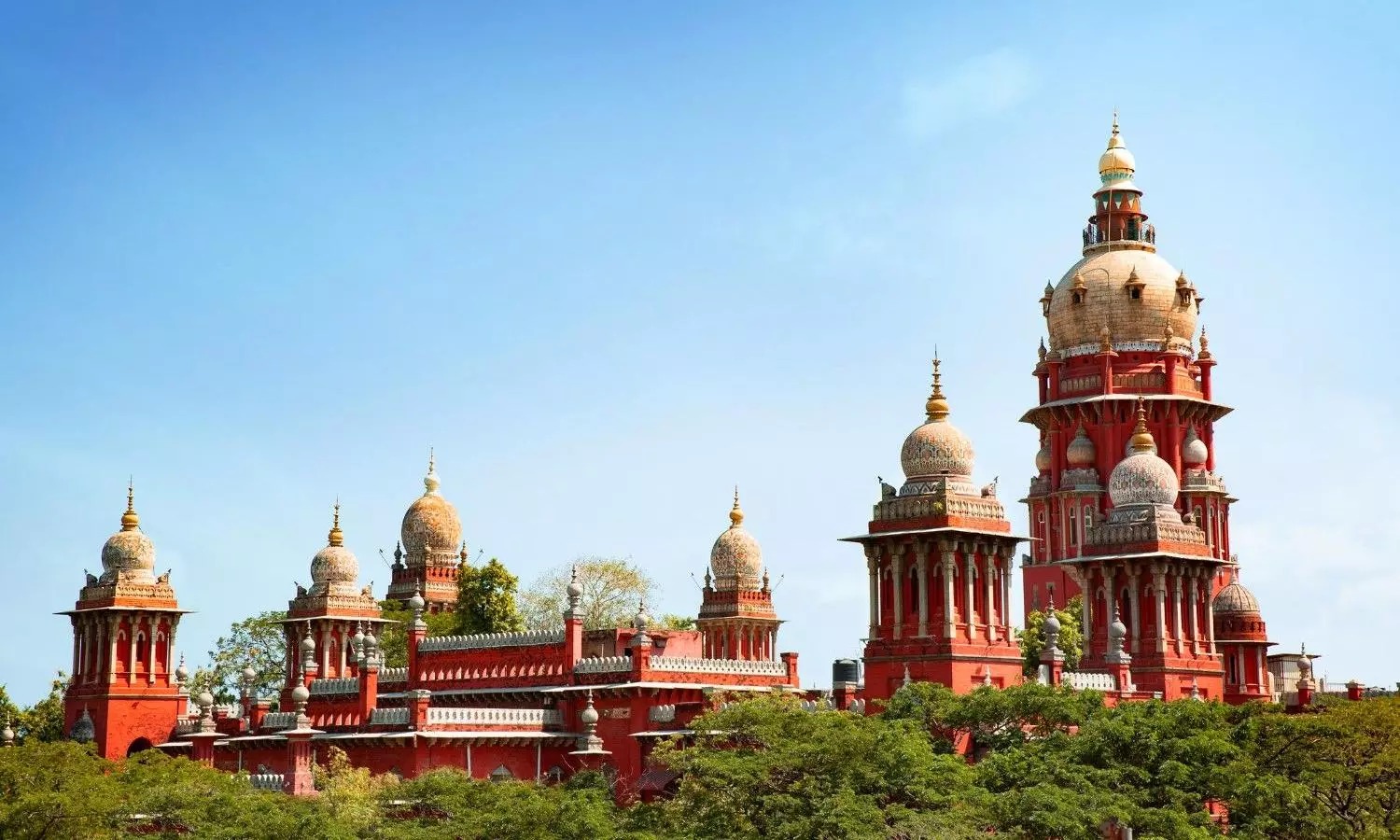
Madras, Jan 27, 2026: The Madras High Court has directed the Greater Chennai Corporation to remove a Christian shrine that was found to be encroaching on a public road, holding that roads and streets do not have any religious character. The Court ruled that any structure, whether religious or non-religious, built on a public road or street must be removed as per law.


The order was passed by a Single Judge Bench of Justice V. Lakshminarayanan while allowing a writ petition filed by a resident who complained that a shrine had been erected on a public pathway, causing obstruction and inconvenience to pedestrians.
The Court observed that irrespective of the nature of a structure, if it is constructed on a public street or land belonging to a local body, the authorities are legally required to remove it after issuing due notice. The judge stated that a road or street cannot be treated as a religious space.
Background
The petitioner approached the High Court alleging that a raised structure had been built on a public pathway adjoining his property. He stated that a statue had been installed inside the structure, blocking access and creating inconvenience for pedestrians using the road.
It was submitted that at the time of purchasing the property, the structure was represented as a temporary one. However, it was later converted into a shrine with the installation of a statue, erection of a tall pillar, use of an amplifier, and unauthorised electricity drawn from a nearby residential premises.
The petitioner submitted a complaint to the Greater Chennai Corporation seeking removal of the encroachment. As no action was taken on the complaint, he filed a writ petition seeking directions to the authorities.
During the proceedings, the third respondent was impleaded and claimed that the shrine had been established several decades earlier and had become a place of worship for residents of the locality. It was argued that the shrine had existed for many years without objection and that its removal would hurt religious sentiments and affect communal harmony.
Court’s Observations
The Greater Chennai Corporation placed inspection reports and revenue records before the Court, including Town Survey Land Records. These records showed that the land on which the structure was erected was classified as Sarkar Poramboke and recorded as a public street.
After examining the records, the High Court noted that the structure had been erected on a public pathway and that this factual position was not in dispute. The Regional Deputy Commissioner had already issued a notice to the third respondent under the Tamil Nadu Urban Local Bodies Act calling for the removal of the superstructure.
The Court rejected the argument that the shrine’s long existence justified its continuance. It held that no person has the right to erect or maintain a religious structure on a public road and then resist its removal by invoking religious sentiments.
Referring to judgments of the Supreme Court and various High Courts, the Bench reiterated that the right to religious freedom under Article 25 of the Constitution does not extend to offering worship or maintaining religious structures on public roads or footpaths. Unauthorised religious structures on public pathways, the Court said, are not protected as essential religious practices.
Final Directions
The High Court examined Section 128 of the Tamil Nadu Urban Local Bodies Act and held that the Commissioner has a statutory duty to remove encroachments on public streets after issuing proper notice. The Court found that the notice issued by the Regional Deputy Commissioner complied with legal requirements.
The Bench also rejected the plea that the idol could not be removed, especially since the third respondent had admitted to establishing and maintaining the shrine. It clarified that long-standing encroachments do not confer any legal protection and that every day an illegal structure remains on a public road gives rise to a fresh cause of action.
The Madras High Court directed the Greater Chennai Corporation to proceed with action under Sections 128(1)(b) and 128(2) of the Tamil Nadu Urban Local Bodies Act, act on the statutory notice already issued, and ensure timely removal of the encroachment. The writ petition was allowed, and the matter was directed to be listed for compliance.
Courtesy: Verdictum







© 2026 CATHOLIC CONNECT POWERED BY ATCONLINE LLP