- 07 June, 2026

New Delhi , June 07, 2026: A recent statement by the Union Minority Affairs Minister has reignited discussions on the realities faced by religious minorities across India.


What Happened?
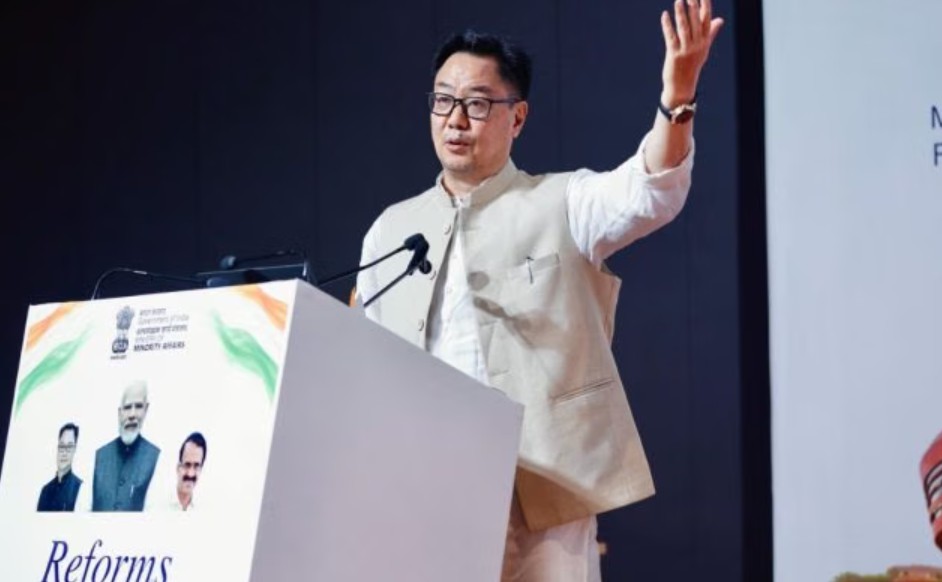
Speaking at the Minority Affairs Ministry's "Reforms Utsav" in New Delhi on June 4, 2026, Union Minority Affairs Minister Kiren Rijiju defended the government's record on minority welfare and questioned allegations of religious persecution in India.


During his address, Rijiju challenged critics to provide an example of a person leaving India because of insecurity linked to their religion or identity. He further described claims of systematic persecution of religious minorities as "propaganda" spread by political opponents.
His remarks came during celebrations marking twelve years of reforms under the Modi government and were widely reported by national media. While supporters viewed the statement as a defense of India's democratic and pluralistic traditions, critics argued that it overlooked documented concerns raised by human rights groups, religious organizations, and international observers.
Why the Statement Sparked Debate
The controversy stems from the contrast between the government's position and reports issued by various civil society organizations regarding the treatment of minority communities.
Several rights groups have documented incidents involving hate speech, communal violence, attacks on places of worship, and social discrimination affecting religious minorities, particularly Muslims and Christians.
Critics argue that acknowledging such incidents is necessary for strengthening India's democratic institutions, while government representatives maintain that isolated incidents should not be portrayed as evidence of widespread persecution.
The debate reflects a larger national conversation about how religious freedom, security, and constitutional rights should be protected in a diverse society.
Challenges Faced by Minorities in Recent Years
a) Anti-Conversion Laws
One of the most debated issues has been the implementation of anti-conversion laws in several states. Supporters say these laws prevent forced or fraudulent religious conversions. Critics contend that they are often used to target Christian pastors, missionaries, and interfaith couples, even when there is little evidence of coercion.
b) Vigilante Violence and Hate Speech
Human rights organizations have repeatedly expressed concern about incidents involving vigilante groups targeting minorities. Allegations of forced conversion, cow protection disputes, and communal tensions have occasionally led to violence and arrests.
Observers have also highlighted inflammatory rhetoric on social media and in public discourse, arguing that such language can deepen divisions between communities.
c) Property Demolitions and Due Process Concerns
Another contentious issue has been the use of demolition drives following communal disturbances in certain states. Critics have described these actions as "bulldozer justice," arguing that legal procedures and due process must be followed regardless of the circumstances.
d) Educational and Social Concerns
Minority organizations have also raised concerns regarding scholarship schemes, educational opportunities, and the protection of minority institutions. Many community leaders argue that access to education remains one of the most effective tools for ensuring social equality and national integration.
India's Constitutional Promise
India's Constitution guarantees freedom of religion, equality before the law, and the right to profess, practice, and propagate one's faith. These principles have long served as the foundation of the country's multicultural identity.
Many legal experts emphasize that debates over religious freedom should not be viewed through partisan lenses alone. Instead, they argue that safeguarding constitutional rights benefits every citizen, regardless of faith or ideology.
A Hopeful Path Forward
Despite differing perspectives, there remains broad agreement that India is strongest when all communities feel secure, respected, and included. Open dialogue between government institutions, religious leaders, civil society groups, and citizens can help address concerns before they escalate into larger conflicts.
The challenge ahead is not merely to debate whether discrimination exists, but to ensure that every reported incident is investigated fairly and that justice is delivered without bias. Building trust requires transparency, accountability, and a commitment to the constitutional values that unite the nation.
As India continues its journey as the world's largest democracy, the hope remains that diversity will be viewed not as a challenge to overcome but as a strength to celebrate. In that vision, every citizen—majority and minority alike—has a place, a voice, and the freedom to live their faith without fear.
Courtesy The Wire
Photo Courtesy : The Print
© 2026 CATHOLIC CONNECT POWERED BY ATCONLINE LLP