- 13 October, 2026

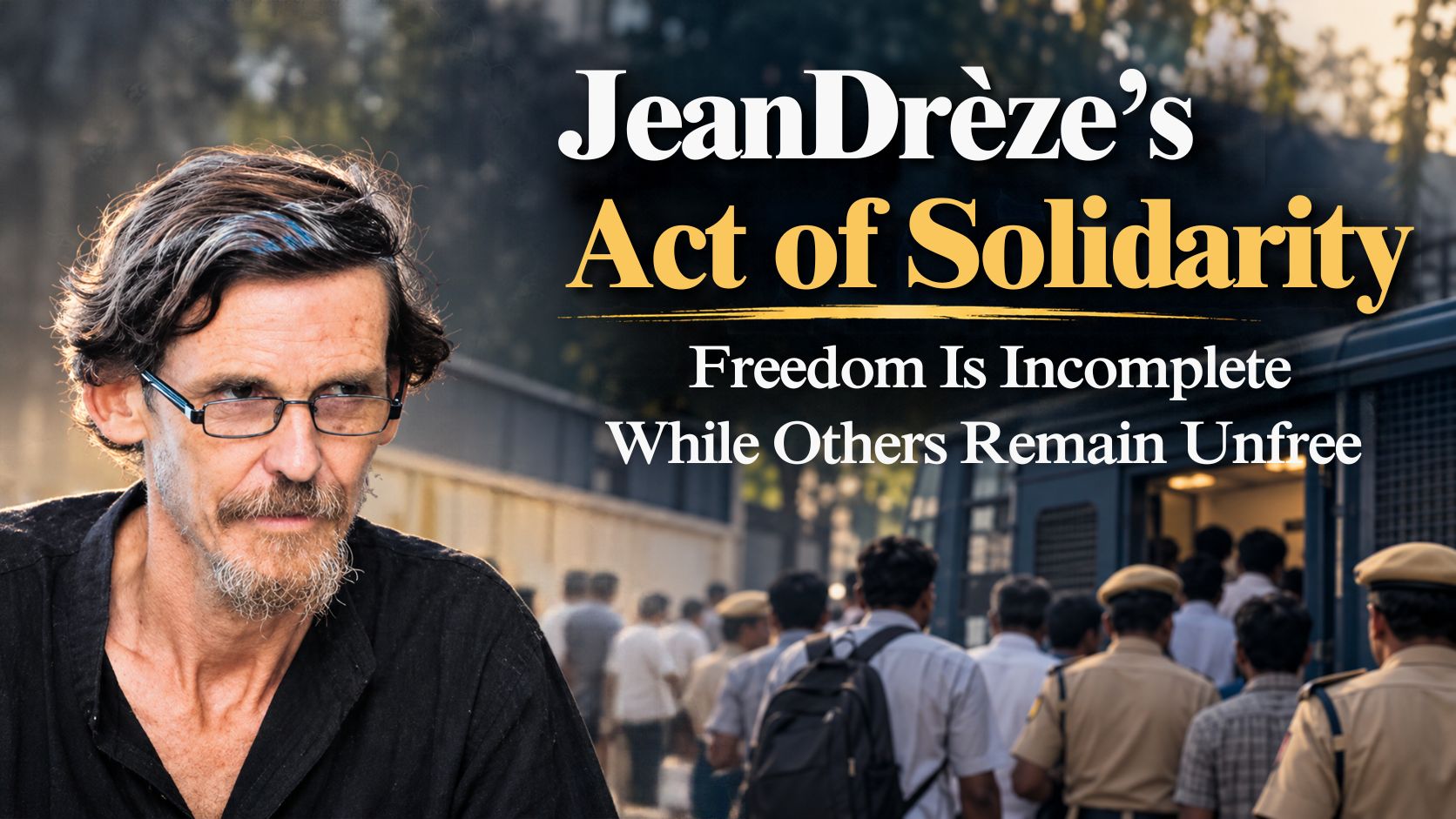
13 Oct 2026: When police offered Jean Drèze his freedom, he refused to leave without his fellow detainees. Detained during a peaceful demonstration at Jantar Mantar, Delhi, on October 10, 2026, the economist chose solidarity over personal liberty, remaining at the police station until everyone was released. His simple but powerful act offers a lesson in what it truly means to be free.



Belgian-born Drèze is an economist known for his work on poverty, hunger, human dignity and human rights in India. Born into a Catholic family, he came to India for research but chose to make the country his home. He has taught at institutions including the London School of Economics and the Delhi School of Economics and collaborated with Nobel laureate Amartya Sen and other prominent scholars. He became an Indian citizen in 2002 and currently lives in Ranchi.
On October 10, Drèze joined other demonstrators at Jantar Mantar, holding a placard. Like them, he was taken by bus to the Adarsh Nagar police station, where he reportedly witnessed the mistreatment of detainees.
After about four hours, police allowed him to leave. Drèze declined, insisting that everyone should be released together. According to Article 14, he told the police: “We told the police that either all the detainees are released together, or we continue to stay here.” After approximately 11 hours, all the detainees were released.
Drèze’s decision challenged the unequal treatment of people based on their social and economic circumstances. He could have walked free but chose not to abandon those who remained in custody. His action demonstrated that solidarity is more than sympathy; it means standing alongside others when we have the option to walk away.
Freedom loses its meaning when it is enjoyed by some but denied to others.
For Indian Catholics, this episode offers a powerful reminder of the Gospel’s call to love our neighbours and treat others as we wish to be treated. Faith must extend beyond worship and words to our response to injustice, exclusion and human suffering.
While many Catholics serve others with compassion, indifference persists when injustice affects people outside their immediate communities. Drèze’s example challenges us to look beyond differences of religion, caste, class and political affiliation. Human dignity and civil rights cannot depend on social standing or personal influence.
When freedoms are curtailed, dissent is suppressed and people are denied meaningful participation in public life, the consequences concern everyone. Defending our own rights while remaining silent about the rights of others weakens the foundations of a just society. We must therefore work together not only to reclaim our freedoms but also to protect those of others.
The dignity and equality of every person are fundamental and must be upheld in practice. As St Ignatius of Loyola reminds us, “Love ought to manifest itself in deeds rather than in words.”
Jean Drèze’s decision to remain with his fellow detainees embodies this principle. His example invites us to ask not merely whether we are free, but what we are willing to do to help others become free.
By Stanislaus Alla SJ
Vidyajyoti, Delhi


© 2026 CATHOLIC CONNECT POWERED BY ATCONLINE LLP