- 24 July, 2026

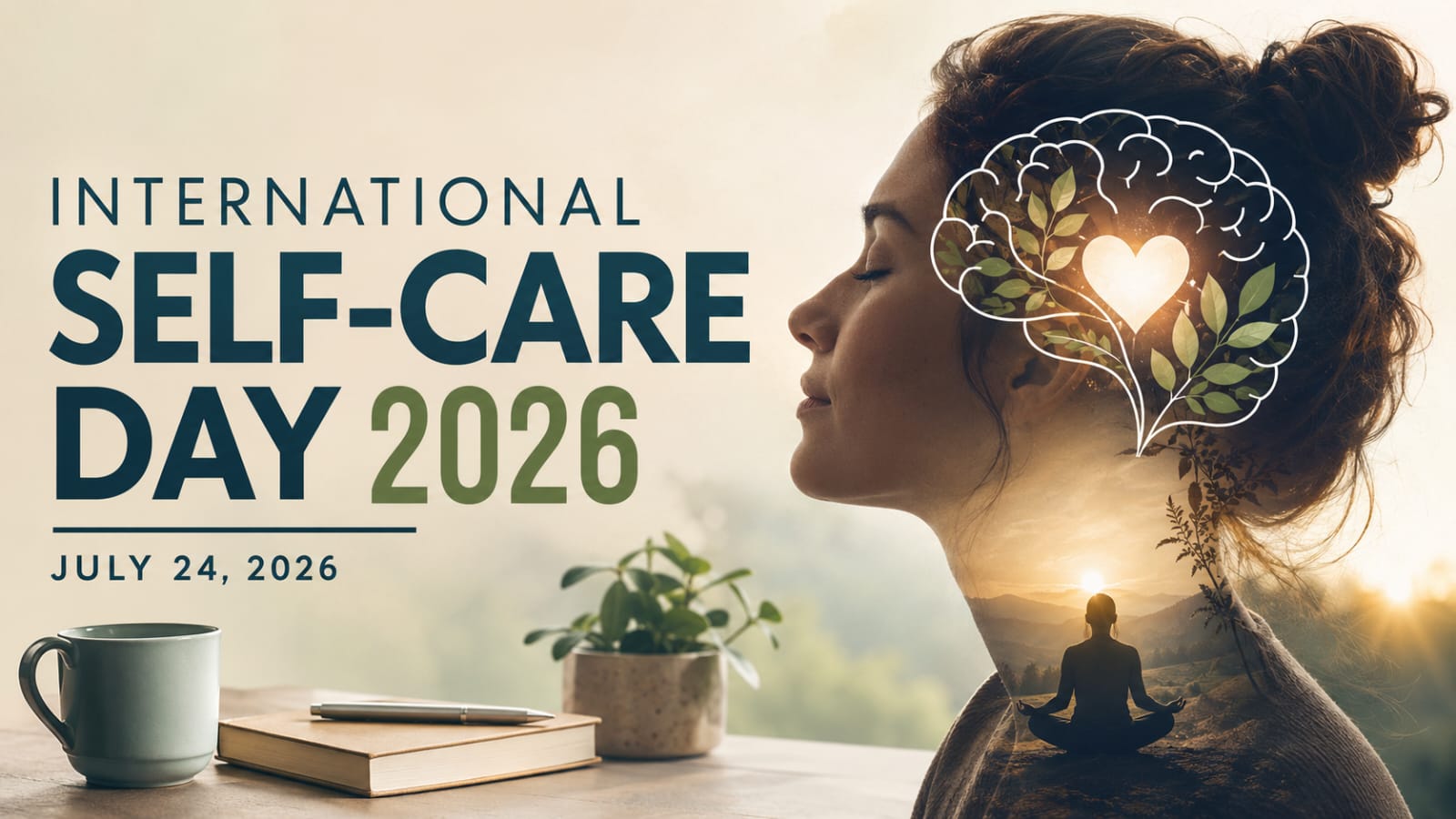
July 24, 2026: What if the greatest act of self-care isn't a spa day, a vacation or switching off your phone—but simply recognising when your mind needs care? As the world marks International Self-Care Day on July 24, the occasion serves as a reminder that self-care is not an occasional indulgence but a daily necessity. At a time when mental health challenges are affecting people across every age group and community, taking care of one's emotional and psychological well-being has become more important than ever.


Observed every year on 24 July, International Self-Care Day was launched by the International Self-Care Foundation (ISF) in 2011. The date—24/7—symbolises that self-care should be practised 24 hours a day, seven days a week, encouraging people to make healthy choices every day rather than only when problems arise.
What is self-care?
The World Health Organization (WHO) defines self-care as the ability of individuals, families and communities to promote health, prevent disease, maintain health and cope with illness or disability, with or without the support of a healthcare provider.


Self-care extends beyond physical health. It includes looking after mental and emotional well-being through healthy habits such as getting enough sleep, eating nutritious food, staying physically active, taking breaks when needed, nurturing meaningful relationships and seeking support during difficult times.
A growing global mental health challenge
The need for self-care has become increasingly urgent as mental health concerns continue to rise around the world.
According to the WHO, nearly one in seven people worldwide—about 1.1 billion people—were living with a mental disorder in 2021.
Among the most common conditions, 359 million people were living with anxiety disorders, while 332 million people were living with depression, which affects about 4% of the global population.
Mental disorders are also among the leading causes of disability worldwide, accounting for one in every six years lived with disability.
(CLICK HERE to follow Catholic Connect for regular News and Content)
The hidden cost of neglecting mental health
Poor mental health affects far more than an individual's emotional well-being.
The WHO estimates that more than 720,000 people die by suicide every year, making suicide the third leading cause of death among young people aged 15 to 29 years. Nearly 73% of suicides occur in low- and middle-income countries.
Mental health also has a significant economic impact. Depression and anxiety result in the loss of approximately 12 billion working days every year, costing the global economy an estimated US$1 trillion annually in lost productivity.
Despite effective treatments being available, the WHO says most people living with mental disorders do not receive adequate care, often because of stigma, limited access to services and a shortage of trained mental health professionals. People living with severe mental health conditions also die 10 to 20 years earlier on average than the general population due to preventable physical illnesses and gaps in healthcare.
Self-care begins with everyday choices
The WHO and mental health experts encourage people to adopt simple daily habits that support mental well-being.
These include getting adequate sleep, engaging in regular physical activity, eating a balanced diet, taking breaks from screens, spending time in nature, maintaining supportive relationships and seeking professional help when emotional struggles persist.
The International Self-Care Foundation also highlights seven pillars of self-care: health literacy, self-awareness, physical activity, healthy eating, risk avoidance, good hygiene, and the responsible use of medicines and healthcare services.
The Catholic Church's Response to Mental Health
Despite effective treatment being available, the WHO says most people living with mental disorders do not receive adequate care because of stigma, limited access to services and shortages of trained professionals.
In India, people seeking emotional support can also turn to the Catholic Mental Health Ministry (CMHM) India, an initiative of the Association of Catholic Mental Health Ministers. The ministry offers free and confidential online counselling, referrals and emotional accompaniment through its nationwide network in multiple Indian languages. Those seeking support can contact the CMHM Helpline at 9611393454.
A reminder beyond one day
International Self-Care Day is more than an annual observance. It is a reminder that caring for mental health should become part of everyday life.
The message behind July 24 is simple yet significant: self-care is not about perfection or luxury. It is about making small, consistent choices that protect physical, emotional and mental well-being. As mental health challenges continue to affect millions across the world, investing time in self-care is not only beneficial for individuals but also for families, workplaces and communities.
By Catholic Connect Reporter






© 2026 CATHOLIC CONNECT POWERED BY ATCONLINE LLP