- 06 November, 2026
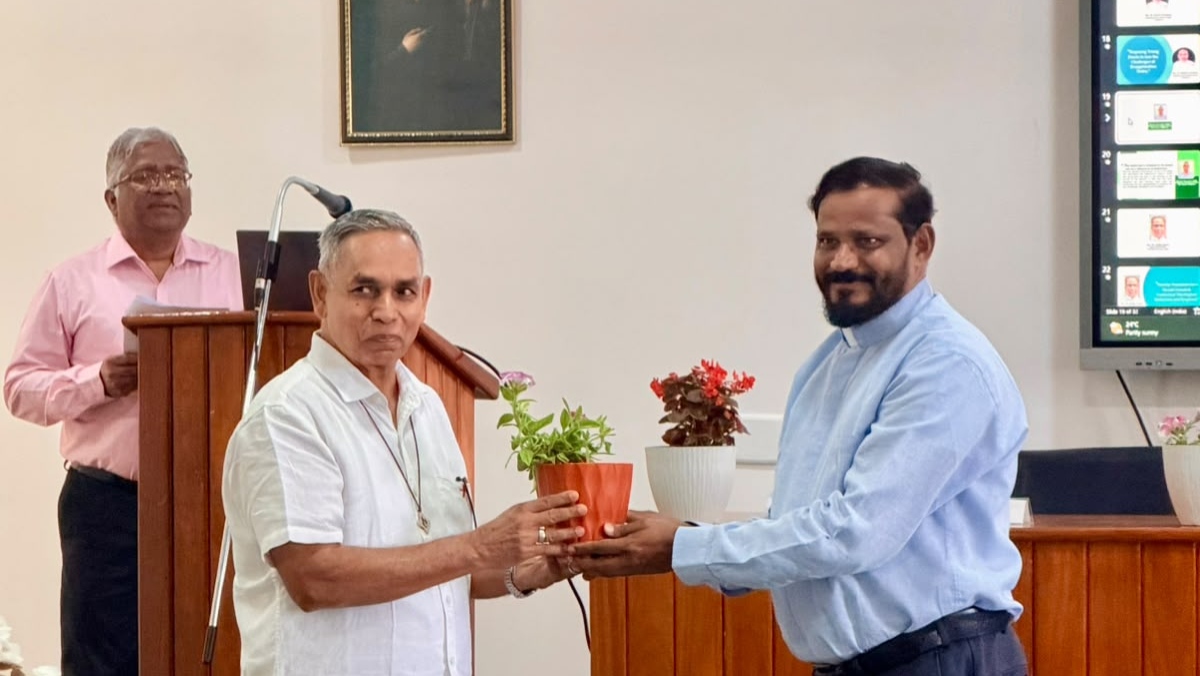
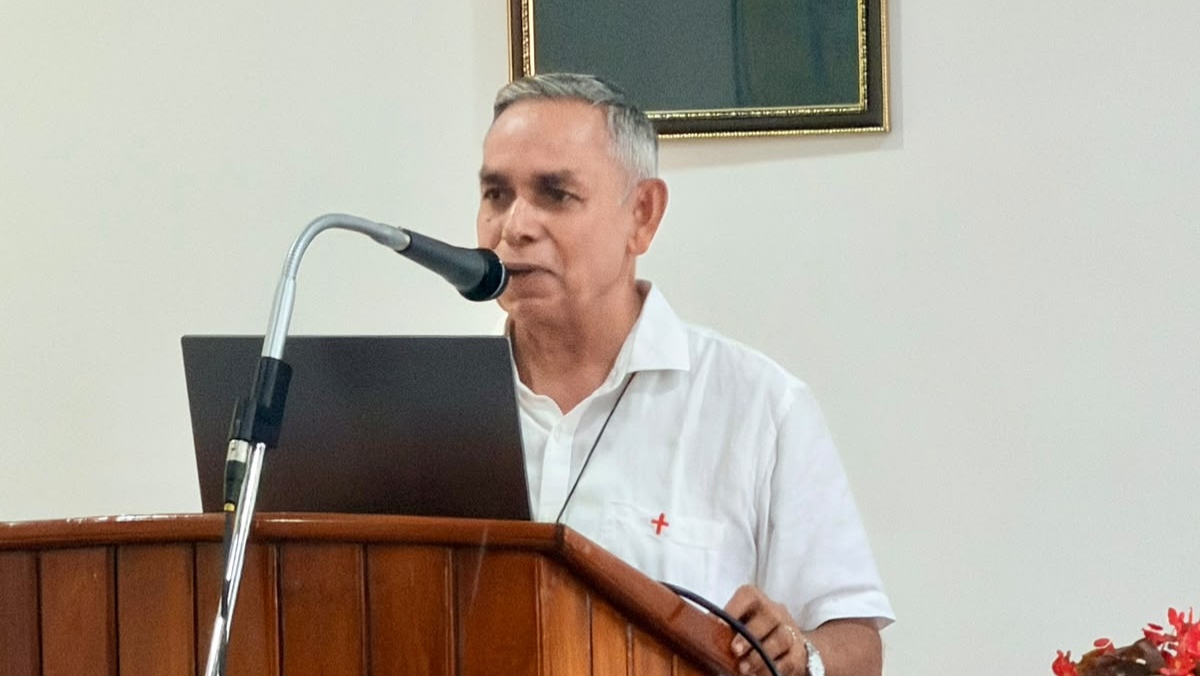
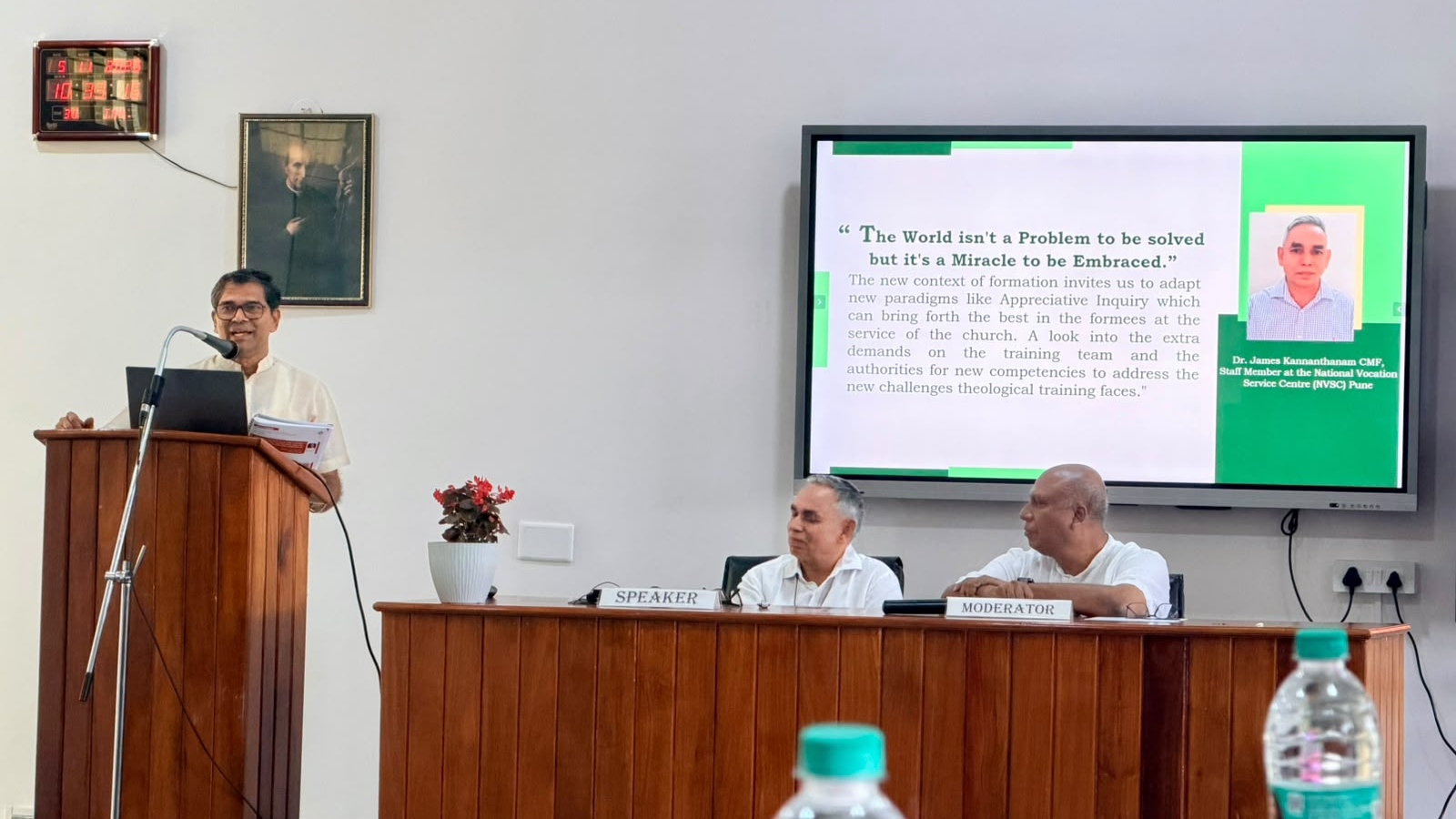
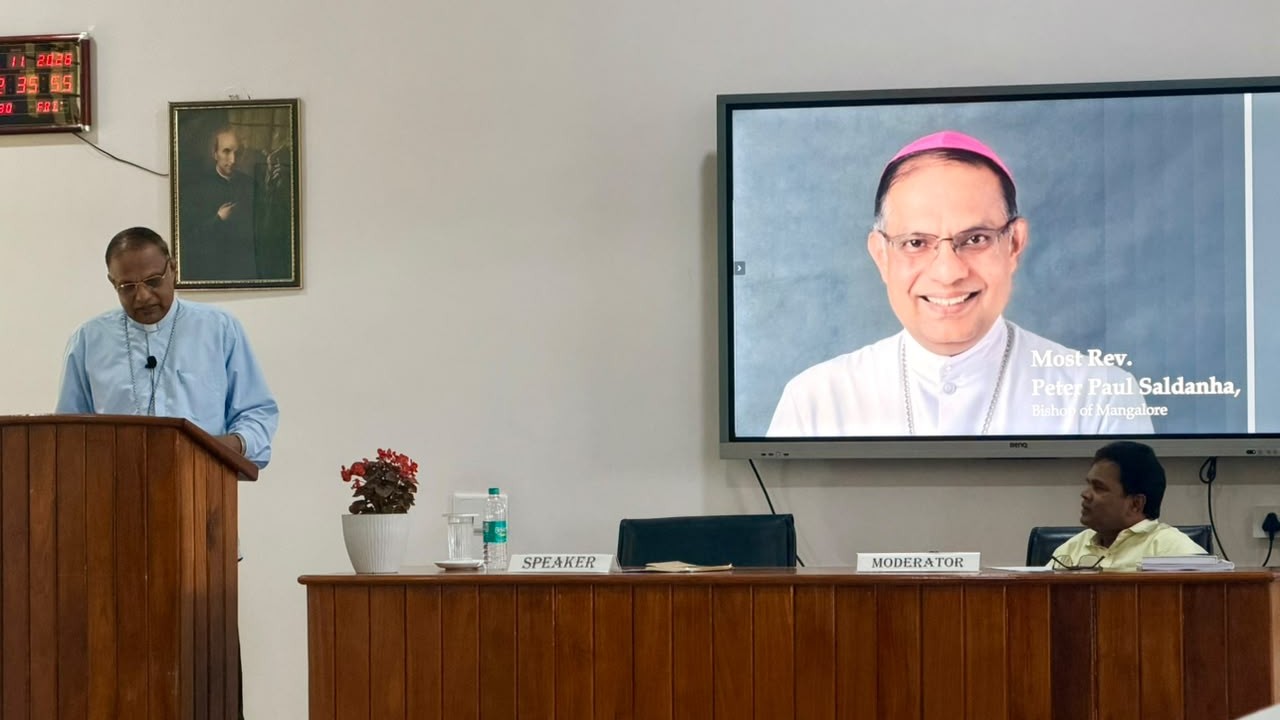
MYSORE, November 6, 2026: Formators must move beyond a fault-finding approach and recognise the strengths and potential of candidates for priesthood, said Dr.James Kannanthanam CMF of NVSC, Pune, addressing a symposium organised as part of the Pallottines’ Platinum Jubilee celebrations.


Speaking on the challenges of the final phase of priestly formation, he advocated Appreciative Inquiry as an approach that places greater emphasis on encouragement, dialogue and accompaniment than on correcting deficiencies and exercising control.
Acknowledging the challenges formators face, Dr Kannanthanam referred to candidates who display argumentative behaviour, come from broken families, struggle with media addiction or experience psychosexual difficulties. He said an approach that focuses primarily on such problems can leave formators feeling inadequate and unprepared.
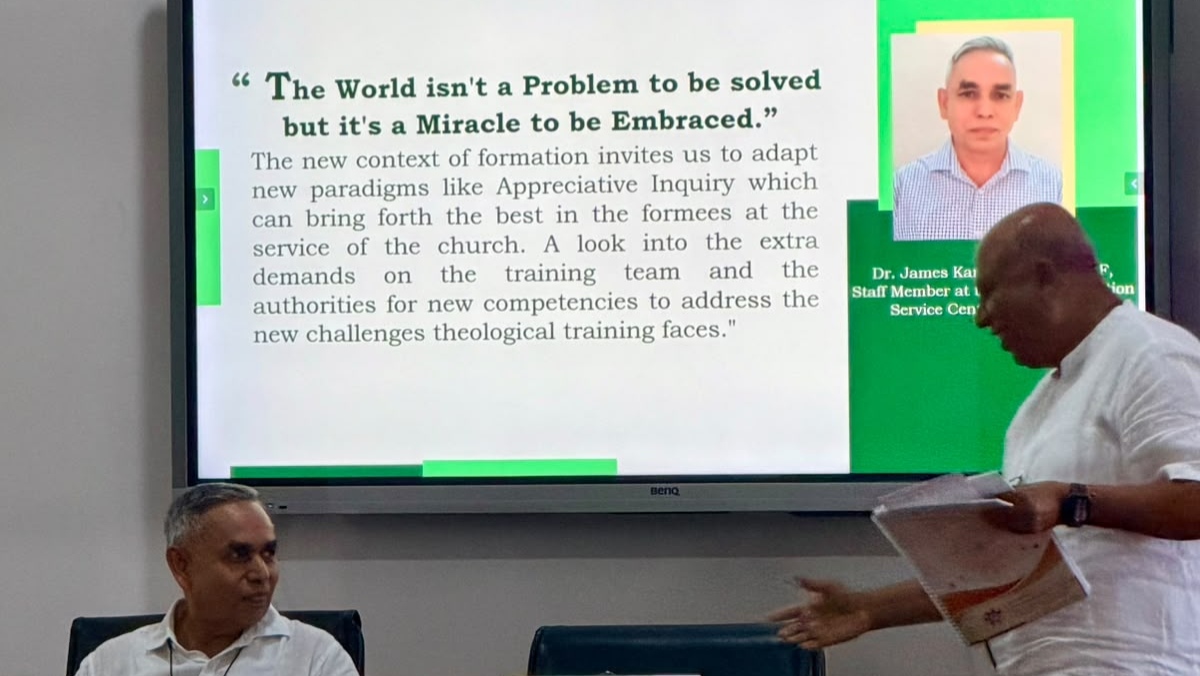
Introducing Appreciative Inquiry, which he abbreviated as AIP, he drew on the philosophy of its founder, David Cooperrider: “The world is not a problem to be solved, but a miracle to be embraced.”
He argued that a deficit-based model of formation, centred on identifying mistakes and correcting shortcomings, often produces anxiety and outward compliance rather than lasting personal transformation. Referring to practices in which formators regularly ask candidates to list their companions’ mistakes, he questioned whether such methods lead to genuine change.
“What is learned through compliance disappears when the enforcer leaves,” he said, stressing that contemporary candidates need accompaniment and mutual engagement rather than authoritarian supervision.
Explaining the practical application of Appreciative Inquiry, Dr Kannanthanam outlined four stages: Discovery, Dream, Design and Destiny. The process involves identifying a candidate's existing strengths, helping him envision the priest he aspires to become, translating that vision into specific and measurable plans, and sustaining progress through regular evaluation.
He also referred to the Pygmalion effect, which demonstrates how positive expectations can influence performance and behaviour.
Emphasising the role of formators, he identified positive attitudes, an appreciative outlook, humility, genuine dialogue and deep listening as essential qualities. He also urged formators to ask questions that encourage reflection and personal growth rather than merely expose shortcomings.
His presentation called for a shift in priestly formation from a corrective model to one that recognises and develops the potential of each candidate, making formation a shared journey of growth and accompaniment.
By Fr. Carlos Luis


© 2026 CATHOLIC CONNECT POWERED BY ATCONLINE LLP