- 23 June, 2026

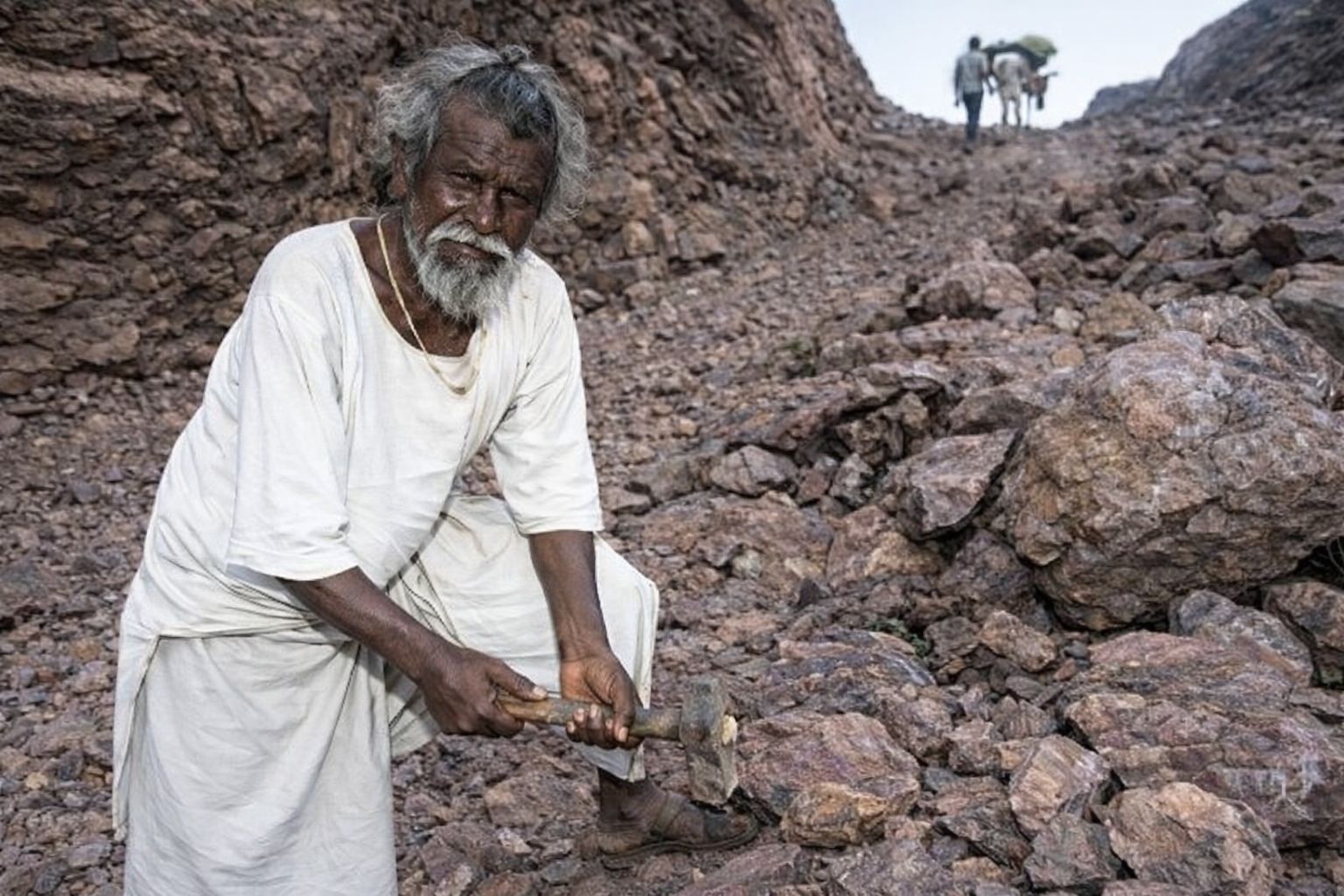
Feb 14, 2026: Every Valentine’s Day, stories of romance often arrive wrapped in roses and promises. But in a quiet corner of rural Bihar, love is remembered in dust, sweat and stone — the enduring legacy of a man who turned grief into a path of hope.


Known across India as the “Mountain Man,” Dashrath Manjhi did not write poetry or serenade his beloved. Instead, he carved a road through a mountain — alone — for love.
Manjhi lived in Gehlaur, a remote village cut off from essential services by a massive rocky hill. In the early 1960s, his wife, Falguni Devi, suffered a fatal injury after slipping on the treacherous terrain while bringing him food. The nearest medical help was miles away, accessible only by a long, winding route around the mountain.


Her death shattered him — but it also ignited a purpose.
Where others saw an immovable barrier, Manjhi saw the obstacle that had stolen his love. With nothing more than a hammer and chisel, he began cutting a path through the mountain in 1960. Villagers mocked him. Some pitied him. But he persisted.
For 22 years.
By 1982, Manjhi had carved a passage 110 metres long, 9 metres wide and 7.5 metres deep, reducing the distance between Gehlaur and nearby towns from 55 kilometres to just 15. What governments had not built, one grieving husband achieved through sheer devotion.
His act was not simply labour — it was love transformed into public good. The road did not serve him alone; it connected an entire community to hospitals, schools and markets.
That is why, decades later, Manjhi’s story resonates far beyond Bihar. His love did not remain private. It became infrastructure.
In an age where love is often measured in gifts or grand gestures, Manjhi’s story offers a striking counterpoint. His devotion was not momentary but sustained. Not symbolic but transformative. Not spoken but carved into the earth itself.
Love, in Manjhi’s world, meant responsibility. It meant endurance. It meant refusing to accept suffering as inevitable.
His journey reminds us that love is not proven in comfort but in sacrifice.
Manjhi passed away in 2007, honoured with a state funeral by the government of Bihar. His life later inspired books, documentaries and the acclaimed film Manjhi: The Mountain Man, ensuring that his story continues to inspire new generations.
Today, travellers who walk the path he carved encounter more than a road. They encounter a testimony: that one person’s love can reshape geography — and history.
The story of Dashrath Manjhi quietly asks a profound question: What does love build?
For the Mountain Man, love built access, dignity and hope. It transformed personal loss into collective progress. And in doing so, it gave the world one of its most powerful definitions of devotion — not in words, but in stone.
His life stands as a reminder that the strongest hearts are not those that feel deeply alone, but those that act deeply for others.
By Fr. Suresh Mathew




© 2026 CATHOLIC CONNECT POWERED BY ATCONLINE LLP