- 26 July, 2026

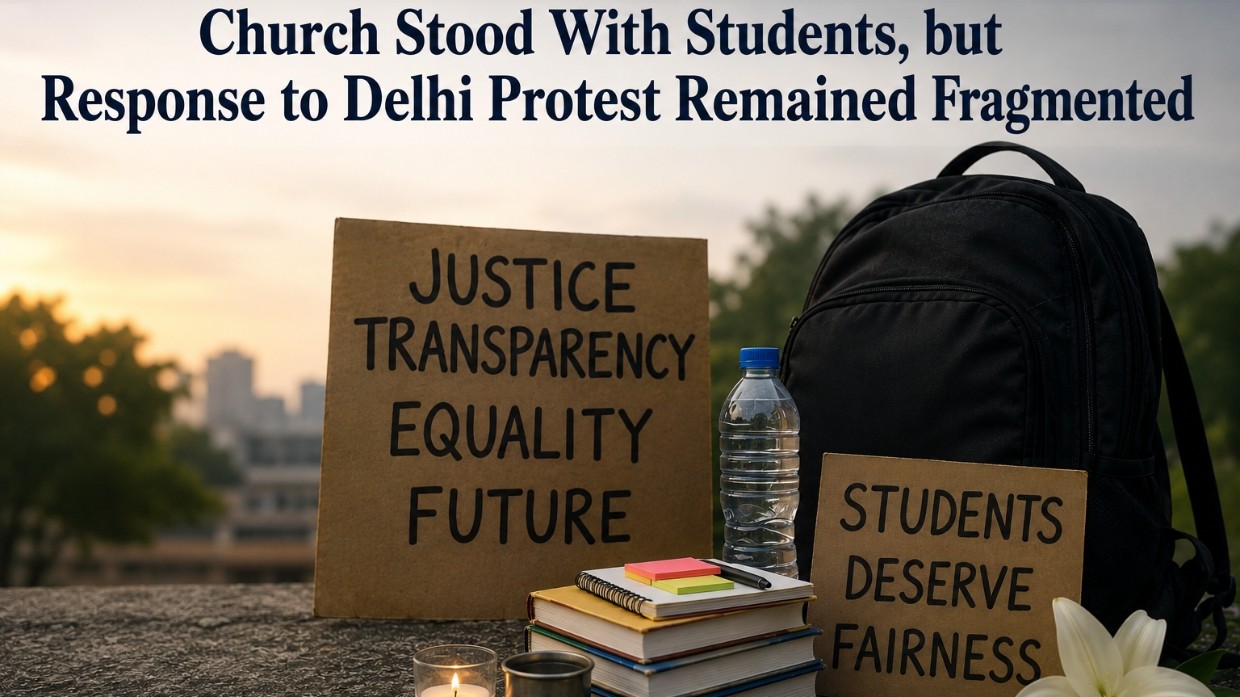
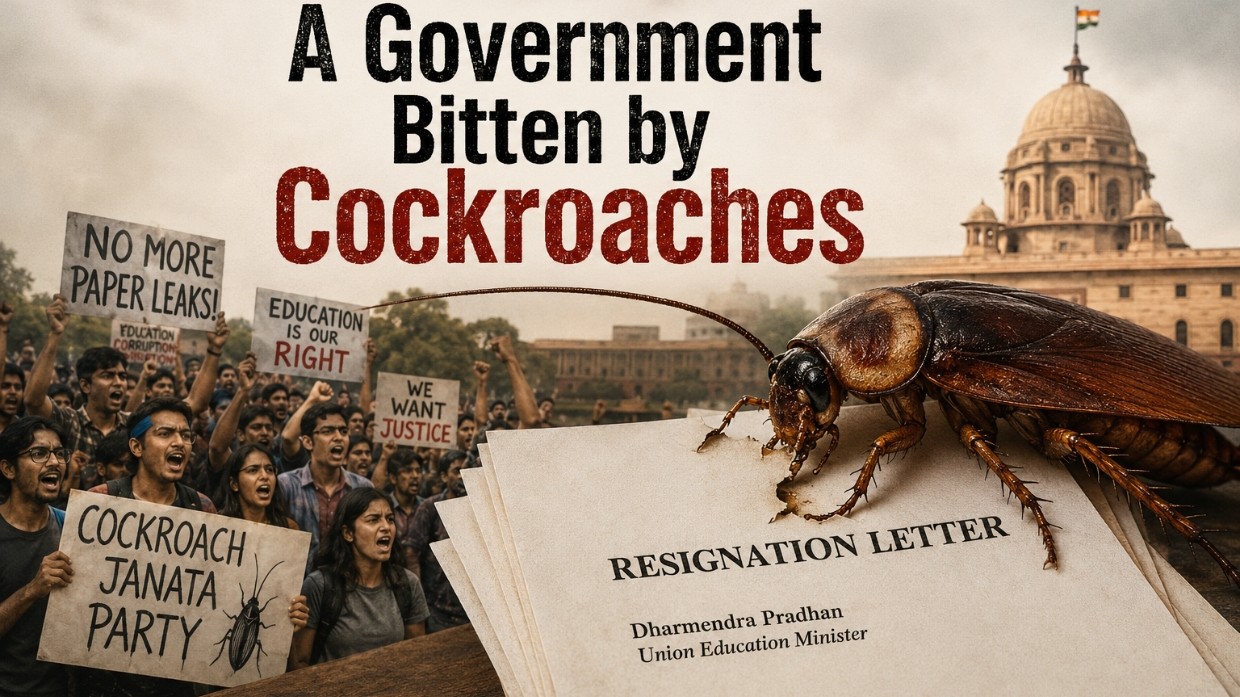
Delhi, July 26, 2026: The Church in India was visible during the June–July 2026 agitation over examination failures, paper leaks and police action in Delhi, but its presence was uneven and lacked a unified national character. Major Catholic, Protestant, Evangelical and Orthodox bodies publicly expressed support for the protesting students, while Christians were also physically present at Jantar Mantar through prayer, visits, food, water, medical supplies and volunteer service.


However, it would be inaccurate to suggest that the entire Church in India, across denominations, appeared as one united national body. While several prominent churches and ecumenical organisations responded clearly, many denominations, dioceses, theological institutions and local congregations were either silent or had no publicly documented response.
Christian presence at Jantar Mantar
On July 14, Christian leaders visited Sonam Wangchuk and the protesting students at Jantar Mantar. Those identified included Christian human-rights activist John Dayal, Catholic priest Fr Susai Sebastian, Michael Williams, Minakshi Singh and other Christian representatives and supporters.


They sat with Wangchuk, expressed solidarity and prayed with him. Some participated in their personal capacity rather than as official representatives of a denomination. Singh described the encounter as painful, saying the younger generation appeared “scattered and unheard.”
The historic Free Church, CNI, on Parliament Street, close to Jantar Mantar, also became a centre for practical assistance. Christians associated with the Diocese of Delhi and other Delhi churches distributed drinking water, food, light refreshments, oral rehydration solution and other essential supplies. An appeal circulated among Delhi Christians seeking supplies and volunteers.
Christian volunteer teams also attempted to take relief materials to the protest site. One team travelling towards Jantar Mantar was reportedly stopped in the Nizamuddin area and warned that its members could be arrested if they continued.
These efforts represented a genuine physical Christian presence, although it was primarily pastoral, humanitarian and solidarity-based rather than a large organised march under church banners.
Churches speak out
The Diocese of Delhi of the Church of North India, led by Bishop Paul Swarup, issued a statement on July 20 expressing solidarity with students and families affected by alleged irregularities in public examinations. It called for a thorough, impartial and transparent investigation, accountability for those responsible, institutional reforms to protect the integrity of public examinations and restoration of public confidence.
“Every student deserves a system founded upon honesty, fairness, transparency, and equal opportunity,” the Diocese said, appealing for urgent action and justice for students.
The Diocese's response was significant as it was both institutionally vocal and physically involved through the Free Church and relief volunteers.
The Evangelical Fellowship of India, in a July 21 statement titled EFI Calls for Dialogue, Restraint and Accountability, expressed distress over injuries suffered by protesters and police personnel. Issued by General Secretary Rev. Vijayesh Lal, the statement said young people had been protesting for weeks over serious failures in the examination system and should have been heard before the situation escalated into confrontation.
“In a democracy, dialogue should come before confrontation,” EFI said.
While condemning violence from any side, it stressed that “the State carries a greater responsibility because it possesses greater power.” It called for an independent and transparent inquiry into the use of lathis and tear gas, proper medical care for the injured, direct dialogue with students and restraint by the authorities. EFI said it could not remain indifferent when legitimate grievances were not addressed in time.
The Catholic Bishops’ Conference of India, through spokesperson Fr Robinson Rodrigues, also issued a strong statement on July 21 condemning what it described as disproportionate police action against peacefully protesting students.
“Our youth, the true future of this nation, took to the streets with legitimate demands,” the CBCI said, describing the use of disproportionate force as “a heartbreaking assault on the very soul of our democracy.” It said it stood firmly with students who had faced violence and expressed solidarity with Sonam Wangchuk during his hospitalisation. The CBCI response was among the strongest institutional condemnations of the police action.
The National Council of Churches in India Commission on Youth issued a message of prayerful solidarity with students and young people whose educational hopes and futures had been affected.
“The Commission on Youth of the National Council of Churches in India stands in prayerful solidarity with every student and young person…” the publicly indexed text began.
The NCCI's involvement was significant because it represents numerous Protestant and Orthodox churches and Christian organisations. However, the complete statement was not consistently accessible through the NCCI website at the time of checking. The NCCI can therefore be included among the responding bodies, although the full official wording should be obtained directly from its archived statement before publication.
The Church of South India Synod also issued a Statement of Solidarity through its General Secretary, expressing deep concern over protests involving students and young people in New Delhi concerning the NEET examination controversy.
The indexed statement confirms that the CSI expressed solidarity with the students, recognised their anxiety over education and their future, called for peaceful engagement and urged authorities to listen and respond constructively. The full statement appears to have circulated primarily through CSI Synod social-media channels rather than an easily accessible permanent webpage. The CSI Diocese of Madras also circulated a separate solidarity message supporting the students.
The Malankara Orthodox Syrian Church, in a July 22 statement issued through Yuhanon Mar Diascoros Metropolitan, condemned the police action at Jantar Mantar and called for dialogue rather than force.
The Church said a democratic society must provide space for peaceful protest, listen carefully to young people, address public dissatisfaction openly and compassionately, and adopt constructive and democratic measures. It urged the government to engage meaningfully with the students, warning that public trust depends on authorities being willing to listen.
The Conference of Religious India, in a July 23 statement signed by National President Fr Saju Chackalackal CMI, Vice-President Bro. Santhosh CSC and Vice-President Sr Maria Nirmalini AC, condemned the police action against the July 20 march.
The CRI described the reported lathi charge and tear-gas action as “unprovoked and unwarranted.”
“Their angst is ours too; we stand in solidarity with them,” it said.
The organisation demanded an independent inquiry, accountability for those responsible, dialogue with protest leaders, a credible and corruption-free examination system, medical care for those fasting and protection of the constitutional right to peaceful protest.
The CRI also pointed out that Catholic religious congregations run numerous educational institutions and that their students and alumni appear for examinations such as NEET.
Another significant response came on July 24 from the All Karnataka United Christian Forum for Human Rights, chaired by Archbishop Peter Machado of Bangalore. The Forum includes representatives of the Assemblies of God, Baptist churches, Believers Eastern Church, Roman Catholic Church, Church of South India, Jacobite Syrian Orthodox Church, Lutheran churches, Malankara Orthodox Church, Mar Thoma Syrian Church, Methodist Church, Seventh-day Adventist Church and other Christian fellowships.
“The anguish of thousands of students… reflects a growing sense of anxiety and uncertainty about their future,” the Forum said.
It appealed to the government to engage the students with openness, sincerity and mutual respect, affirming that “a just and peaceful resolution can only emerge through dialogue.” It also expressed solidarity with the students in their pursuit of “justice, dignity and a secure future.”
The statement was perhaps the clearest example of an interdenominational response from a state outside Delhi.
Christian individuals and civil-society voices
Christian human-rights activist John Dayal visited the protest and later strongly criticised the government's handling of the students' concerns. While recognising partial concessions made to the protesters, he argued that accountability for the wider education crisis remained incomplete.
Catholic priests, pastors and lay activists, including Fr Susai Sebastian, Michael Williams and Minakshi Singh, participated in visits, prayer and relief efforts. Several pastors were reportedly present at or near Jantar Mantar, although some attended personally rather than under official denominational authorisation.
A visible but fragmented response
The evidence indicates that the Church in India was present during the protests, but its visibility was neither comprehensive nor uniform.
Its response took four principal forms: prophetic statements condemning violence and examination corruption; pastoral solidarity with students, families and Sonam Wangchuk; physical service through water, food, ORS, prayer and volunteers; and ecumenical advocacy for dialogue, inquiry, accountability and educational reform.
The strongest documented responses came from the CNI Diocese of Delhi, the Evangelical Fellowship of India, the Catholic Bishops’ Conference of India, the NCCI Commission on Youth, the Church of South India, the Malankara Orthodox Syrian Church, the Conference of Religious India and the All Karnataka United Christian Forum.
Yet the response remained fragmented. There was no single, prominently publicised national Christian delegation bringing together Catholic, Orthodox, Protestant, Evangelical, Pentecostal and Independent churches at the protest site. Nor is there presently documented evidence of large-scale mobilisation by Christian colleges, seminaries, student fellowships and church youth movements in all the states where solidarity demonstrations occurred.
The Church, therefore, was not absent. But neither was it as collectively and visibly present as its extensive educational ministry and moral responsibility might have required.
By Catholic Connect Reporter
Continue Reading on Catholic Connect App
Get access to exclusive news articles & more.
© 2026 CATHOLIC CONNECT POWERED BY ATCONLINE LLP