- 07 September, 2026

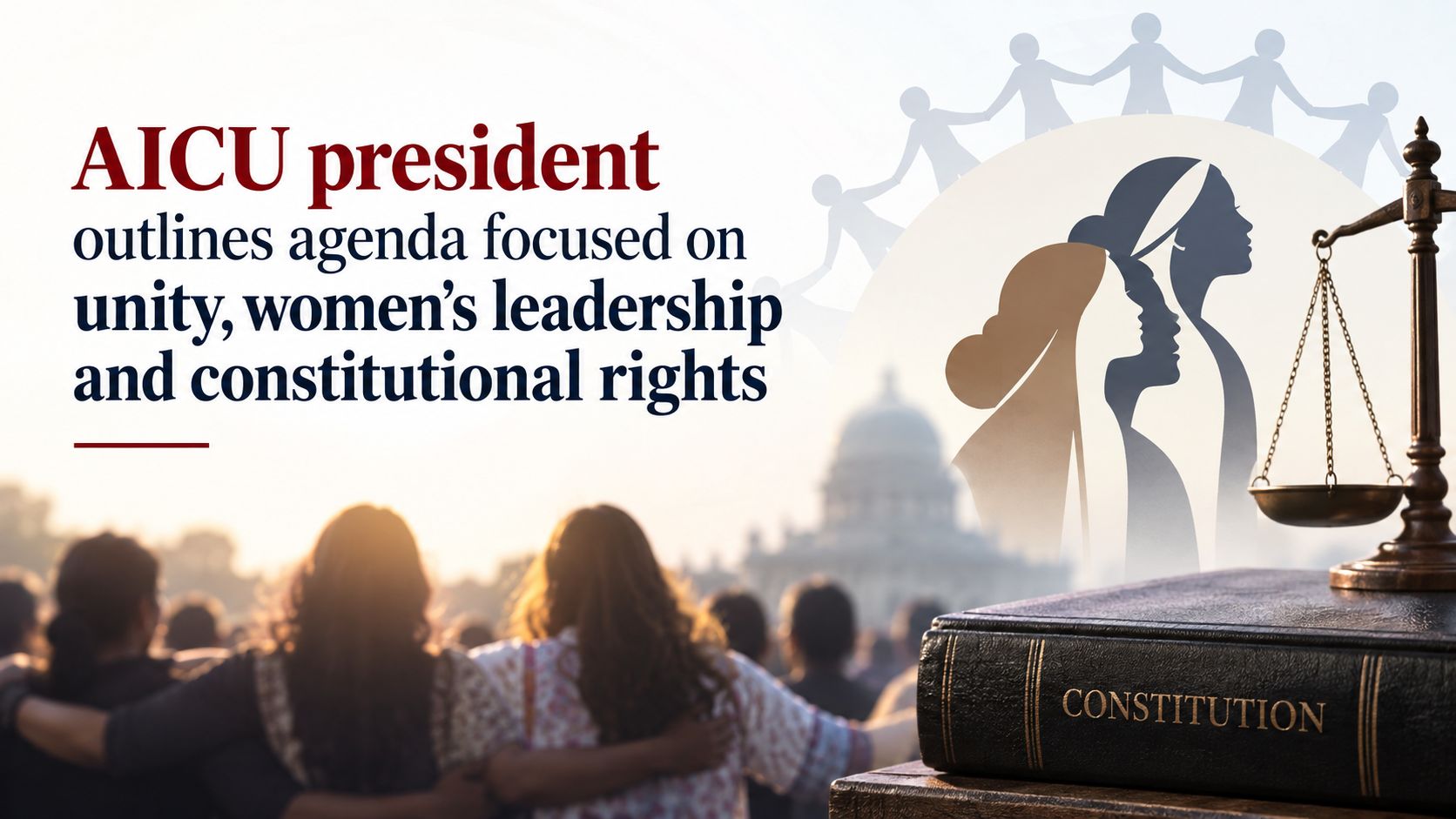
NEW DELHI, September 7, 2026: Newly elected All India Catholic Union (AICU) national president A Chinnappan has outlined an agenda centred on greater unity among India’s three Catholic rites, stronger women’s leadership, digital communication, advocacy for Dalit Christian rights and a more coordinated response to attacks and legal challenges faced by Christians.


Chinnappan, elected at the AICU’s Annual General Meeting in New Delhi in August, said his vision for the 107-year-old organisation would be guided by the motto, “One Faith. Three Rites. One Catholic Family.”
He said greater unity among the Latin, Syro-Malabar and Syro-Malankara communities should not mean uniformity, but greater cooperation while preserving their distinct liturgical and cultural traditions.

According to Chinnappan, the AICU could promote this unity through joint programmes focusing on youth and women’s leadership, social action and community service.
Women’s leadership is another major priority. Chinnappan said women should have a greater role not only in organising programmes but also as office-bearers, policy contributors and trainers at parish, diocesan, state and national levels.
He also proposed creating a leadership pathway through which younger members could progress from parish-level involvement to positions of responsibility at the national level.
The AICU also plans to strengthen its approximately 120 diocesan units through a national digital communication and reporting system. The proposed system would enable local units to report activities, emerging concerns and urgent issues more quickly while helping translate national priorities into local initiatives.
On Dalit Christian rights, Chinnappan said the AICU would continue its campaign for Scheduled Caste status for Dalit Christians. The organisation plans to support its advocacy with research on education, employment, land, income and access to welfare schemes and engage political parties, parliamentarians, commissions and policymakers.
Constitutional and judicial avenues would also remain part of the AICU’s strategy, he said.
On incidents of violence, intimidation and legal insecurity involving Christians, Chinnappan stressed the need for stronger networks of constitutional lawyers, legal researchers and state-level contacts. He called for systematic documentation of incidents and said the AICU would ground its response in constitutional guarantees, particularly Articles 14, 21 and 25.
He also expressed concern over broadly worded anti-conversion laws, arguing that such legislation could create scope for harassment of legitimate religious freedom and charitable activities.
On relations with the Catholic hierarchy, Chinnappan said the AICU would maintain an approach based on respect, dialogue and responsibility. While remaining loyal to the Church and its pastors, the lay organisation would retain its independent responsibility to speak on issues concerning constitutional rights, human dignity and justice.
The AICU president also called for greater cooperation with civil society and people of other faiths. Its diocesan units, he said, should work with secular organisations, educators and community leaders on initiatives including blood donation, environmental protection, education, disaster relief, women’s empowerment and child protection.
The AICU would not seek confrontation with any religious community, Chinnappan said, but would firmly defend the constitutional rights of Christians as well as those of every other citizen.
He outlined the agenda in an interview with The Herald, the weekly newspaper of the Archdiocese of Calcutta.
By Catholic Connect Reporter




© 2026 CATHOLIC CONNECT POWERED BY ATCONLINE LLP