- 31 May, 2026
May 31, 2026:

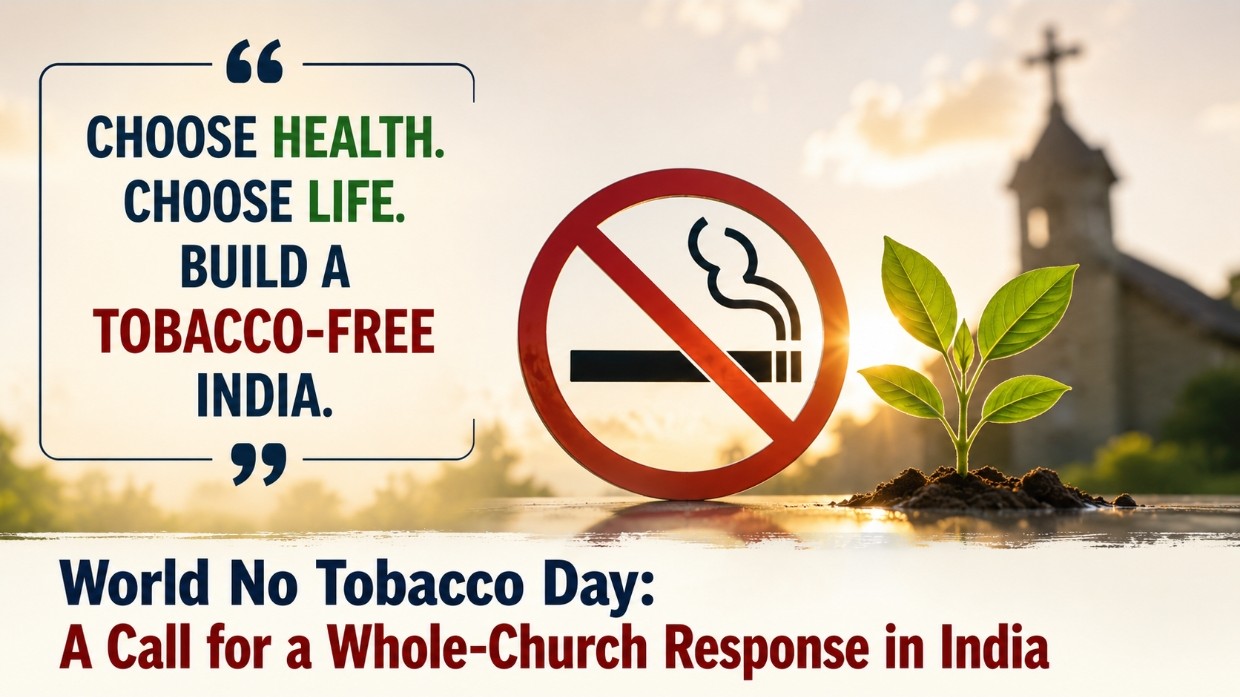
Every year on 31 May, the global community marks World No Tobacco Day, drawing attention to the devastating toll that tobacco use continues to take on individuals, families and societies. In India, where millions remain trapped in various forms of tobacco addiction, the challenge extends far beyond a public health issue. It is a concern that touches family life, youth development, education, economic well-being and the very dignity of the human person.
Tobacco use remains one of the leading causes of preventable deaths in the country, contributing to cancers, cardiovascular diseases, respiratory disorders and countless other health complications. The economic burden is equally severe, with many families, especially those already struggling financially, facing increased healthcare costs and loss of income due to tobacco-related illnesses.
For the Catholic Church in India, the fight against tobacco is deeply connected to its mission of protecting life and promoting human dignity. Rooted in the Gospel's call to care for the whole person, the Church is uniquely positioned to address the issue through its extensive pastoral, educational and healthcare networks.


The various commissions of the Catholic Bishops' Conference of India (CCBI) can play a significant role in building a tobacco-free society through a coordinated and holistic approach.
Empowering the Young
The Church's ministry among youth offers one of the strongest avenues for prevention. Young people are often exposed to peer pressure and social influences that can lead to experimentation with tobacco products. Through parish youth groups, leadership formation programmes, awareness campaigns and creative initiatives, the Youth Commission can encourage healthy lifestyles and equip young people to become advocates for a tobacco-free future.
Prevention among adolescents and young adults remains one of the most effective long-term strategies in reducing addiction and promoting public health.
Building Tobacco-Free Families
The impact of tobacco addiction is rarely confined to the individual user. Families frequently bear the consequences through financial strain, emotional distress and exposure to second-hand smoke. The Family Commission can strengthen prevention efforts by promoting tobacco-free homes through family enrichment programmes, parental guidance sessions and support networks.
Such initiatives can help create environments where children are protected from harmful influences and encouraged to make healthy life choices.
Healing Through Healthcare
Catholic healthcare institutions have long been at the forefront of compassionate care, and they can make a vital contribution to tobacco cessation efforts. The Health Commission, together with Catholic hospitals and clinics, can establish cessation services, offer counselling, conduct oral cancer screening programmes and train healthcare professionals to support those seeking to overcome addiction.
For many individuals, recovery requires not only medical assistance but also encouragement and hope—qualities that faith-based healthcare institutions are well placed to provide.
Educating for Healthy Living
Catholic schools and educational institutions play an important role in shaping values and behaviours. By integrating tobacco awareness into value-based education, schools can help students understand the dangers of addiction while fostering a culture of healthy living.
Observances of World No Tobacco Day, teacher training programmes and student-led awareness campaigns can reinforce the message that caring for one's health is a responsibility towards oneself, one's family and society.
Addressing Social and Economic Injustice
The harmful effects of tobacco often fall disproportionately on vulnerable communities. The Commission for Justice, Peace and Development can draw attention to the social and economic dimensions of addiction, particularly its impact on the poor.
Advocacy for stronger tobacco-control policies, public awareness efforts and support for sustainable livelihoods can contribute to breaking cycles of poverty that are frequently worsened by tobacco dependency.
Reaching Migrants and Workers
Many migrant workers and labourers face challenging working conditions, isolation and stress, factors that can increase vulnerability to tobacco use. Through workplace awareness initiatives and support programmes, the Commission for Migrants and Labour can help workers make informed choices and access assistance when needed.
Strengthening Women's Leadership
Women often witness firsthand the effects of tobacco use within families. They frequently shoulder the burden of caring for family members affected by tobacco-related illnesses while also protecting children from exposure to second-hand smoke.
The Women's Commission can empower women to become advocates for healthier homes and communities through education, awareness campaigns and leadership opportunities.
Communicating Hope and Change
In an age shaped by digital communication, the Church's media ministry has a critical role to play. The Commission for Social Communications can utilise both traditional and digital platforms to spread awareness, share testimonies of recovery and promote positive behavioural change.
Stories of transformation and healing can often inspire others to seek freedom from addiction and embrace healthier lifestyles.
A Pastoral Response to Addiction
Tobacco dependence is not merely a physical habit; it can also become a deeply personal struggle requiring spiritual support. The Commission for Evangelisation and Pastoral Care can provide accompaniment through counselling, prayer services and parish-based support groups.
Such pastoral initiatives affirm that freedom from addiction is part of the Christian journey toward fullness of life and human flourishing.
A Shared Mission
World No Tobacco Day serves as a reminder that combating tobacco use is not solely the responsibility of healthcare professionals or policymakers. It is a shared mission that involves families, educators, faith leaders, community organisations and every person committed to the common good.
By integrating tobacco prevention and cessation efforts into the work of its various commissions, the Church in India can make a meaningful contribution towards building a healthier society. Such an approach reflects the Church's enduring commitment to protecting life, upholding human dignity and promoting the well-being of all.
As India continues its struggle against tobacco-related disease and addiction, a united and compassionate response from the Church can help ensure that future generations inherit a society where health, hope and human flourishing prevail over dependence and despair.
By Catholic Connect Reporter
Download Catholic Connect App for Daily News Updates:
Android: Click here to download
Continue Reading on Catholic Connect App
Get access to exclusive news articles & more.


© 2026 CATHOLIC CONNECT POWERED BY ATCONLINE LLP