- 23 November, 2026
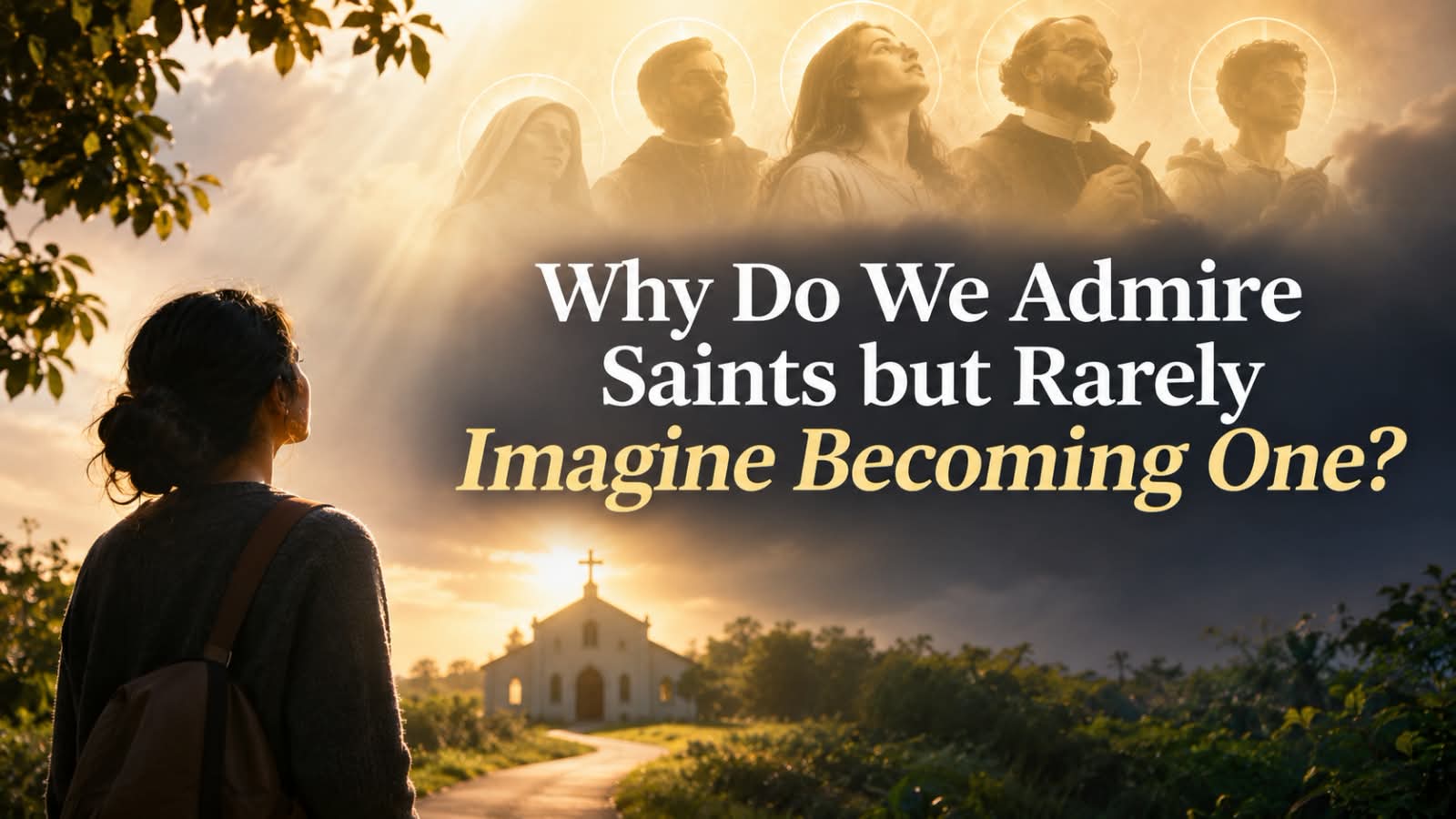
November 23, 2026: We admire the saints for their faith, courage and love of God. We celebrate their lives and look to their example, yet it can be harder to see holiness as a calling for ourselves. Perhaps we imagine that saints must have lived extraordinary lives, or that holiness is possible only for a few exceptional people.
The Church teaches that the call is much wider. The Catechism states that “all Christians in any state or walk of life are called to the fullness of Christian life and to the perfection of charity.” Holiness, then, is not reserved for priests, religious or people whose lives are publicly recognised as remarkable. It is the Christian vocation, lived according to each person’s state and circumstances.
Holiness in ordinary life
Pope Francis explains that holiness does not consist especially in doing extraordinary things. Rather, it means allowing God to act in us. Our weakness does not make the call impossible: God’s grace meets us there and enables us to live in charity, joy and humility, serving our neighbours.
This does not mean that holiness is effortless, or that good intentions alone make us holy. We are called to cooperate with God’s grace and to let it shape the choices we make. Pope Benedict XVI describes the ordinary practices of Christian life: meeting Christ in the Sunday Eucharist, making time for contact with God each day, and following God’s commandments as expressions of love in concrete situations. These are not distractions from holiness; they belong to its everyday path.
Pope John Paul II likewise teaches that the ways of holiness differ according to each person’s vocation. The call is not to imitate someone else’s life in every detail, but to seek holiness in our own responsibilities and circumstances. He points to Christians who attained holiness amid the ordinary conditions of life and urges the Church to propose this “high standard of ordinary Christian living” to everyone.
A call we can answer
The saints are not presented merely as figures to admire from a distance. Their lives witness that holiness can be pursued in every age and state of life. Pope Benedict XVI notes that saints have different characters and come from different peoples and circumstances; their example helps show that this path is possible for everyone.
The call is demanding, but it is not a call to rely on our strength alone. Pope Francis addresses those who feel weak or fragile directly: “do not be afraid of holiness, do not be afraid to aim high.” He urges Christians to let God love and purify them and to be guided by the Holy Spirit. Holiness is therefore not self-perfection achieved by sheer effort; it is a life increasingly opened to God’s transforming grace.
John Paul II also urges Christians to pursue “ambitious dreams of personal holiness,” reminding them that apostolic service flows from an interior life sustained by love. The aspiration to become holy is not self-centred: as love grows, it bears fruit in service to others.
Perhaps, then, we should not ask whether we are extraordinary enough to aspire to holiness. The Church’s answer is that every Christian is called. The invitation is to begin where we are: to seek God, follow Christ, receive grace and love our neighbours in the life we have been given. The saints remind us that this call is not only for a few people in the past. It is before us today.
By Catholic Connect Reporter
Read More on Sainthood:
1) What If You Are Called to Be a Saint? Finding Holiness in Everyday Life
2) The Communion of Saints: How Are We Connected to Those Who Have Gone Before Us?
3) Do You Have to Be Extraordinary to Become a Saint? The Catholic Teaching on Holiness?
4) St Ignatius of Loyola: The Five-Minute Practice That Can Bring You Closer to God
5) What Does the Bible Say About Becoming a Saint? Understanding the Call to Holiness
6) St. Augustine: The Power of Conversion and a New Beginning
7) St. Monica: The Mother Who Never Stopped Praying – A Story of Faith, Patience and Perseverance
8) St. Francis of Assisi: He Gave Up Everything to Discover What Truly Matters
9) Live Like St. Joseph: Discovering Holiness in Life’s Quietest Moments
10) Beyond Likes and Followers: Five Virtues for a Holier Digital Life
11) St. Maximilian Kolbe: What Could Make a Man Choose Death to Save a Stranger?
12) St. Teresa of Calcutta: In a World of AI Conversations, Are We Forgetting Human Connection?
13) Why Do Catholics Ask Saints to Pray for Them? The Meaning Behind This Belief
14) The Beauty of Small Things: How St. Thérèse of Lisieux Found a Path to Sainthood
16) Are Catholics Worshipping Statues? The Catholic Explanation Behind Sacred Images
17) Are Catholic Relics Biblical or Pagan? What Scripture and Early Church History Reveal
18) St. Devasahayam Pillai: A Life That Refused to Renounce Christ
19) St. Maria Goretti : How Did an Eleven-Year-Old Girl Teach the World to Forgive?
20) St. Kuriakose Elias Chavara: Can a Classroom Become a Path to Holiness?


© 2026 CATHOLIC CONNECT POWERED BY ATCONLINE LLP