- 21 September, 2026

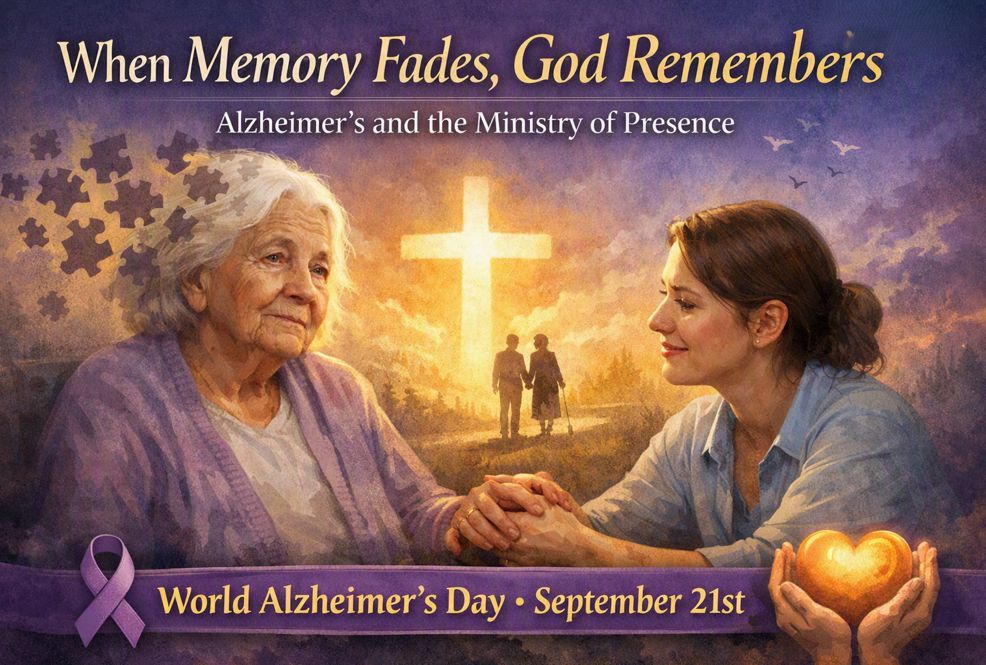
September 21, 2026: On World Alzheimer’s Day, the Church is invited to look beyond the medical reality of memory loss and ask a deeper question: What remains when memory begins to disappear?


For Catholic faith, the answer is clear. Human dignity does not depend upon intelligence, memory, independence or productivity.
Every person is created in the image and likeness of God — imago Dei — and therefore possesses an inviolable dignity that illness cannot erase.
Alzheimer’s disease may gradually affect memory, speech, judgement and the ability to recognise loved ones. But it cannot remove the person whom God created and loves.

(CLICK HERE to follow Catholic Connect and to stay updated with Catholic News & Content)
One of the most consoling passages for families living with dementia comes from Isaiah: “I will never forget you. See, I have engraved you on the palms of my hands.” (Isaiah 49:15–16)
A mother may forget her children. A husband may no longer recognise his wife. Someone who once prayed every day may eventually struggle to remember even familiar prayers.
Yet Christian hope does not rest upon our ability to remember God perfectly. It rests upon God's unfailing love.
Even when human memory fails, the person remains known by God. Their identity is held not merely in the memories stored within the brain, but in the love of the Creator who calls each person His own.
Alzheimer’s also changes the lives of families. Spouses, children and relatives may experience exhaustion, grief and a profound sense of loss while continuing to care for someone they love.
This hidden work can become a powerful Christian witness.
The caregiver who patiently repeats a name, prepares another meal, helps someone dress or simply sits beside them is practising a form of self-giving love. In moments of profound difficulty, caregiving can resemble the journey of Simon of Cyrene, who helped Christ carry His Cross.
It is not necessary to pretend that caregiving is easy. Christian compassion makes room for fatigue, frustration and tears. It also reminds caregivers that they, too, deserve support.
Faith can sometimes reach a person through places deeper than intellectual understanding. Familiar hymns, gestures, Scripture, the sign of the Cross or a beloved prayer may remain meaningful even when other memories have faded.
Parishes can therefore help families by creating dementia-friendly communities. Ushers and parish volunteers can be trained to respond patiently when someone becomes confused during Mass. Caregiver support groups can offer friendship and practical help, while Eucharistic ministers can bring Holy Communion to those unable to attend church.
The Church's pastoral care should ensure that people with dementia are not made invisible.
The story of the Nun Study, involving School Sisters of Notre Dame who contributed their lives and brains to scientific research, also offers a remarkable example of service. Their willingness to participate helped researchers investigate ageing and Alzheimer’s disease, demonstrating how religious life can contribute to the wellbeing of future generations.
World Alzheimer’s Day is therefore more than a reminder about a disease. It is an invitation to remember those whom society can easily overlook.
When memory fades, Christian love remains.
And perhaps one of the quietest forms of Christian love is this: to remember someone when they can no longer remember themselves, and to remind them, through our presence, that they are still beloved.
By Catholic Connect Reporter





© 2026 CATHOLIC CONNECT POWERED BY ATCONLINE LLP