- 29 July, 2026

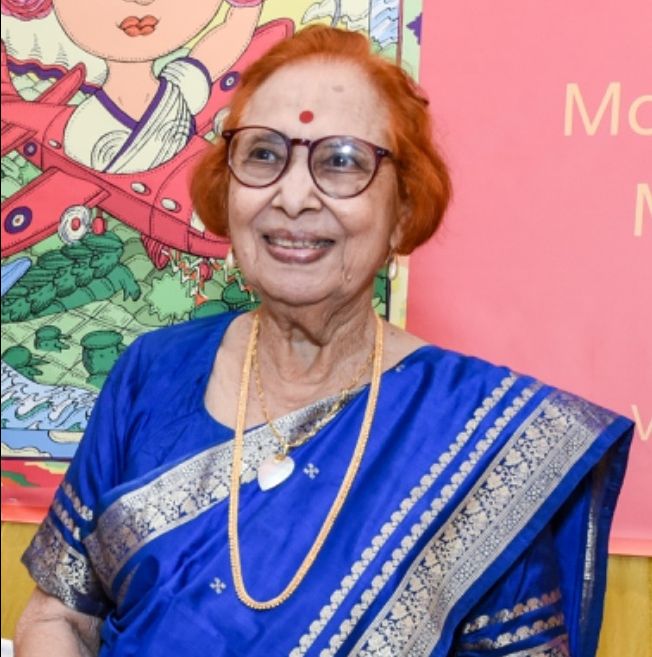
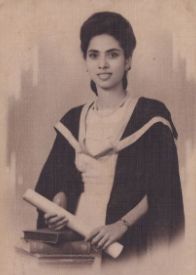
Goa, July 29, 2026: Few freedom fighters can claim to have altered the course of history without firing a single shot. Yet Libia Lobo Sardesai, affectionately known as "Libby", did exactly that. Through the power of words, courage and an underground radio station, she became one of the most influential voices of Goa's liberation movement against Portuguese colonial rule.


Born on 25 May 1924 in Porvorim, Portuguese Goa, Libia devoted her life to justice, democracy and public service. A freedom fighter, lawyer, administrator, educator and social reformer, she broke several barriers while remaining deeply rooted in her Catholic faith. Her fearless broadcasts from the clandestine Voice of Freedom radio station inspired thousands of Goans and ensured that hope remained alive during years of censorship and oppression.
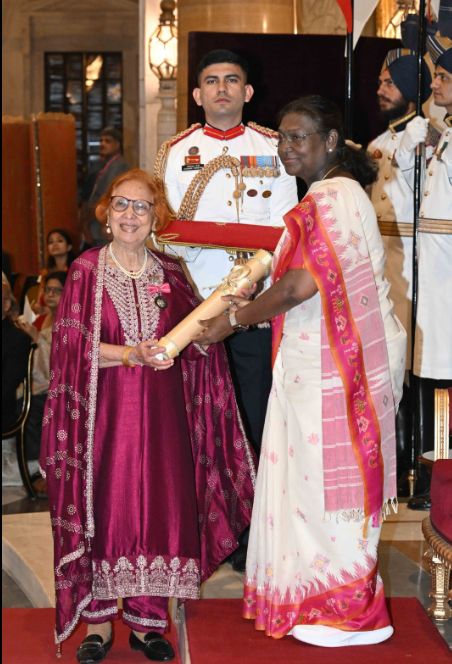
More than six decades after Goa's liberation, her extraordinary contribution received national recognition when she was awarded the Padma Shri in 2025, cementing her place among India's most respected freedom fighters.


Libia Lobo was born into a respected Roman Catholic family in Porvorim, but much of her childhood was spent in Bombay (now Mumbai) after her parents relocated there. Although she grew up away from Goa, her bond with her homeland never weakened, with regular visits strengthening her connection to the land of her birth.
She studied at Antonio de Souza High School in Byculla before earning a Bachelor of Arts (Honours) in English from Siddharth College, founded by Dr B. R. Ambedkar. Determined to pursue law, she later completed her Bachelor of Laws at the Government Law College in Bombay while working full-time.
During the Second World War, she worked as an Italian translator and censor for the British authorities, decoding correspondence from Italian prisoners of war. She subsequently joined All India Radio, Bombay, serving as a stenographer and librarian while continuing her legal studies.
Growing up near Crawford Market also brought her into contact with renowned modernist painter F. N. Souza, who was among her childhood friends.
Living in Bombay exposed Libia to India's growing independence movement. She witnessed nationalist demonstrations, police crackdowns and the sacrifices made by ordinary citizens fighting for freedom. Seeing followers of Mahatma Gandhi being attacked by mounted police left a lasting impression on the young student.
Her experiences transformed into action when she joined T. B. Cunha's Goan Youth League, later serving as its Secretary between 1948 and 1950. While India had gained independence in 1947, Goa remained under Portuguese colonial rule, governed by the authoritarian regime of António de Oliveira Salazar.
Determined to see her homeland free, Libia dedicated herself to Goa's liberation.
Libia Lobo Sardesai's greatest contribution came through the underground radio station Voice of Freedom (Voz da Liberdade), established in November 1955.
After Portuguese authorities violently attacked peaceful satyagrahis on Goa's borders, strict censorship silenced newspapers, restricted public gatherings and cut Goans off from independent sources of information.
Recognising that communication had become one of the movement's most powerful weapons, Libia, fellow freedom fighter Vaman Sardesai and activist Nicolau Menezes transformed confiscated wireless equipment into a clandestine shortwave transmitter.
Using the alias "Vimal Nadkarni", Libia became one of the station's principal broadcasters. The broadcasts, delivered in English, Konkani, Portuguese and Marathi, reached listeners throughout Goa with uncensored news, patriotic messages and updates from India.
The station constantly shifted between forests near Amboli, Sawantwadi, Castle Rock in Karnataka and areas around Belgaum to evade Portuguese intelligence. The team endured dangerous living conditions, including venomous snakes, leeches, isolation and the constant threat of arrest.
Despite these hardships, the broadcasts continued uninterrupted, becoming a vital lifeline for the people of Goa. Portuguese authorities later admitted that the station had become one of their greatest challenges because it consistently undermined colonial propaganda.
As Operation Vijay commenced in December 1961, the Voice of Freedom repeatedly broadcast appeals from Indian Defence Minister V. K. Krishna Menon urging the Portuguese Governor-General to surrender peacefully.
When Portuguese rule finally ended on 19 December 1961 after 451 years, Libia once again made history.
Flying aboard an Indian Air Force aircraft equipped with loudspeakers and radio equipment, she announced Goa's liberation from the skies while thousands of leaflets proclaiming freedom were dropped across the territory.
For countless Goans, her voice became the first announcement that colonial rule had ended and that Goa had become part of independent India.
Libia's service to the nation did not end with liberation.
She first joined the Ministry of External Affairs, assisting in the repatriation of Portuguese military personnel. In March 1962, she became the first Director of Tourism for Goa, Daman and Diu.
Over the next six years, she helped lay the foundations for Goa's tourism industry, working with the United Nations Development Programme to promote the state's heritage, culture and natural beauty through international projects.
In 1968, she resigned from government service to begin legal practice, becoming Goa's first woman practising advocate. She later taught Constitutional Law at Salgaocar College of Law and served as Vice-President of the Goa, Daman and Diu Advocates' Association.
Her commitment to women's empowerment also left a lasting legacy. She founded Goa's first Women's Cooperative Bank, managed entirely by women, and established the AIWC Jubilee College of Home Sciences. She represented India at several international gatherings, including the World Peace Conference in Moscow and the United Nations Decade for Women Conference in Nairobi.
Following the death of her husband, Vaman Sardesai, in 1994, she established the Vedanta Institute to encourage ethical living and personal development.
Libia married fellow freedom fighter Vaman Sardesai in 1964. Their marriage was built upon common ideals, sacrifice and a shared commitment to Goa's liberation and India's democratic future.
Although they had no children, the couple devoted their lives to public service, education and nation-building. Their partnership became one of the defining examples of selfless dedication during and after the liberation movement.
Throughout her remarkable life, Libia Lobo Sardesai remained deeply rooted in her Roman Catholic faith.
Importantly, her participation in the Goa Liberation Movement was never directed against religion or the Catholic Church. Instead, she demonstrated that Goan Catholics could remain devoted to their faith while also embracing Indian nationalism.
Her work in education, law, women's empowerment and social welfare reflected values closely associated with Catholic social teaching, including justice, compassion, dignity and service to society.
She earned respect across religious communities for promoting unity, democracy and inclusive public service.
Although her role in Goa's liberation remained relatively unknown for many years, public recognition steadily grew through exhibitions, documentaries and commemorative events.
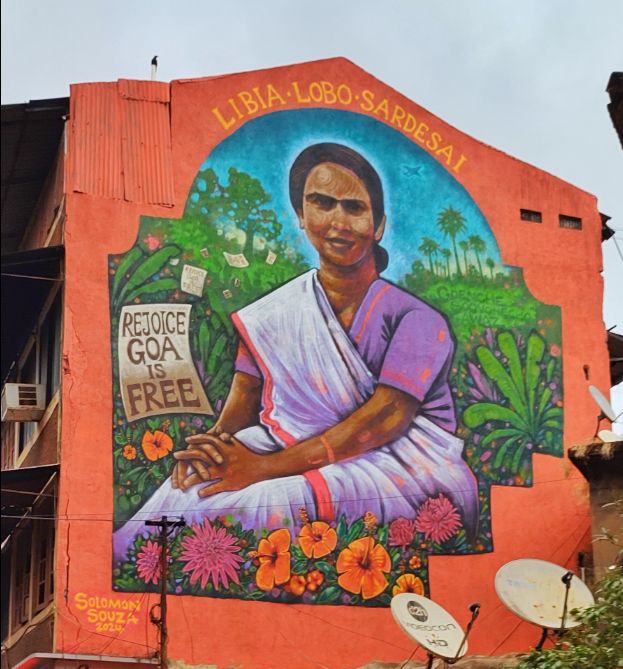
On her 100th birthday in 2024, she was honoured by the Indian Army, the Indian Navy and the Government of Goa. A mural celebrating her remarkable life was also unveiled opposite her residence in Panaji.
In January 2025, the Government of India announced her selection for the Padma Shri, recognising her invaluable contribution as a freedom fighter, lawyer, social worker and the courageous broadcaster whose voice announced Goa's liberation.
The honour acknowledged not only her role in history but also her lifelong dedication to nation-building and public service.
Libia Lobo Sardesai's life spans more than a century of extraordinary history—from colonial Goa to independent India, from secret broadcasts in remote forests to receiving one of the country's highest civilian honours.
Whether in Porvorim, Bombay, Belgaum, Castle Rock or Panaji, her commitment to Goa's freedom never diminished. Together with Vaman Sardesai, she proved that truth, information and courage could become powerful instruments of liberation.
As Goa's first woman advocate, first Director of Tourism, respected educator and Padma Shri awardee, Libia Lobo Sardesai leaves behind an extraordinary legacy. Her life reminds future generations that patriotism is not measured only on battlefields, but also through unwavering conviction, public service and the courage to speak the truth when it matters most.
Courtesy The Better India (Krystelle Dsouza)
© 2026 CATHOLIC CONNECT POWERED BY ATCONLINE LLP