- 28 October, 2026
New Delhi, October 28, 2026: —Petition questions whether stringent conversion procedures and broad definitions of inducement violate constitutional guarantees of religious freedom.



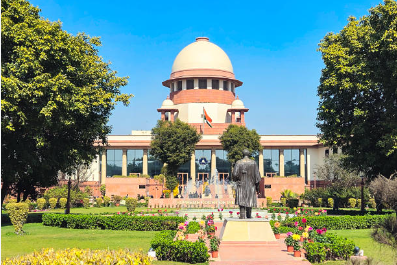
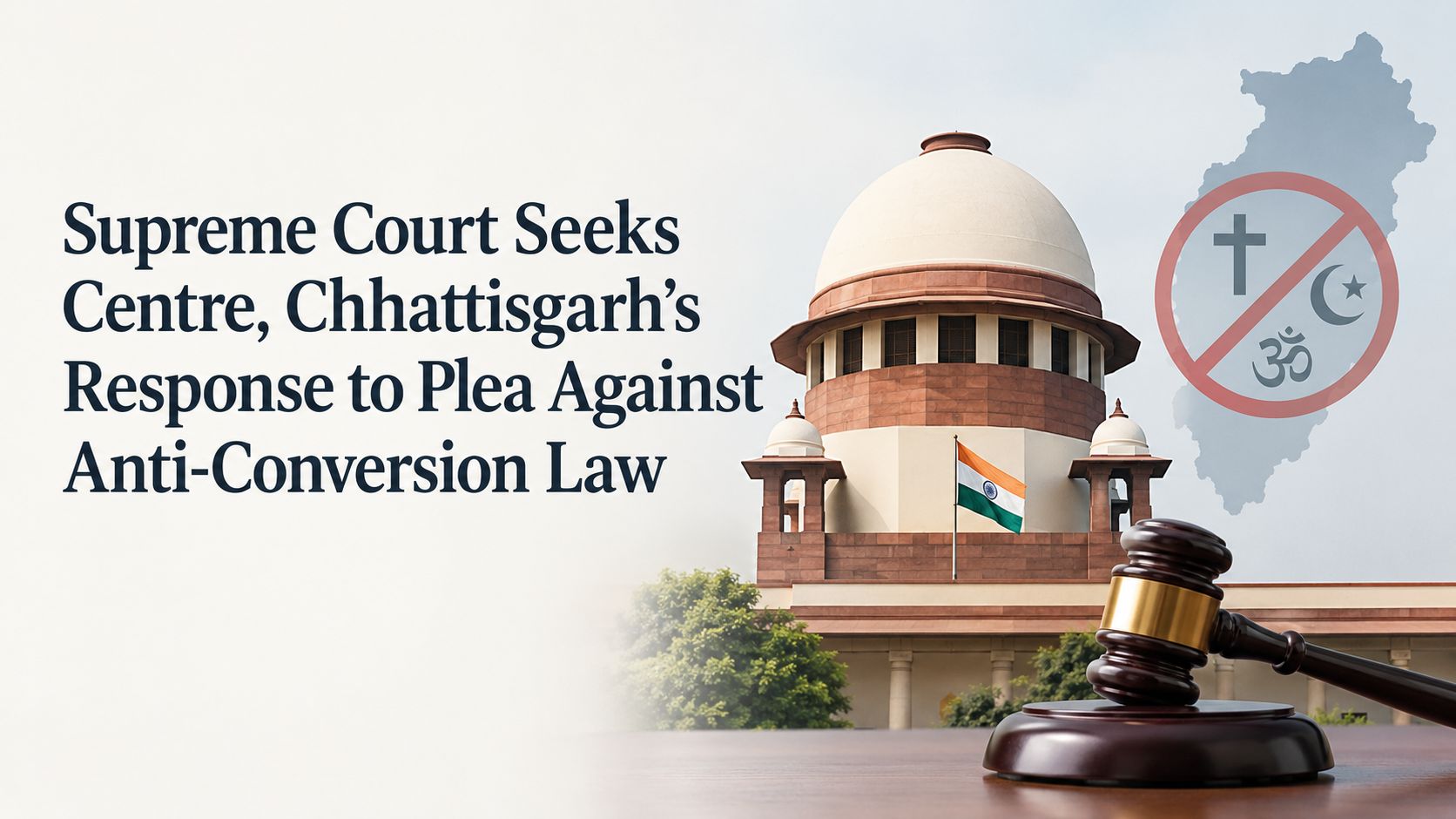
The Supreme Court of India has sought responses from the Union and Chhattisgarh governments on a petition challenging the constitutional validity of the state’s anti-conversion law, bringing renewed attention to legislation that civil rights groups say threatens religious freedom and personal autonomy.
A bench comprising Chief Justice of India Surya Kant and Justices Joymalya Bagchi and V Mohana issued notices on Monday and directed that the challenge be heard alongside pending cases concerning similar laws in Uttar Pradesh and Rajasthan.
The petition was filed by Isai Adivasi Mahasabha, an organisation representing tribal Christians. The bench noted that a similar challenge to the Chhattisgarh legislation was pending before the state’s High Court.
Legal challenge and court proceedings
The bench initially suggested that the petitioner pursue the matter before the High Court, offering to request an expedited hearing. Senior advocate Colin Gonsalves, representing the organisation, argued that related challenges were already before the Supreme Court and that a ruling could make proceedings in the High Court redundant.
Gonsalves said he would consult petitioners involved in the High Court proceedings about potentially seeking their transfer to the Supreme Court. The bench observed that it could not compel those petitioners to move their cases.
The court has not ruled on the constitutional validity of the legislation. Its notice seeks responses from the governments concerned as the legal challenge proceeds.
Provisions under scrutiny
The Chhattisgarh Assembly passed the law in March to prevent religious conversions allegedly carried out through force, fraud, inducement or misrepresentation. It prescribes life imprisonment in cases involving mass conversion.
However, the petition argues that several provisions go beyond preventing coercion and could restrict voluntary religious conversion and legitimate religious activities.
It challenges the law’s definition of “allurement”, which reportedly includes promises of a “better lifestyle” and the glorification of one religion over another. According to the petition, such broad language could encompass ordinary religious preaching, explanations of religious doctrine and humanitarian or charitable work.
The petitioner also questions an exemption for “reversion” to an ancestral religion, arguing that the legislation does not clearly define the term “ancestral religion”.
Concerns over privacy and religious freedom
The challenge invokes Article 25 of the Constitution, which guarantees freedom of conscience and the right freely to profess, practise and propagate religion, subject to constitutional limitations.
The petition particularly objects to requirements for advance declarations before conversion. Under the provisions challenged, applicants must disclose their names, existing faith and intended religion, with details published on government websites and displayed at local administrative and police offices.
A further declaration is required within 30 days after conversion, followed by a compulsory personal appearance within 21 days. Failure to comply can result in the conversion being treated as illegal or void.
The petitioner argues that these procedures turn a fundamental right into an activity dependent on official notification and expose deeply personal religious choices to public scrutiny.
Penalties and wider implications
The law prescribes a minimum seven-year prison sentence, with punishment extending to ten years in specified cases involving minors, women and people belonging to Scheduled Castes, Scheduled Tribes or Other Backward Classes.
The legislation forms part of a wider debate over anti-conversion laws in India. Critics argue that broadly worded restrictions can discourage interfaith relationships and voluntary changes of faith, while supporters of such laws maintain that they are intended to prevent coercion and fraudulent conversion.
The Supreme Court’s consideration of related challenges could have wider implications for the balance between preventing coercion and protecting individual religious freedom. For now, the constitutional questions remain before the courts.
Courtesy : Hindustan Times




© 2026 CATHOLIC CONNECT POWERED BY ATCONLINE LLP