- 20 November, 2026
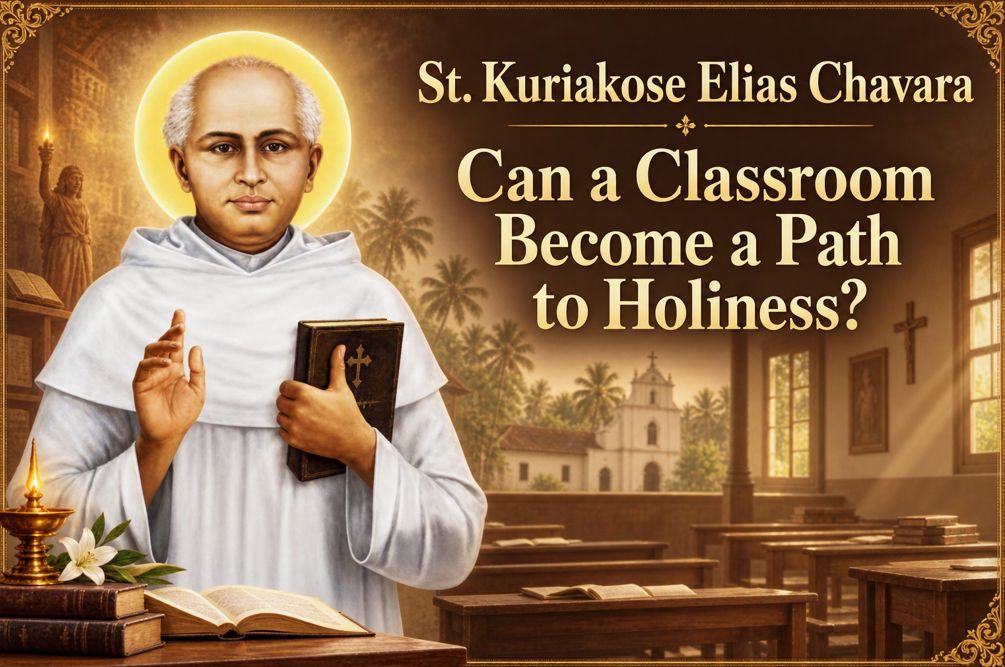
November 20, 2026: Can studying mathematics, reading books or teaching children bring someone closer to God? For St. Kuriakose Elias Chavara, education was about far more than academic achievement. He believed that learning could transform individuals, uplift communities and contribute to the formation of a life rooted in faith and holiness.


Born in Kerala in 1805, St. Kuriakose Elias Chavara was a Catholic priest, religious founder and pioneering promoter of education. At a time when educational opportunities were limited, he worked to make learning more accessible through parish-based educational initiatives. His life and work reflected an important Christian conviction: educating the mind and forming the heart should go hand in hand.
Catholic theology teaches that God is the source of all truth. The human intellect is a gift that enables us to seek understanding, discover the wonders of creation and recognise our responsibilities towards others.
Chavara understood education as a means of overcoming ignorance and developing wisdom. For him, learning was not simply about memorising facts, gaining qualifications or securing professional success. It should also help people distinguish right from wrong, develop sound judgement and grow in their understanding of the world and their responsibilities before God.
(CLICK HERE to follow Catholic Connect and to stay updated with Catholic News & Content)
This vision reflects the Catholic belief that faith and reason are not enemies. In his encyclical Fides et Ratio (Faith and Reason), Pope St. John Paul II describes faith and reason as two wings on which the human spirit rises towards the contemplation of truth. Both have an important place in the search for meaning and understanding.
Education, therefore, can become an opportunity to explore truth while allowing faith to illuminate the questions and discoveries of human reason.
One of Chavara's significant contributions was his commitment to promoting education through parish communities. He encouraged churches to establish schools so that children could have opportunities to learn within their local communities.
His vision helped promote the importance of education beyond the confines of formal institutions and reflected his understanding that learning was essential for the development of individuals and society.
This commitment resonates deeply with Catholic social teaching, which recognises the inherent dignity of every human person. Every individual is created in the image and likeness of God and deserves opportunities to develop their God-given abilities.
Education becomes an expression of Christian charity and justice when it helps people overcome ignorance, develop their potential and participate more fully in society. Chavara's efforts remind us that the promotion of education is not merely a social responsibility but can also be a meaningful expression of Christian concern for human dignity.
Academic excellence alone does not make someone holy. A person may possess considerable knowledge and intellectual ability but still lack honesty, humility, compassion or concern for others.
Chavara's educational vision points towards the formation of the whole person. Students should develop intellectual abilities alongside virtues such as patience, discipline, responsibility, kindness and respect.
The Catechism of the Catholic Church teaches that human beings are called to seek and love what is true and good, and that, with the help of God's grace, they grow in virtue and holiness.
This is an important distinction: education does not automatically produce holiness. Rather, it can contribute to a person's spiritual growth when knowledge is guided by faith, moral responsibility and a willingness to live according to the teachings of Christ.
A truly educated person should not only know more but also become more capable of choosing what is good and living with integrity.
For Chavara, education had a purpose that extended beyond individual advancement. His wider apostolic work reflected a commitment to the spiritual and social well-being of others.
This connects with Christ's commandment to love our neighbours: "You shall love your neighbour as yourself" (Matthew 22:39).
Knowledge should make us more attentive to the needs of others, not indifferent to their struggles. An educated person should be better equipped to recognise injustice, respond to poverty and contribute positively to society.
Teachers, too, have a vocation that extends beyond delivering lessons and preparing students for examinations. Through their example, encouragement and dedication, they can help young people develop a sense of responsibility, integrity and compassion.
In this way, teaching becomes more than a profession. It can become a meaningful service to God and humanity.
St. Kuriakose Elias Chavara offers an important message for today's educational institutions, teachers, parents and students. In a world where education is often measured through examination results, professional qualifications and career opportunities, his vision invites us to look beyond academic success.
Education has a deeper purpose when the pursuit of truth develops wisdom, knowledge encourages virtue, and learning inspires service.
A classroom can become a place where young people discover their abilities, learn to respect human dignity, develop moral responsibility and grow in their relationship with God.
However, the journey towards holiness requires more than intellectual development. It calls for faith, God's grace, the practice of virtue and a life shaped by love and charity.
The ultimate purpose of education is not simply to make people more knowledgeable, but to help them become wiser, more compassionate and more willing to use their gifts in the service of God and others.
St Kuriakose Elias Chavara reminds us that when education is guided by faith, enriched by virtue and expressed through charity, it can become a meaningful part of our journey towards holiness.
By Catholic Connect Reporter
Read More on Sainthood:
1) What If You Are Called to Be a Saint? Finding Holiness in Everyday Life
2) The Communion of Saints: How Are We Connected to Those Who Have Gone Before Us?
3) Do You Have to Be Extraordinary to Become a Saint? The Catholic Teaching on Holiness?
4) St Ignatius of Loyola: The Five-Minute Practice That Can Bring You Closer to God
5) What Does the Bible Say About Becoming a Saint? Understanding the Call to Holiness
6) St. Augustine: The Power of Conversion and a New Beginning
7) St. Monica: The Mother Who Never Stopped Praying – A Story of Faith, Patience and Perseverance
8) St. Francis of Assisi: He Gave Up Everything to Discover What Truly Matters
9) Live Like St. Joseph: Discovering Holiness in Life’s Quietest Moments
10) Beyond Likes and Followers: Five Virtues for a Holier Digital Life
11) St. Maximilian Kolbe: What Could Make a Man Choose Death to Save a Stranger?
12) St. Teresa of Calcutta: In a World of AI Conversations, Are We Forgetting Human Connection?
13) Why Do Catholics Ask Saints to Pray for Them? The Meaning Behind This Belief
14) The Beauty of Small Things: How St. Thérèse of Lisieux Found a Path to Sainthood
16) Are Catholics Worshipping Statues? The Catholic Explanation Behind Sacred Images
17) Are Catholic Relics Biblical or Pagan? What Scripture and Early Church History Reveal
18) St. Devasahayam Pillai: A Life That Refused to Renounce Christ
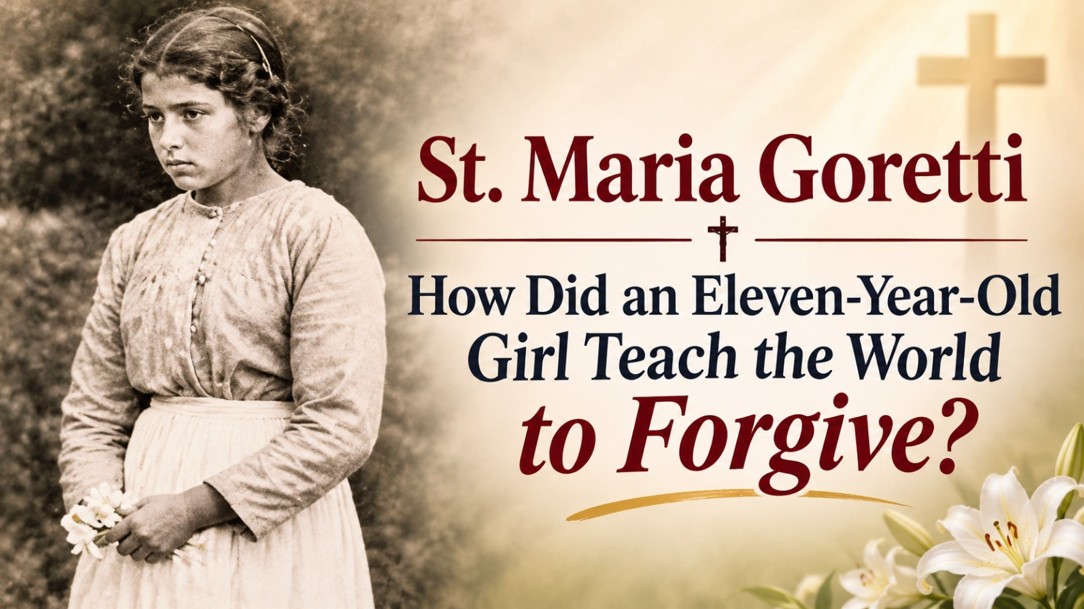
19) St. Maria Goretti : How Did an Eleven-Year-Old Girl Teach the World to Forgive?
© 2026 CATHOLIC CONNECT POWERED BY ATCONLINE LLP