- 18 November, 2026
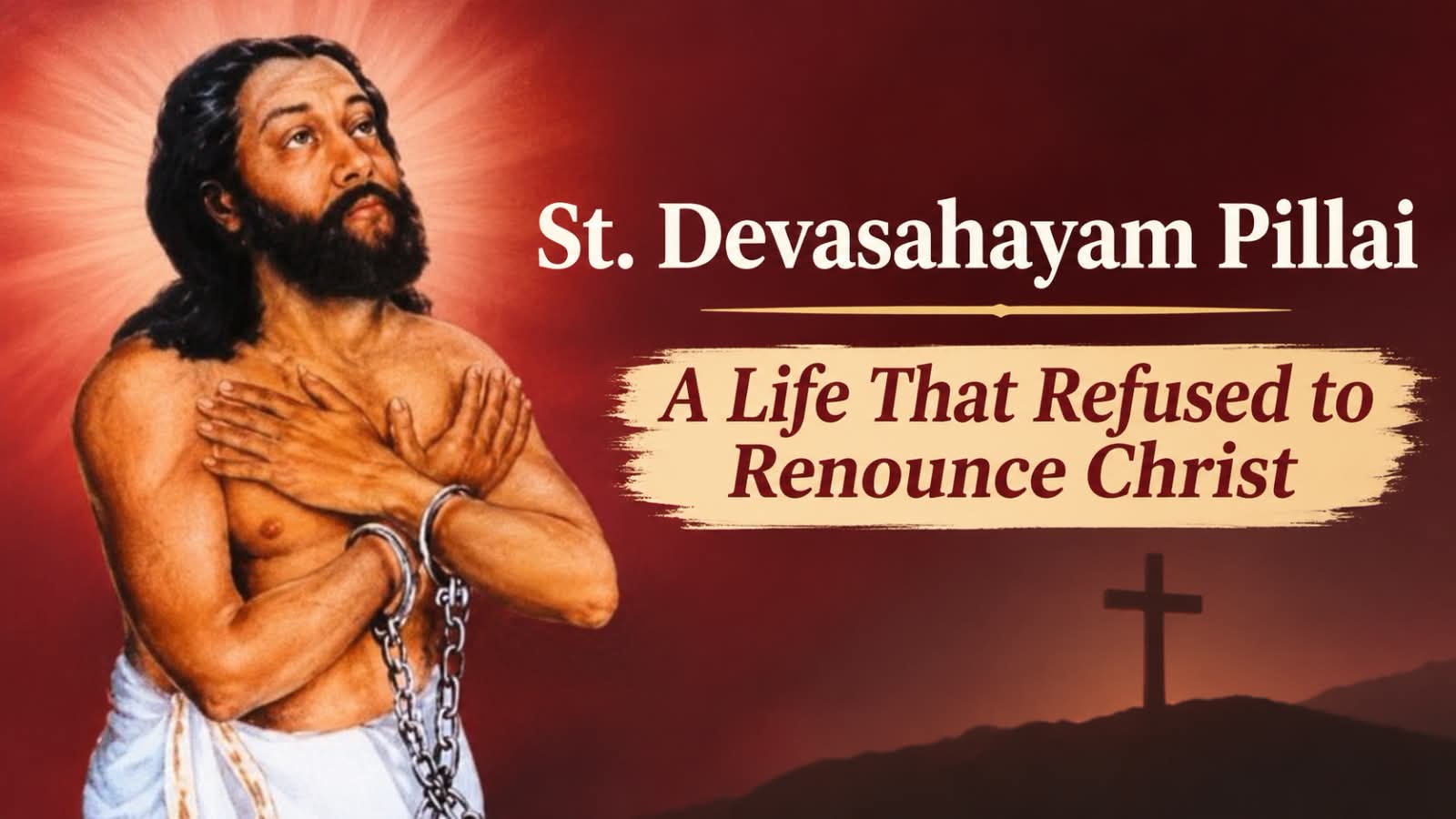
November 18, 2026: Faith is easy to profess when life is comfortable, but remaining faithful when it demands sacrifice takes courage. St Devasahayam Pillai chose Christ despite imprisonment, torture and pressure to renounce his faith. His life reminds us that holiness begins with the courage to remain faithful, even when the cost is great.


A Friendship That Changed His Life
Born Nilakandan in 1712 at Nattalam, in the kingdom of Travancore, Devasahayam came from a Hindu Nair family. He served the king in the military and royal administration and was married to Bargaviyamma.
His friendship with Eustachius De Lannoy, a Catholic officer captured after the Dutch defeat at Colachel, introduced him to Christianity. De Lannoy spoke with him about the biblical story of Job, and Nilakandan gradually became interested in the Christian faith.
On 14 May 1745, Jesuit missionary Fr Giovanni Battista Buttari baptised him, giving him the name Devasahayam, meaning “God has helped.” His wife was also baptised and received the name Gnanappoo. After his baptism, Devasahayam began preaching the Gospel. He spoke of equality among people and challenged social distinctions.
(CLICK HERE to follow Catholic Connect and to stay updated with Catholic News & Content)
When Following Christ Came at a Cost
His preaching and support for Christians drew opposition. On 23 February 1749, he was imprisoned and repeatedly pressured to renounce his faith. When he refused, he was publicly humiliated and tortured. He remained steadfast in his faith in Christ despite these attempts to make him abandon it.
On 14 January 1752, he was taken to Aralvaimozhi and killed. His remains were buried at the church of St Francis Xavier in Kottar. The Church beatified him in 2012 and canonised him in 2022.
The Call to Live a Life of Sainthood
Martyrdom is not suffering for its own sake; it is bearing witness to Christ, even at the cost of one’s life. Pope Francis describes martyrs as witnesses who give their lives for Christ, while affirming that all Christians are called to witness through their lives.
Most Christians may never face the persecution Devasahayam endured. Yet his example challenges us to resist wrongdoing, treat others with dignity and remain faithful when doing so is costly. Such daily courage is not martyrdom in the strict sense, but it is a real witness to the faith.
Sainthood is not only about extraordinary sacrifice. It begins with ordinary choices made in faithfulness to Christ. Do not simply admire the courage of the saints; begin living the faith that made them saints.
By Catholic Connect Reporter
Read More on Sainthood:
1) What If You Are Called to Be a Saint? Finding Holiness in Everyday Life
2) The Communion of Saints: How Are We Connected to Those Who Have Gone Before Us?
3) Do You Have to Be Extraordinary to Become a Saint? The Catholic Teaching on Holiness?
4) St Ignatius of Loyola: The Five-Minute Practice That Can Bring You Closer to God
5) What Does the Bible Say About Becoming a Saint? Understanding the Call to Holiness
6) St. Augustine: The Power of Conversion and a New Beginning
7) St. Monica: The Mother Who Never Stopped Praying – A Story of Faith, Patience and Perseverance
8) St. Francis of Assisi: He Gave Up Everything to Discover What Truly Matters
9) Live Like St. Joseph: Discovering Holiness in Life’s Quietest Moments
10) Beyond Likes and Followers: Five Virtues for a Holier Digital Life
11) St. Maximilian Kolbe: What Could Make a Man Choose Death to Save a Stranger?
12) St. Teresa of Calcutta: In a World of AI Conversations, Are We Forgetting Human Connection?
13) Why Do Catholics Ask Saints to Pray for Them? The Meaning Behind This Belief
14) The Beauty of Small Things: How St. Thérèse of Lisieux Found a Path to Sainthood
16) Are Catholics Worshipping Statues? The Catholic Explanation Behind Sacred Images
18) Are Catholic Relics Biblical or Pagan? What Scripture and Early Church History Reveal

© 2026 CATHOLIC CONNECT POWERED BY ATCONLINE LLP