- 07 July, 2026

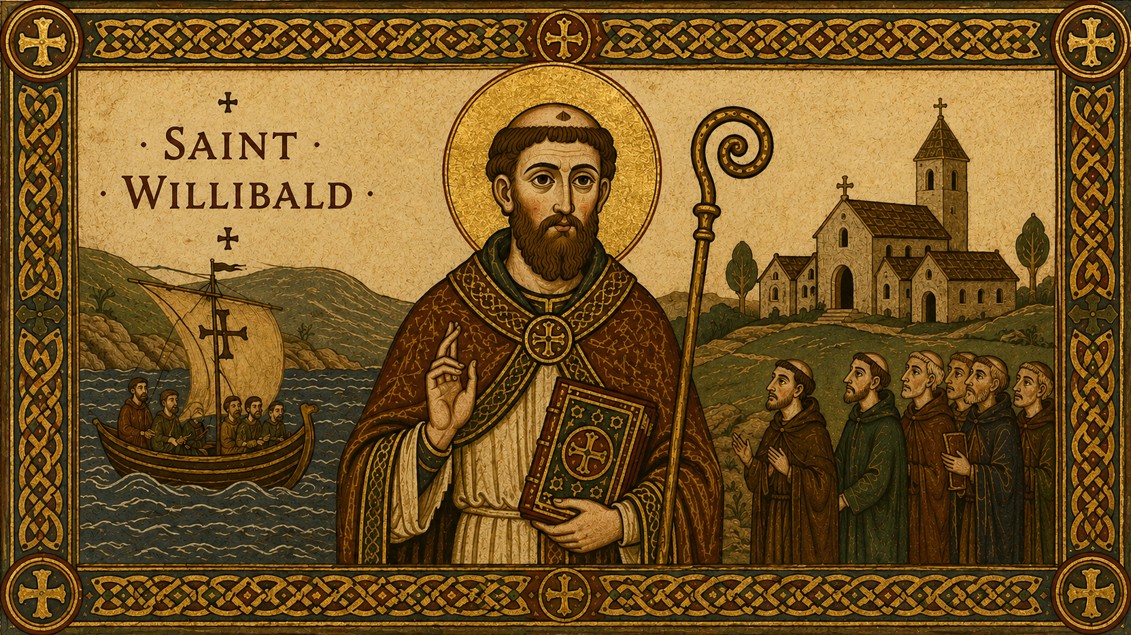
Germany, July 7, 2026: Why is Saint Willibald remembered as one of the great missionary saints of Europe? Discover the inspiring story of the English pilgrim who travelled to the Holy Land, became one of the earliest Christian pilgrims to record his journey, and later helped spread the good word in Germany alongside Saint Boniface, leaving a legacy of faith that continues more than twelve centuries later.


Feast Day: 7 July
Born: c. 700, Wessex, Anglo-Saxon England
Died: 7 July 787 (traditionally), Eichstätt, Bavaria, Germany
Canonized: Recognized as a saint by early Church tradition (pre-congregation canonization)


Patron of: Pilgrims and the Diocese of Eichstätt
Known For: Pilgrimage to the Holy Land, missionary work in Germany, founding monasteries, and serving as the first Bishop of Eichstätt
Title: Bishop and Missionary
Few saints combined the spirit of adventure with deep faith as completely as Saint Willibald.
Long before travel became easy, Willibald journeyed thousands of kilometres across Europe and the Middle East in search of the places where Christ had lived, preached, died, and risen again.
After years as a pilgrim, God called him to an even greater mission—to bring the Gospel to the peoples of Germany.
Working alongside some of the Church's greatest missionaries, he helped establish monasteries, educate clergy, and strengthen Christianity throughout central Europe.
His remarkable life became a bridge between pilgrimage and missionary service.
Willibald was born around the year 700 into a noble Christian family in Wessex, England.
According to tradition, he became seriously ill as a child.
His parents prayed for his recovery and promised that if he survived, they would dedicate him to God's service.
Willibald recovered, and true to their promise, he was entrusted to monastic life at an early age.
There he grew in prayer, Scripture, and learning, preparing for the mission God had planned for him.
(CLICK HERE to follow Catholic Connect for regular News and Content)
At about twenty years of age, Willibald set out on one of the most extraordinary pilgrimages of the early Middle Ages.
Travelling with members of his family, he journeyed through present-day France and Italy before sailing across the Mediterranean toward the Holy Land.
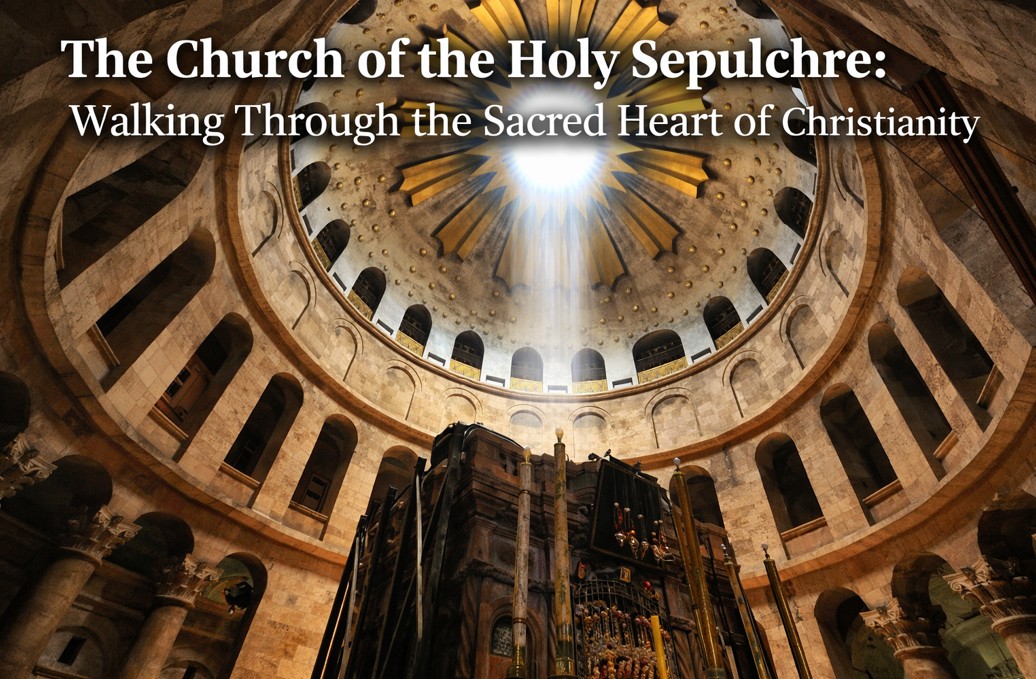
His pilgrimage included visits to many of Christianity's holiest places, including:
He also travelled through parts of Syria and Asia Minor before returning to Italy.
His journey became one of the earliest detailed pilgrimage accounts preserved in Christian history.
Following his return from the Holy Land, Willibald spent nearly a decade at the famous Monte Cassino Abbey.
Founded centuries earlier by Saint Benedict of Nursia, the monastery was one of Europe's greatest centres of prayer and learning.
There, Willibald deepened his spiritual life, studied Scripture, and prepared for future missionary work.
His years of quiet formation gave him the wisdom that would later guide the growing Church in Germany.
Around 739, Willibald received an invitation from Saint Boniface, the great English missionary who was spreading the good word in Germanic lands.
Recognising Willibald's gifts, Boniface asked him to assist in building and organizing the Church in Bavaria and Franconia.
Willibald accepted without hesitation.
His willingness to leave the peace of monastic life demonstrated his complete trust in God's call.
In 741, Saint Boniface ordained Willibald as the first Bishop of Eichstätt.
The region was still developing its Christian identity, and much work remained to be done.
As bishop, Willibald devoted himself to:
Under his leadership, the Diocese of Eichstätt became an important centre of spreading the good word.
Saint Willibald was not the only saint in his family.
His brother, Saint Winebald, also served as a missionary in Germany, while his sister, Saint Walburga, later became one of Germany's most beloved saints.
Together, the three siblings helped spread Christianity and strengthen the Church throughout the region.
Their family remains one of the most remarkable examples of shared holiness in Christian history.
Those who knew Willibald admired not only his learning but also his humility.
He guided his clergy with patience, cared for the poor, and encouraged unity among Christians.
Rather than seeking recognition, he quietly devoted himself to serving God's people.
His leadership helped establish lasting foundations for the Church in Germany that endured long after his death.
Saint Willibald died on 7 July, traditionally in the year 787, after decades of faithful ministry.
He was buried in Eichstätt, where devotion to him quickly spread.
His life was later recorded by Saint Walburga's companion, the nun Hugeburc, providing one of the earliest biographies of an English pilgrim and missionary.
His shrine became an important destination for pilgrims throughout medieval Europe.
Saint Willibald remains especially honoured in the Diocese of Eichstätt, where churches, schools, and institutions continue to bear his name.
Pilgrims still visit the Eichstätt Cathedral, where his relics are venerated.
His life continues to inspire missionaries, pilgrims, and all who seek to follow God's call with courage.
The life of Saint Willibald teaches valuable lessons:
His witness reminds Christians that every journey with God can become an opportunity to bring others closer to Christ.
More than twelve centuries after his death, Saint Willibald remains an inspiring example of missionary zeal and faithful discipleship.
He was a pilgrim who sought Christ in the Holy Land, a monk who embraced prayer, and a bishop who helped shape the future of Christianity in Germany.
From the sacred sites of Jerusalem to the churches of Bavaria, his life continues to proclaim that those who follow God's call with trust can leave a lasting legacy of faith.
Saint Willibald teaches a timeless truth:
The greatest journey is not measured by the distance travelled, but by the hearts brought closer to Christ along the way.
To know about more saints please visit the spiritual section.
By Catholic Connect Reporter
Saint Willibald, Saint Willibald feast day, Bishop of Eichstätt, Saint Willibald biography, English missionary saints, Catholic pilgrims, Holy Land pilgrimage, Saint Boniface, German saints, Benedictine saints, July saints, Catholic missionaries, Saint Walburga, Saint Winebald, Diocese of Eichstätt
© 2026 CATHOLIC CONNECT POWERED BY ATCONLINE LLP