- 29 July, 2026
Vatican, July 29, 2026: Pope Leo XIV has urged communicators to ensure that every technological tool is used "at the service of truth and the common good," as the Church continues to reflect on both the opportunities and challenges presented by artificial intelligence.


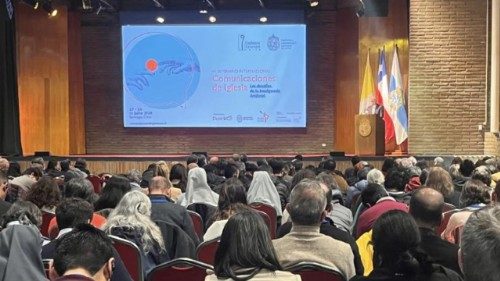
His message, signed by Cardinal Secretary of State Pietro Parolin, was addressed to participants of the Seventh International Seminar on Church Communication, held on 27-28 July at the Pontifical Catholic University of Chile in Santiago.
The seminar, titled The Challenges of Artificial Intelligence, has brought together communicators, pastoral workers, academics, and Church representatives from across Latin America and the Caribbean to examine the ethical, cultural, and religious implications of artificial intelligence in the light of Pope Leo XIV's Encyclical Magnifica humanitas.


Wisdom and responsibility in the age of AI
In his message to Archbishop René Osvaldo Rebolledo Salinas, President of the Chilean Bishops' Conference, the Pope expressed his hope that participants would promote "a communication that, in the face of the new opportunities offered by technological development, knows how to safeguard the dignity of the human person and place every tool at the service of truth and the common good."
Pope Leo also entrusted the seminar to the guidance of the Holy Spirit, praying that those taking part would respond to the challenges posed by artificial intelligence "with wisdom and responsibility, so that ecclesial communication may foster encounter among people and contribute to the proclamation of the Gospel."
Social media as human spaces
During the opening session of the seminar, Cardinal Fernando Natalio Chomalí Garib, Archbishop of Santiago de Chile, reflected on the role of social media, describing them as "truly human" spaces because they mirror emotions, relationships, and conflicts.
"Everything that happens to us also happens there," he said, while proposing four essential principles for communication: truth, goodness, beauty, and usefulness.
The Cardinal stressed that Magnifica humanitas, which focuses on safeguarding the human person in the age of artificial intelligence, should not be interpreted only through a technological lens.
"Today there is much discussion about artificial intelligence," he noted, "but this Encyclical speaks above all about human dignity and truth."
Building Jerusalem, not Babel
Cardinal Chomalí said that communication grounded in these principles can help strengthen community life in a society that is becoming increasingly individualistic.
"We will promote dialogue, we will promote fraternity; in the end, we will build Jerusalem, not Babel," he said.
These themes were also reflected in the homily he delivered during the Eucharistic celebration that followed. Referring to Magnifica humanitas as a "Christological" Encyclical, he called for communication guided by discernment and expressed the hope that artificial intelligence would always remain at the service of human dignity.
A shared journey for the Church
Other speakers on the opening day included Juan Carlos de la Llera, Rector of the Pontifical Catholic University of Chile, and Archbishop Rebolledo Salinas, who described the seminar as a tangible expression of synodality and the Church's shared journey.
He said the publication of Magnifica humanitas has brought renewed depth to the Church's pastoral reflection on emerging technologies.
"The inviolable dignity of the human person must constitute the principle, the criterion and the ultimate goal of both technological development and scientific progress," he said.
Courtesy: Vatican News

© 2026 CATHOLIC CONNECT POWERED BY ATCONLINE LLP