- 21 July, 2026

Mumbai, July 21, 2026: The Maharashtra government has constituted a 27-member committee to examine whether members of Scheduled Tribes (STs) who convert to another religion should continue receiving reservation and other government welfare benefits, triggering renewed debate over constitutional protections, tribal identity and religious freedom.


The committee, headed by Maharashtra Tribal Development Minister Ashok Uike, was constituted through a Government Resolution issued on July 16. It has been tasked with studying the constitutional and legal framework governing Scheduled Tribe status, examining relevant Central laws, and reviewing policies adopted by other states before submitting recommendations to the state government. No deadline has been fixed for the panel to submit its report.
The move follows demands by the Janjatiya Suraksha Manch, an organisation backed by the RSS-affiliated Vanvasi Kalyan Ashram, which recently urged President Droupadi Murmu and Prime Minister Narendra Modi to remove, or "de-list", Scheduled Tribe members who convert to other religions from the ST category.


The organisation has argued that tribal persons who abandon their traditional indigenous faith and customs after embracing another religion should no longer be eligible for reservation and welfare benefits intended for Scheduled Tribes. The demand has revived a long-standing debate over whether religious conversion should affect constitutional recognition of tribal identity.
Under the current constitutional framework, Scheduled Tribe status is determined by tribal identity and not by the religion a person professes. Unlike Scheduled Castes, whose recognition is restricted to Hindus, Sikhs and Buddhists under the Constitution (Scheduled Castes) Order, 1950, Scheduled Tribes are not subject to any religious restriction. Consequently, individuals recognised as Scheduled Tribes continue to receive reservation and welfare benefits even after converting to Christianity, Islam, Buddhism or other religions.
According to the 2011 Census, Scheduled Tribes account for approximately 9.35 per cent of Maharashtra's population. While nearly 97.2 per cent identified as Hindus, the census also recorded more than 1.13 lakh Muslims, over 20,000 Christians and nearly 21,000 Buddhists belonging to Scheduled Tribe communities, reflecting the religious diversity among tribal populations.
The government's decision has drawn criticism from tribal rights activists, who argue that linking Scheduled Tribe status with religion is inconsistent with the Constitution. Adivasi activist Sanjay Dabhade described the committee's formation as "illogical" and alleged that it reflects a long-standing ideological demand rather than a constitutional necessity.
Dabhade maintained that religion has never been a criterion for recognising Scheduled Tribe status and argued that any attempt to alter the existing framework would require a constitutional amendment. He warned that introducing religion as a determining factor for tribal status would raise significant constitutional concerns.
The committee is expected to undertake a detailed review of constitutional provisions, judicial precedents and policies followed by other states before making its recommendations.
Its findings are likely to influence future discussions on tribal welfare, reservation policy and the relationship between constitutional identity and religious conversion. Any proposal to alter the existing framework is expected to face extensive legal, political and social scrutiny in view of the constitutional protections currently available to Scheduled Tribe communities across the country.
Courtesy Scroll
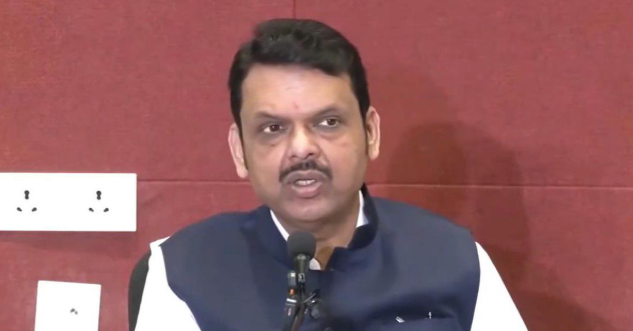
Photo Courtesy : Screenshot/Devendra Fadnavis, @Dev_Fadnavis via X.
© 2026 CATHOLIC CONNECT POWERED BY ATCONLINE LLP