
- 07 October, 2026

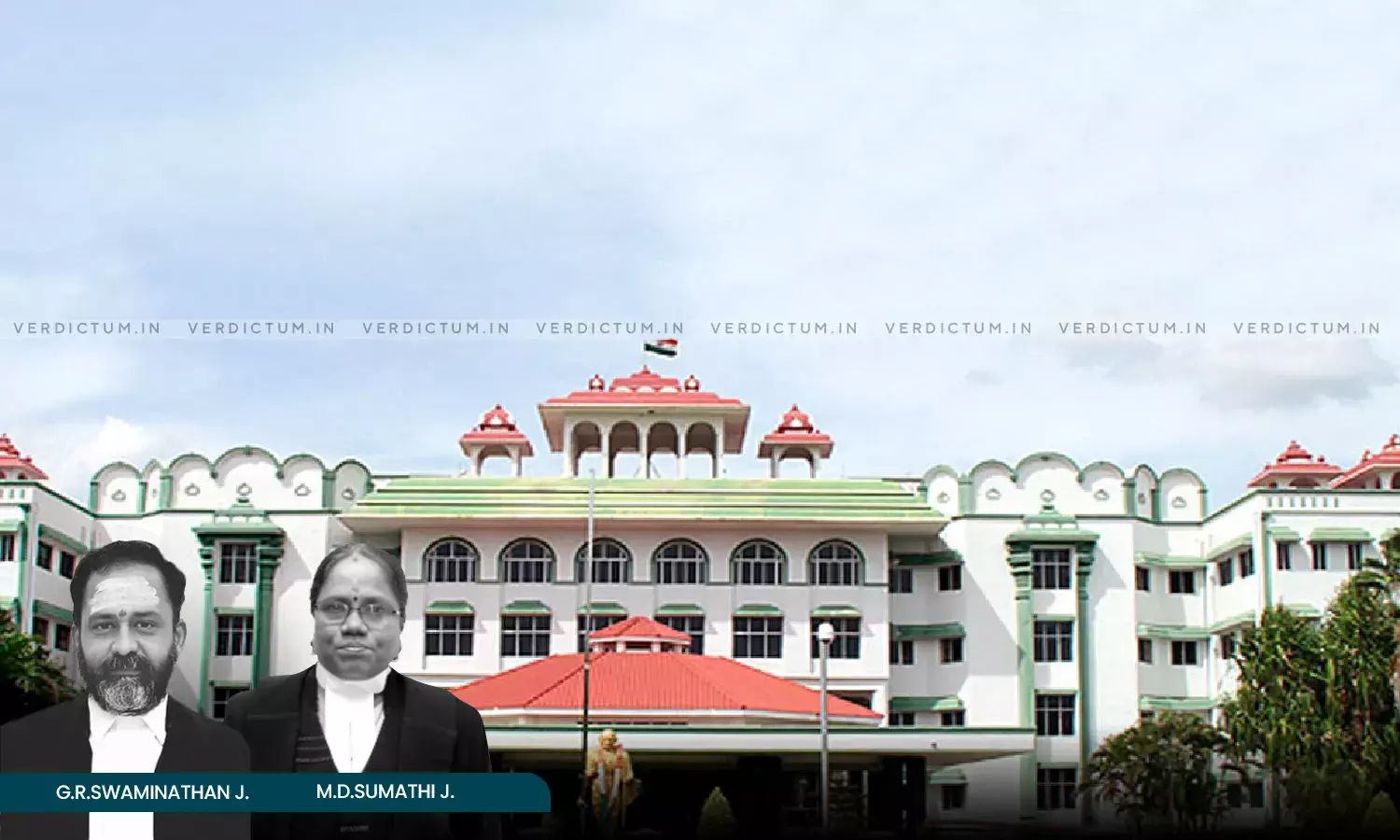
Chennai, October 7, 2026: The Madras High Court has held that religious organisations engaged in converting people from one faith to another can be denied registration under the Foreign Contribution (Regulation) Act (FCRA).



A Division Bench comprising Justice G.R. Swaminathan and Justice M.D. Sumathi made the observation while dismissing an appeal filed by Kanzeon Public Charitable Trust, which had challenged the rejection of its application for FCRA registration.
The Trust, established in 2021 and registered under Sections 12AB and 80G of the Income Tax Act, had applied for an FCRA registration certificate. After the application was rejected by the authorities, the Trust approached the High Court.
In its judgment, the Bench noted that the Trust claimed to follow Zen Buddhist philosophy but had not, in the court’s view, correctly disclosed the religious character of its activities in its application.
The court observed that religious organisations whose activities do not undermine the country’s secular fabric or social harmony may be eligible for FCRA registration. However, it held that organisations engaged in converting people from one religious faith to another should be denied such registration.
The Bench further observed that organisations conducting worship and religious rituals would fall within the religious category under the FCRA framework.
Referring to the provisions of the Act, the court noted that Section 12 restricts an unregistered religious organisation from accepting foreign contributions, while Sections 11 and 12 provide for religious organisations with a definite religious programme to seek registration, subject to the statutory conditions.
The judgment also examined Section 12(4)(a)(ii), which deals specifically with conversion from one religious faith to another. The Bench said the provision applies to religious organisations irrespective of their faith or denomination.
In this context, the court referred to organisations involved in activities such as Ghar Wapsi, observing that a Hindu organisation could likewise face denial of FCRA registration if its activities amount to conversion from one religious faith to another.
The court also stressed the obligation of applicants to accurately disclose the nature and character of their activities when seeking registration under the FCRA.
It further held that the ability to receive foreign contributions is not an absolute right, but a statutory privilege available subject to compliance with the requirements of the law.
The Bench consequently dismissed the appeal filed by Kanzeon Public Charitable Trust.
The case was Kanzeon Public Charitable Trust v. Union of India, CMA(MD) No. 1057 of 2026.
Source: Verdictum
Continue Reading on Catholic Connect App
Get access to exclusive news articles & more.
© 2026 CATHOLIC CONNECT POWERED BY ATCONLINE LLP