- 29 September, 2026

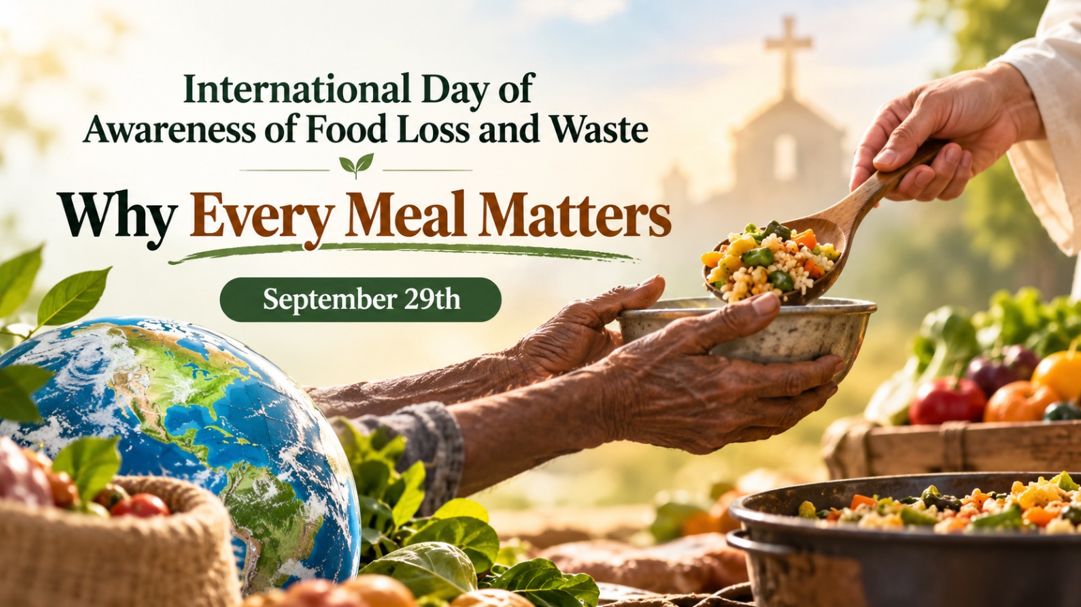
September 29, 2026: The International Day of Awareness of Food Loss and Waste, observed annually on 29 September, draws attention to a global challenge: the enormous amount of food lost or discarded despite the resources required to produce it.


Established by the United Nations General Assembly, the observance encourages governments, businesses, communities and individuals to use food more responsibly and support more sustainable food systems.
The day has been observed since 2020 and is closely linked to Sustainable Development Goal 12, which promotes responsible consumption and production.
Food loss and food waste occur at different stages of the food system.
Food loss generally refers to food that is lost during production, harvesting, storage, transportation or processing. Poor storage facilities, inadequate transport, pests and damage during handling can all contribute to losses before food reaches consumers.
(CLICK HERE to follow Catholic Connect and to stay updated with Catholic News & Content)
Food waste, meanwhile, commonly occurs at the retail, food-service and household levels. Food may be discarded because too much was purchased, meals were prepared in excessive quantities or products were not used before they deteriorated.
Understanding where food is lost or wasted is important because solutions must address the entire journey from farm to table.
Food production requires significant amounts of water, land, energy, labour and money. When food is wasted, these resources are effectively wasted as well.
Reducing food loss and waste can help conserve natural resources, lower greenhouse-gas emissions and reduce the quantity of organic waste sent to landfill. It can also help strengthen food security by making better use of food that has already been produced.
The international observance supports SDG Target 12.3, which calls for halving per-capita global food waste at retail and consumer levels and reducing food losses along production and supply chains by 2030.
Households have an important role to play. Planning meals before shopping can prevent unnecessary purchases, while buying only what is needed can reduce the amount of food left unused.
Proper storage can extend the life of fresh and packaged foods. Leftovers can also be incorporated into new meals rather than automatically thrown away.
Consumers should understand food labels, particularly the distinction between “best before”, which generally relates to quality, and “use by”, which relates to food safety.
Where possible, safe surplus food can be donated, while unavoidable food scraps can be composted.
The International Day of Awareness of Food Loss and Waste is ultimately a reminder that food is more than something placed on a plate. Behind every meal are farmers, workers, natural resources, energy and human effort.
Reducing unnecessary loss and waste therefore requires action throughout the food chain — from producers and retailers to restaurants, governments and households.
By valuing food and using it responsibly, communities can protect resources, reduce environmental pressure and contribute to a more sustainable and food-secure future.
By Catholic Connect Reporter



© 2026 CATHOLIC CONNECT POWERED BY ATCONLINE LLP