- 16 November, 2026
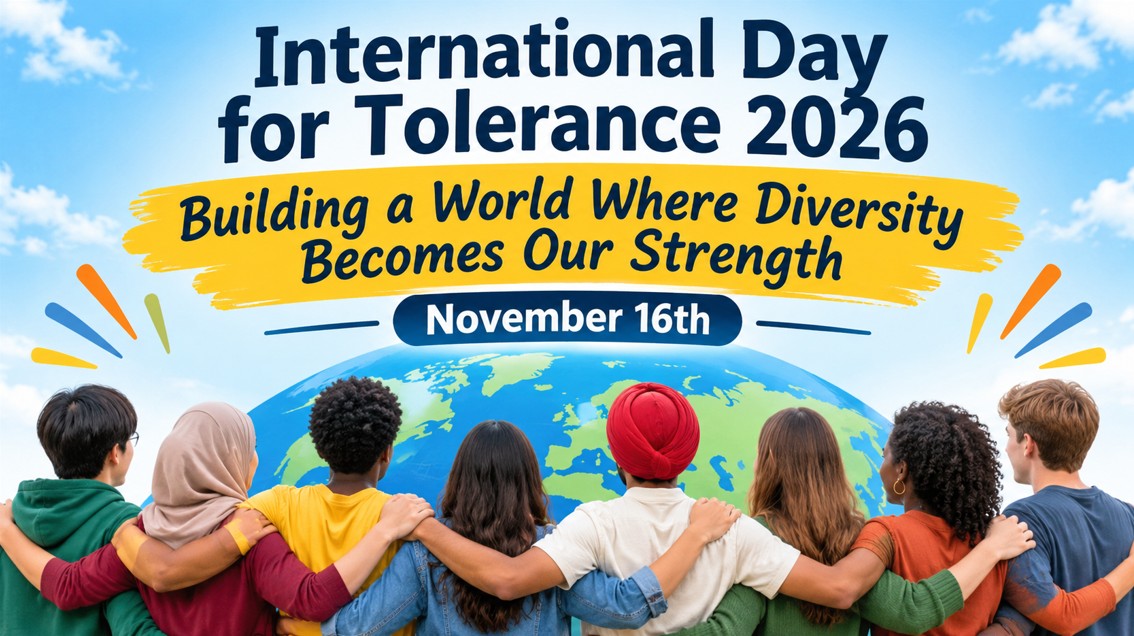
November 16, 2026: Every year on 16 November, the world observes the International Day for Tolerance, encouraging individuals, communities and nations to embrace diversity, promote mutual understanding and stand against discrimination.


Established by UNESCO in 1995, the observance reminds us that tolerance is not simply about accepting the presence of people who are different from us, but about recognising their dignity, respecting their rights and celebrating the richness they bring to society.
The theme, ‘More Than Coexistence: Celebrating the Beauty of Living Together’, invites us to move beyond merely sharing the same geographical spaces and towards building meaningful relationships rooted in empathy, friendship and mutual respect.
Coexistence often means living alongside people without conflict. However, genuine togetherness requires something deeper: the willingness to understand different cultures, religions, languages, traditions and perspectives.
Tolerance should not be mistaken for passive acceptance or indifference. It involves actively respecting the freedom of others, listening to their experiences and recognising that diversity is a source of strength rather than division.
The UNESCO Declaration of Principles on Tolerance describes tolerance as ‘harmony in difference’. This understanding encourages societies to appreciate different ways of life while upholding equality, justice and fundamental human rights.
Our schools, workplaces, neighbourhoods and places of worship provide opportunities to practise tolerance every day. When people from different backgrounds come together, share experiences and learn from one another, they create stronger and more inclusive communities.
Education plays an important role in nurturing this understanding. Children and young people must be encouraged to appreciate cultural differences, question prejudice and develop empathy from an early age.
Similarly, interreligious and intercultural dialogue can help overcome misunderstandings and build bridges between communities. Celebrating one another's festivals, respecting different traditions and participating in community activities can transform strangers into friends.
Living together does not mean that everyone must think alike or agree on every issue. Differences of opinion are natural in a diverse society. What matters is the ability to disagree without hatred, listen without prejudice and express opinions without denying others their dignity.
Tolerance also requires standing against discrimination, racism, religious intolerance, exclusion and violence. Respect must extend to everyone, regardless of their background, beliefs or social circumstances.
For Christians, this commitment is closely connected to the Gospel message of loving one's neighbour. Recognising the dignity of every human person encourages compassion, forgiveness and solidarity beyond religious and cultural boundaries.
The International Day for Tolerance is an opportunity to reflect on our everyday attitudes and actions. Listening patiently, speaking kindly, helping those who face discrimination and welcoming people who feel excluded are simple but meaningful ways of building a more harmonious society.
Ultimately, the beauty of humanity does not lie in everyone being the same, but in our ability to remain united despite our differences.
This 16 November, let us move beyond tolerance towards acceptance, beyond acceptance towards appreciation, and beyond coexistence towards genuine togetherness.
Different roots, one humanity: let us not merely live beside one another, but learn from one another, stand with one another and grow together.
By Catholic Connect Reporter


© 2026 CATHOLIC CONNECT POWERED BY ATCONLINE LLP